
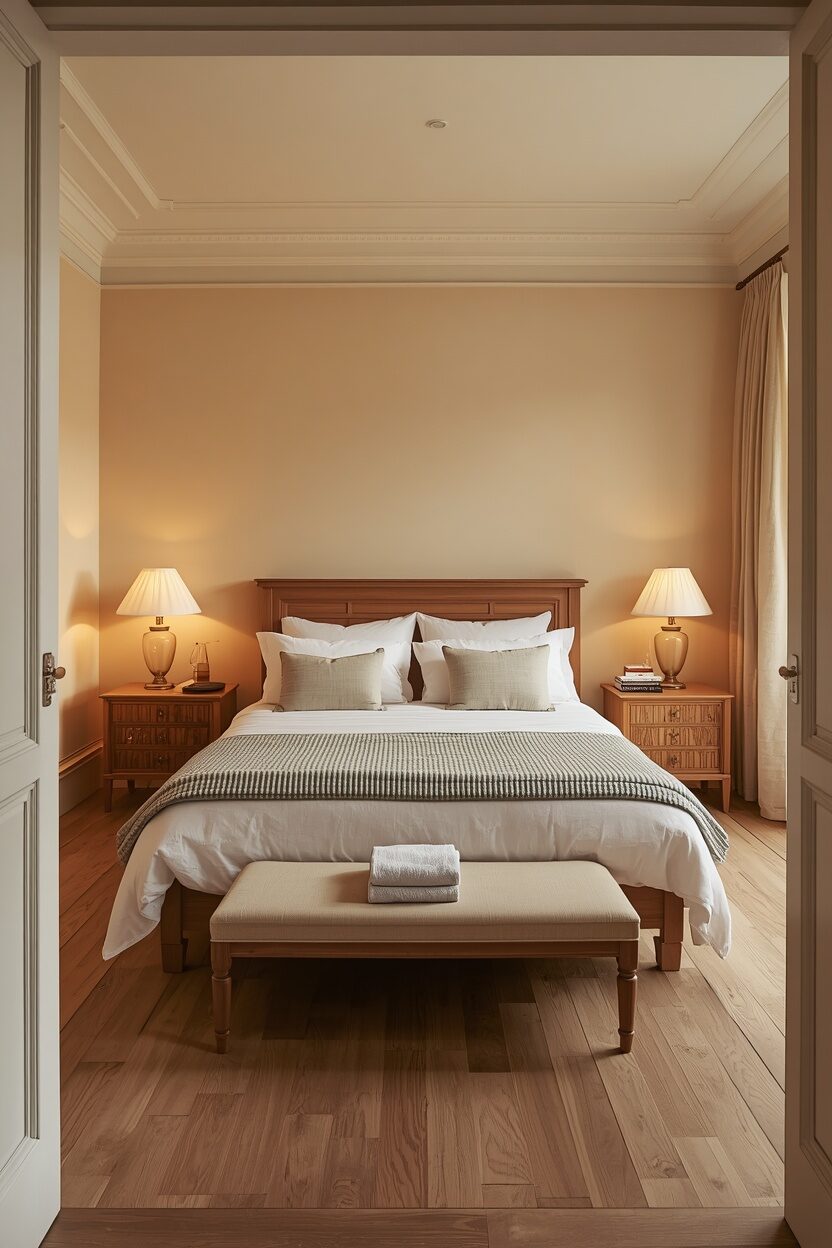
The test of a guest room is not how it photographs. It is whether someone can find a light switch at two in the morning, put a glass of water down without moving three ornaments, and unpack without living out of a suitcase on the floor.
Most spare rooms fail on the practical things while getting the decorative ones roughly right. So this list runs the other way round — the small operational details first, because they are what your guests actually remember, and the styling built on top of them. Nearly all of it is cheap, and several of the best ideas cost nothing at all.
1. Put a real surface on both sides of the bed
If two people are staying, two people need somewhere to put a phone, a book, and a glass of water. One bedside table means someone spends three nights leaving their glasses on the floor.
The height matters more than the style: aim for the tabletop to land within a couple of inches of the mattress top, roughly 24 to 28 inches from the floor for a standard bed. Too low and reaching for water in the dark becomes a guess. The two tables do not need to match — a small chest on one side and a simple stool or a slim wall shelf on the other is perfectly fine, and often looks better than a matching pair.
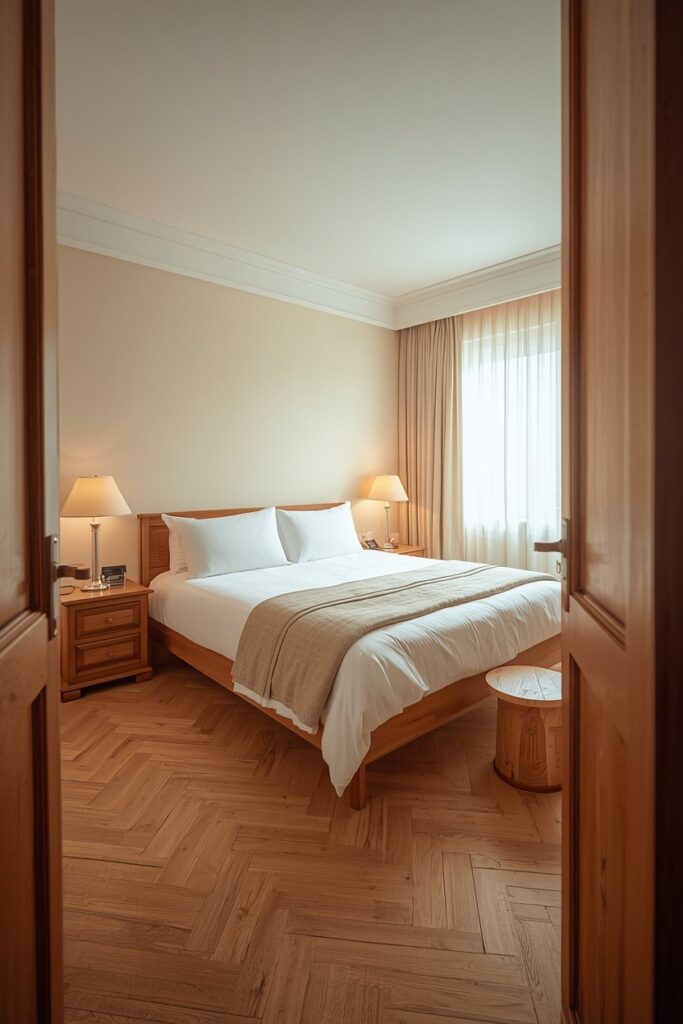
2. Make the light reachable from the pillow
A guest room lit only by a switch beside the door is a room where someone has to cross the floor in the dark, in an unfamiliar house, and get back into bed by feel.
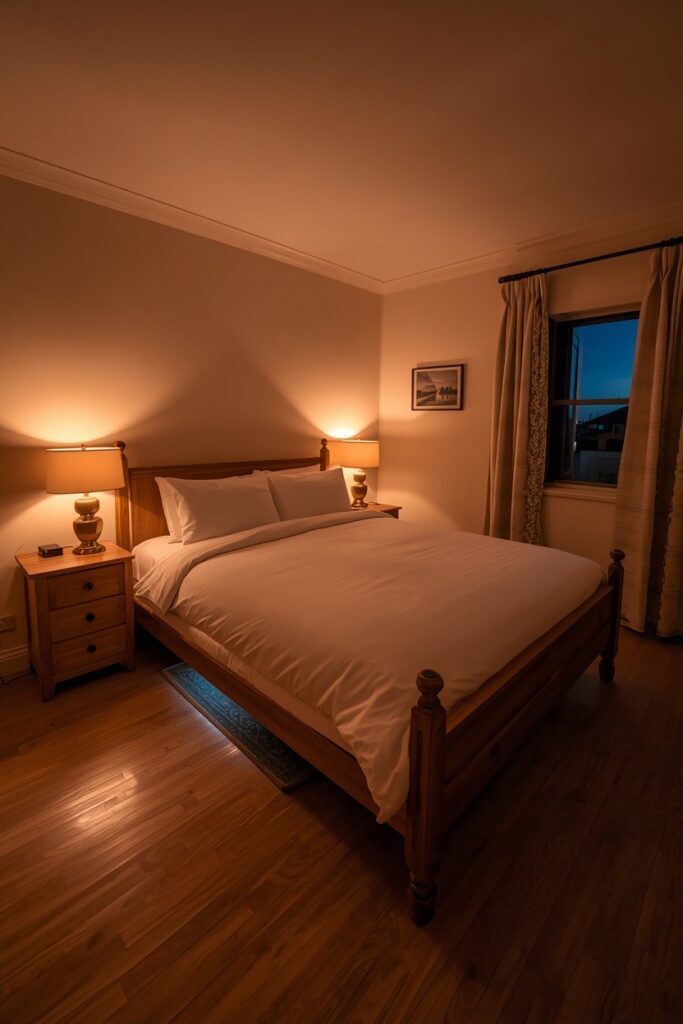
Give each side of the bed a light that can be turned on and off without sitting up — a table lamp with a switch on the cord or the base, or a wall-mounted reading light with the switch within arm’s reach. Warm bulbs at 2700K, and dimmable if you can manage it. Then add the smallest thing on this list and one of the most appreciated: a plug-in nightlight low on the wall between the bed and the door, so a stranger can find your bathroom at 3am without waking the whole house.
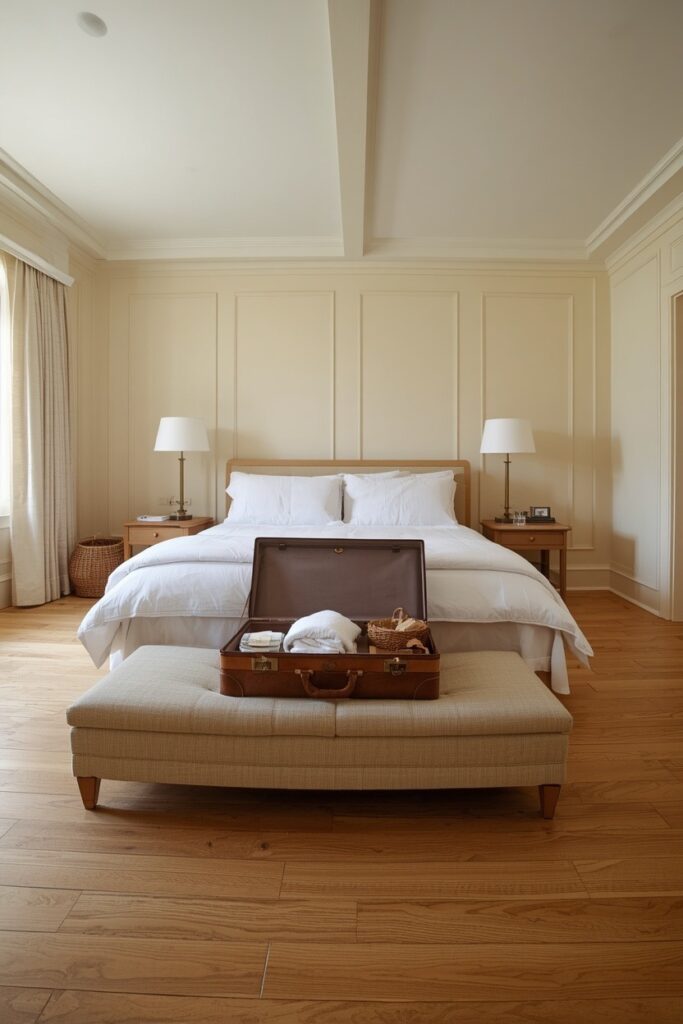
3. Leave somewhere for the suitcase
Watch a guest arrive and you will see the moment of hesitation: they are holding a large bag and there is nowhere in the room to put it that isn’t the middle of the floor or your bed.
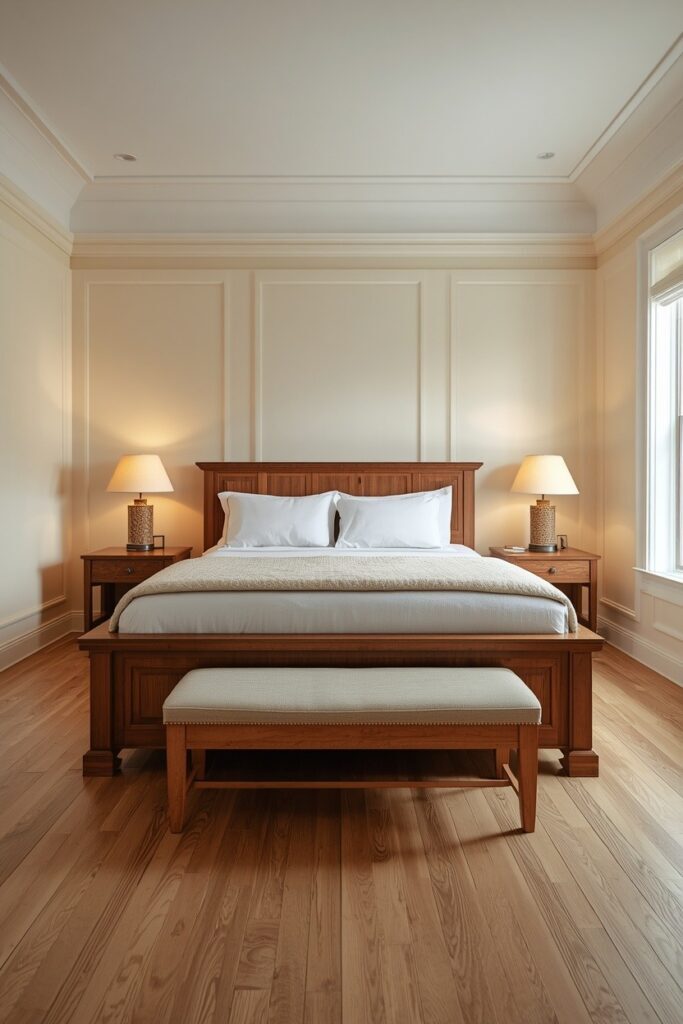
Solve it with a luggage bench, a low stool, or a sturdy folding rack at the end of the bed. Around 18 to 20 inches high suits most cases and stops people crouching to dig through their bag. If the room is genuinely too small for a bench, clear a defined patch of floor in a corner instead and put a folded blanket or a basket there — the point is that the space is obviously allocated, not that it’s furnished. Whatever you use, it must not be the only chair in the room.
4. Empty one drawer and hang six hangers
This is the idea people skip, and it’s the one that separates a guest room from a storage room with a bed in it.
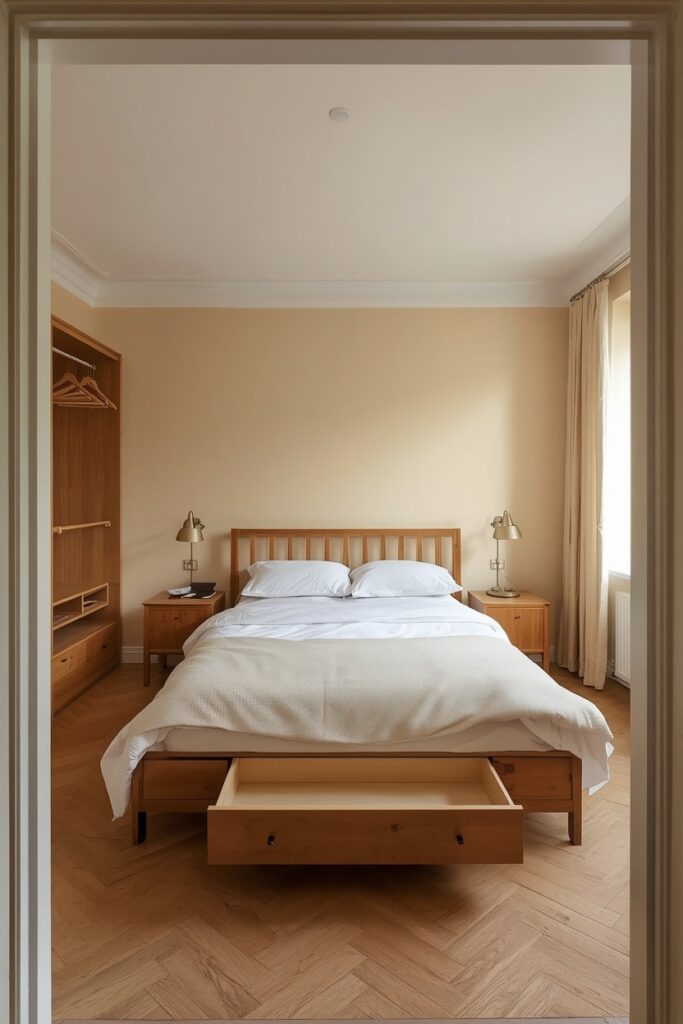
Your guest will not ask to move your out-of-season coats. Clear one full drawer and leave it genuinely empty, and hang at least six matching hangers with visible space between them in the wardrobe — wooden or velvet, not the wire ones from the dry cleaner. If your spare room doubles as storage, put your things in lidded boxes on the top shelf rather than the hanging rail, and keep the lower half of the wardrobe for visitors. Someone staying four nights who can unpack properly will sleep better than someone living out of a bag.
5. Layer the window with sheers and blackout
Guest rooms are often the room at the front of the house with the streetlight outside, and a single thin curtain is why people wake at five.
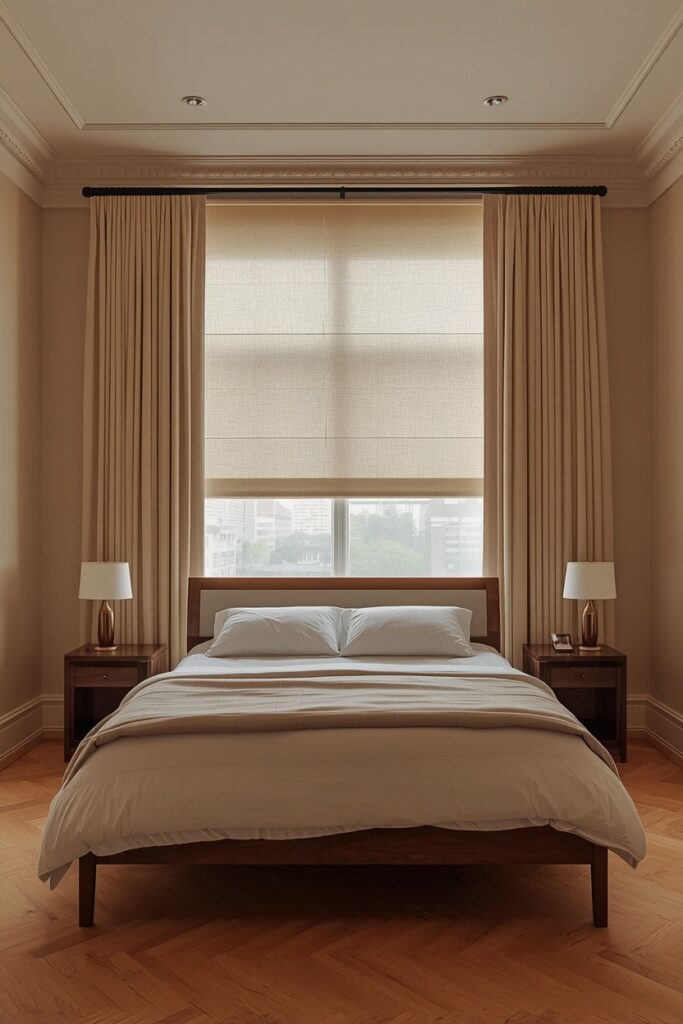
Run two layers: a sheer or light linen panel for daytime privacy, and a blackout lining or a separate blackout curtain behind it. Mount the rod 4 to 6 inches above the window frame and extend it 8 to 12 inches past the frame on each side so light doesn’t leak down the edges — that side leak is the part most people miss, and it’s the part that actually wakes you. Floor length, always. If the room takes strong morning sun, blackout matters more than anything else on this list.
6. Layer the bedding so guests can adjust it
You cannot know whether your visitor sleeps hot or cold, so build the bed to be changed rather than obeyed.
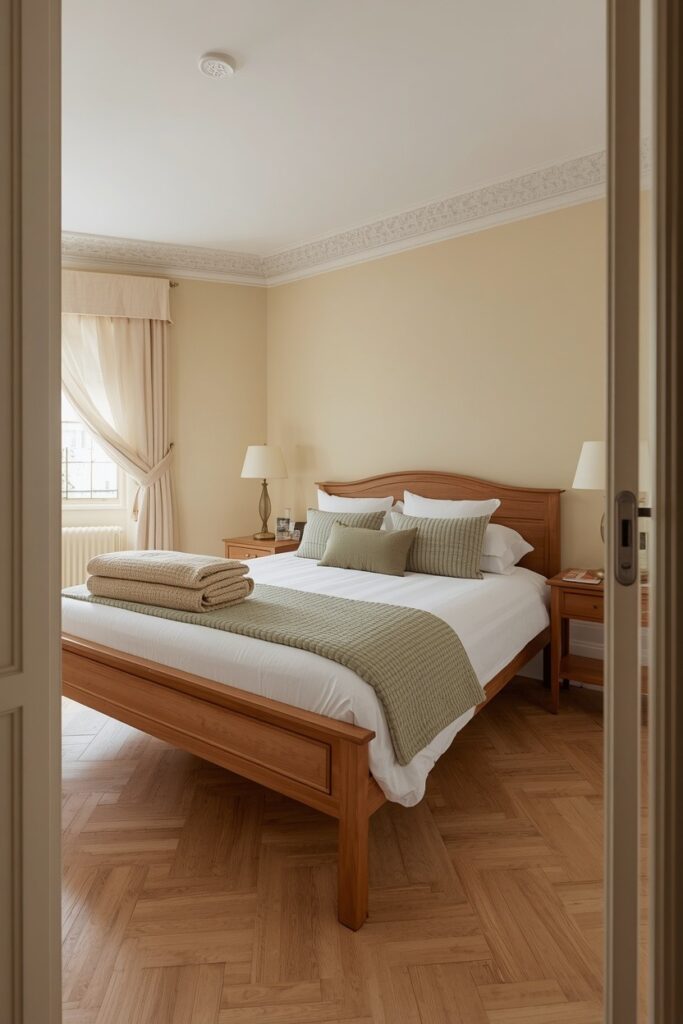
A washed cotton or linen sheet, a mid-weight duvet, and then a folded blanket across the foot of the bed — waffle cotton, a wool throw, or a quilted cover. Someone who wakes up cold pulls it up; someone who wakes up hot pushes the duvet off and keeps the blanket. Offer two pillow types if you can, one firm and one soft, and say so out loud when you show them the room. Iron the top edge of the sheet even if you iron nothing else. It takes two minutes and it is the detail that reads as effort.
7. Take the mattress seriously
Spare rooms get the old mattress. Everyone knows this and nobody admits it, and it is the single biggest reason people sleep badly in other people’s houses.
If yours is more than about ten years old, or it was demoted from your own room because it had gone soft, it is not doing the job. A mattress topper is the cheap intervention — a 2 to 3 inch one will genuinely rescue a mattress that has lost support without much give. Also check the bed frame for noise before your guests do it for you; a slat that squeaks every time someone turns over will ruin a night more thoroughly than any decorating decision. Tighten the bolts and add felt pads where wood meets wood.
8. Put a chair in, even a small one
A bedroom with nowhere to sit except the bed is a room where guests are either lying down or leaving. That’s a subtle kind of unwelcoming.
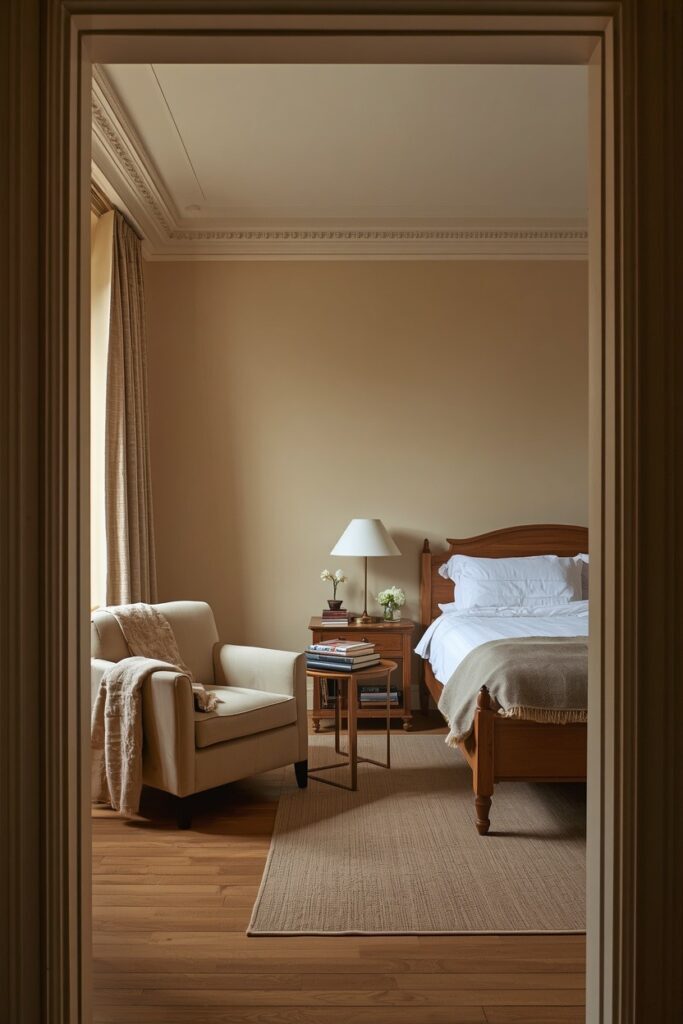
One small armchair, a slipper chair, or even a wooden chair with a cushion changes the room’s function — it becomes somewhere to sit and read, put shoes on, or take a phone call away from the family. Angle it toward the window if there’s a view worth having, and put a small side table or a stack of books beside it. In a narrow room, a chair in the corner opposite the door reads better than one squeezed alongside the bed, and it keeps the walking route clear.
9. Leave the small supplies out where they can be seen
Guests will not go looking through your cupboards, and most will not ask. Anything you want them to have, they need to be able to see from the bed.
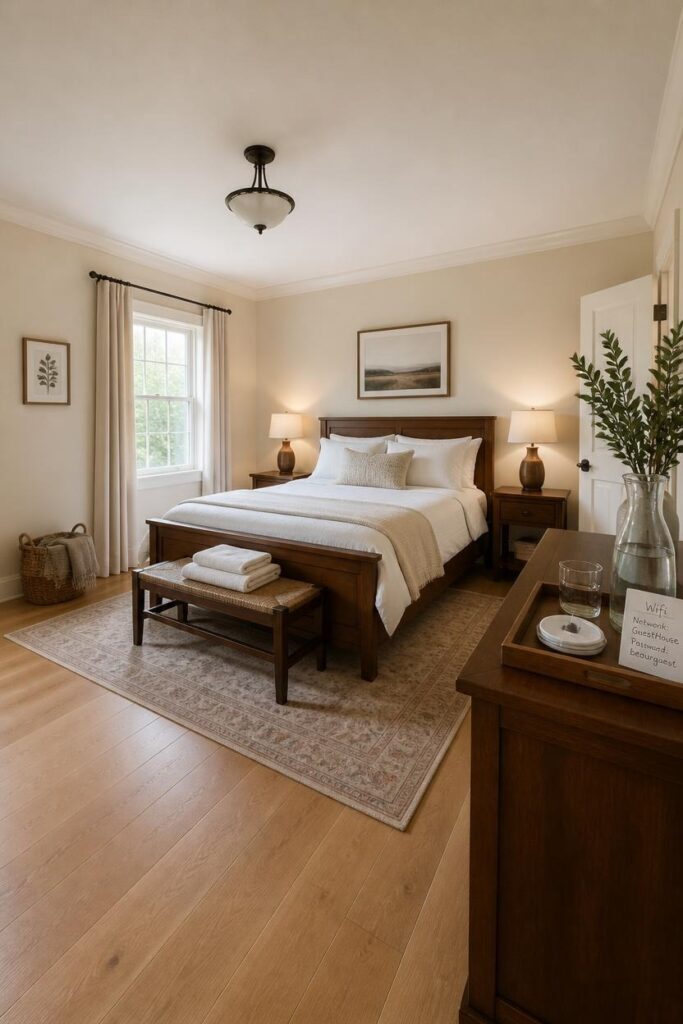
A small tray on the chest is the tidiest way to do it: a carafe or bottle of water and a glass, a phone charging cable, spare tissues, and a folded towel and hand towel stacked on the bench. Add a note card with the wifi name and password written out — not a QR code, which is useless if their phone is the thing that needs the wifi. If there is a spare blanket, put it in a visible basket rather than the airing cupboard. The principle is simple: visible means available, and stored means invisible.
10. Choose a soft, warm colour rather than a bold one
A guest room is not the place for the colour you’ve always wanted to try. Everyone who sleeps there is sleeping somewhere unfamiliar, and the room’s job is to lower the temperature of that.
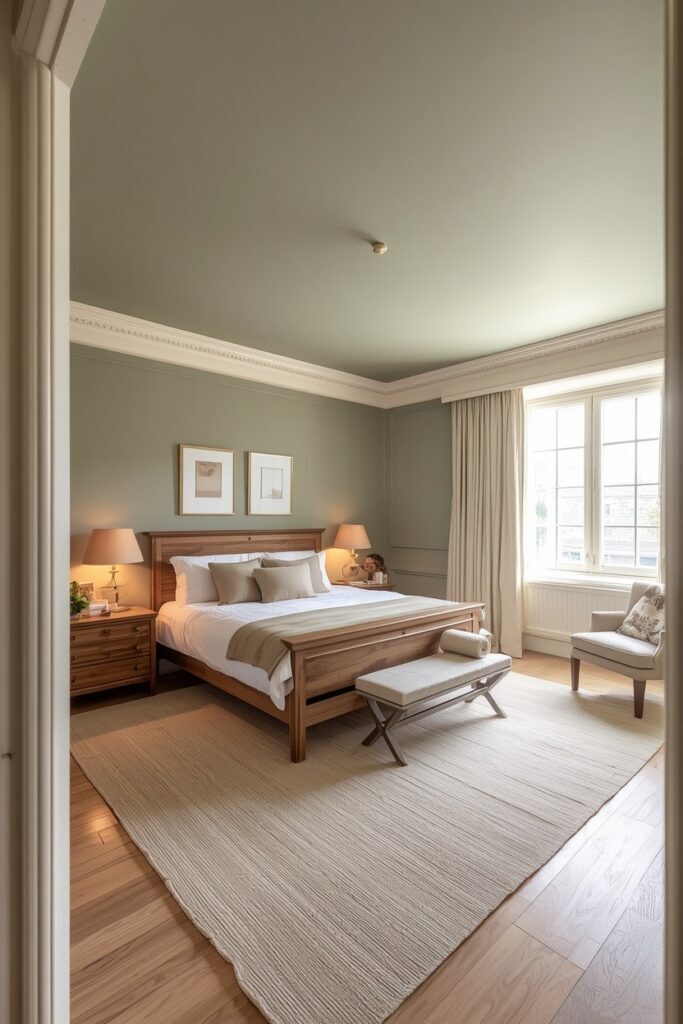
Soft, slightly muted, warm-leaning shades do it best: a warm off-white with a hint of cream, a chalky sage that leans grey, a muted clay, a very soft blue with green in it rather than a clean sky blue. Keep the ceiling and woodwork in a warm off-white rather than brilliant white so the edges stay soft. A caution worth heeding: dark, dramatic guest room walls look wonderful in photographs and can be genuinely disorienting to wake up in at an unfamiliar hour. Save the deep colour for a room you sleep in yourself.
11. Hang a mirror they can actually get dressed in
Small decorative mirrors are common in spare rooms and close to useless. Someone staying with you needs to check an outfit before they leave the house, and if they can’t do it here they’ll do it in your hallway.
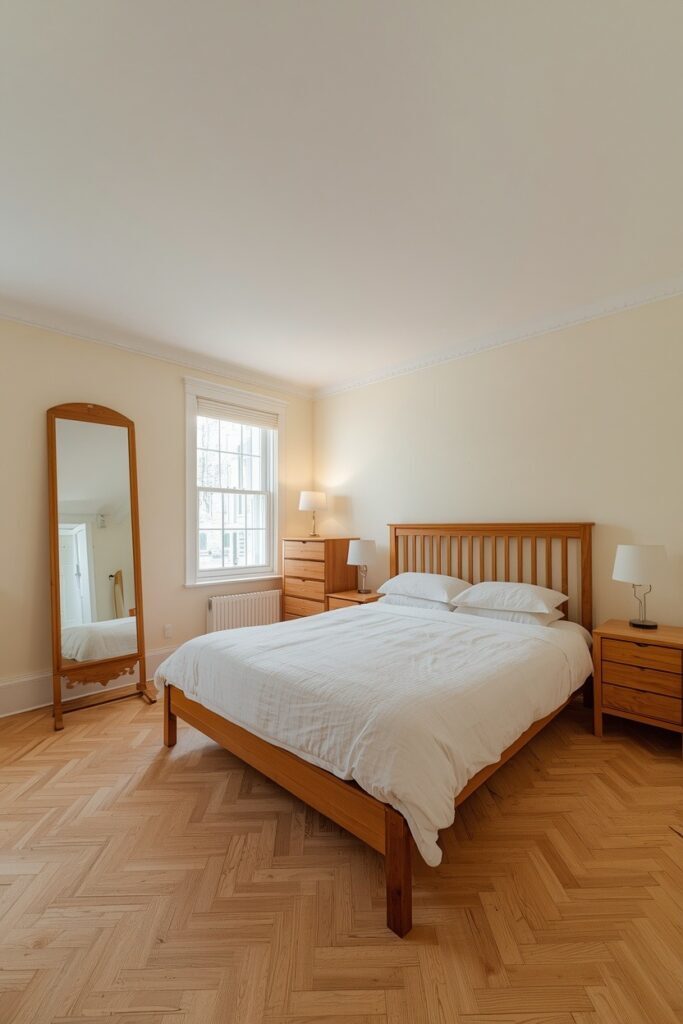
A full-length mirror is ideal — wall-mounted or securely leaning, positioned where daylight falls on the person rather than behind them, since backlit is the one angle where you can’t see anything. If floor space is tight, hang it on the back of the door. Failing that, a decent-sized mirror above the chest of drawers at least covers head and shoulders. Hang it so the centre sits around 57 to 60 inches up, which suits most people standing.
12. Air the room and skip the strong scent
A spare room with the door closed for six weeks smells like a spare room with the door closed for six weeks, and no candle covers it convincingly.
Open the window for an hour the morning your guests arrive, even in winter. Wash the bedding within a few days of the visit rather than a month before, because linen that has sat folded in a warm cupboard picks up its own dusty smell. Then leave the scent alone, or keep it very light — a small bowl of dried lavender, or nothing. Heavily fragranced diffusers and plug-ins are genuinely unpleasant for anyone with asthma or a sensitivity, and the person suffering will be far too polite to tell you.
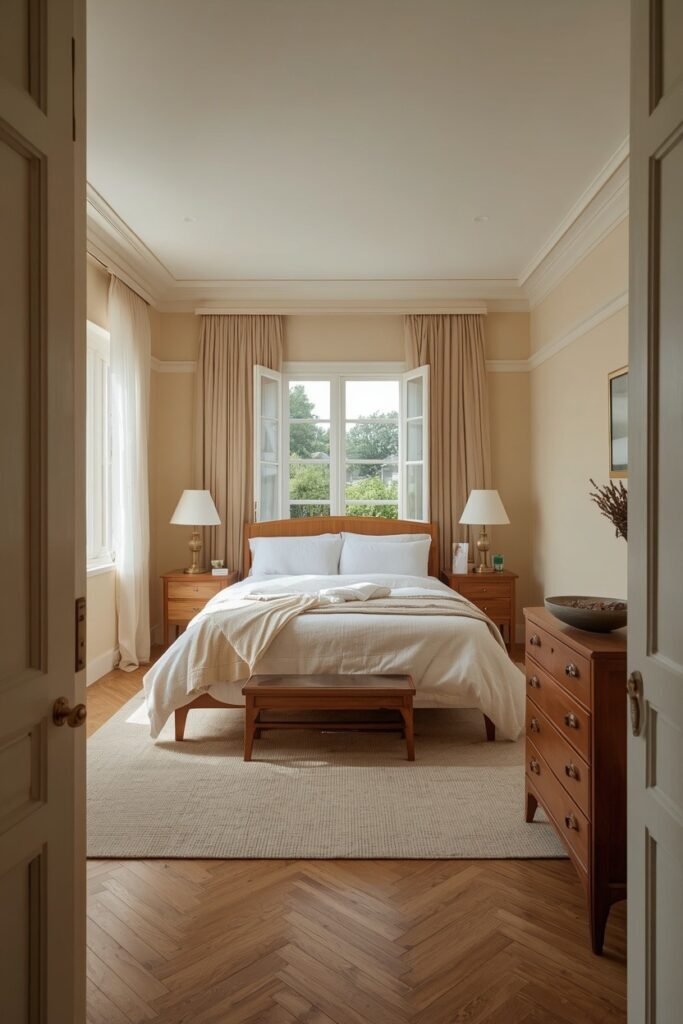
Where I’d start if I only did three things
Sort the mattress, add a second bedside light, and empty a drawer.
Those three cover the whole night: whether your guest sleeps, whether they can navigate the dark, and whether they can unpack. A topper, a lamp, and twenty minutes of clearing out will do more for someone’s stay than a new headboard and a set of matching cushions. Everything else on this list is worth doing — it just won’t rescue a bad mattress.
FAQ
How do I do this when the spare room is also my office or storage?
Decide which function wins during a visit, and make the other one disappear temporarily. Lidded boxes on high shelves, a folding screen or a curtain across an open storage wall, and the desk cleared to a single clean surface with the cables tied back. Move your working papers out entirely for the duration — a guest sleeping beside someone else’s admin never really relaxes. A daybed or a good sofa bed with a proper sprung mattress rather than a fold-out foam pad makes the dual purpose far less obvious.
What if my guest room is tiny?
Cut furniture, not comfort. Wall-mounted reading lights instead of bedside lamps free the whole surface of a small table. Floating shelves instead of a chest of drawers. Skip the bench and put a folding luggage rack in the wardrobe for guests to set up themselves. Hang curtains high and wide and use one large mirror to open the space. What you should not cut: the second bedside surface, the blackout layer, or the empty drawer.
How do I make it comfortable for guests staying a week or more?
Longer stays need somewhere to be, not just somewhere to sleep. That means a chair, decent daytime light, a surface big enough for a laptop, and a bin — small things that stop someone feeling they must sit in your living room from breakfast to bedtime. Clear more storage than you would for a weekend, tell them plainly which shelf in the bathroom is theirs, and leave a spare key on the tray so they can come and go without coordinating around you.
What’s a realistic cleaning and turnaround routine between guests?
Strip the bed the day they leave and wash everything, then remake it fully rather than leaving folded linen on the mattress — you’ll forget, and the next guest arrives to bare ticking. Wipe the lampshades and skirting, which collect dust fastest in a little-used room. Then close the door and open the window for an hour a fortnight if you can. Ten minutes of upkeep between visits beats a two-hour panic on the day.
Conclusion
A good guest room is an act of anticipation — you are imagining someone at their most tired and least confident and removing every small obstacle in advance. Do the practical things first, keep the colours quiet, and the room will be remembered as one where people slept properly.