
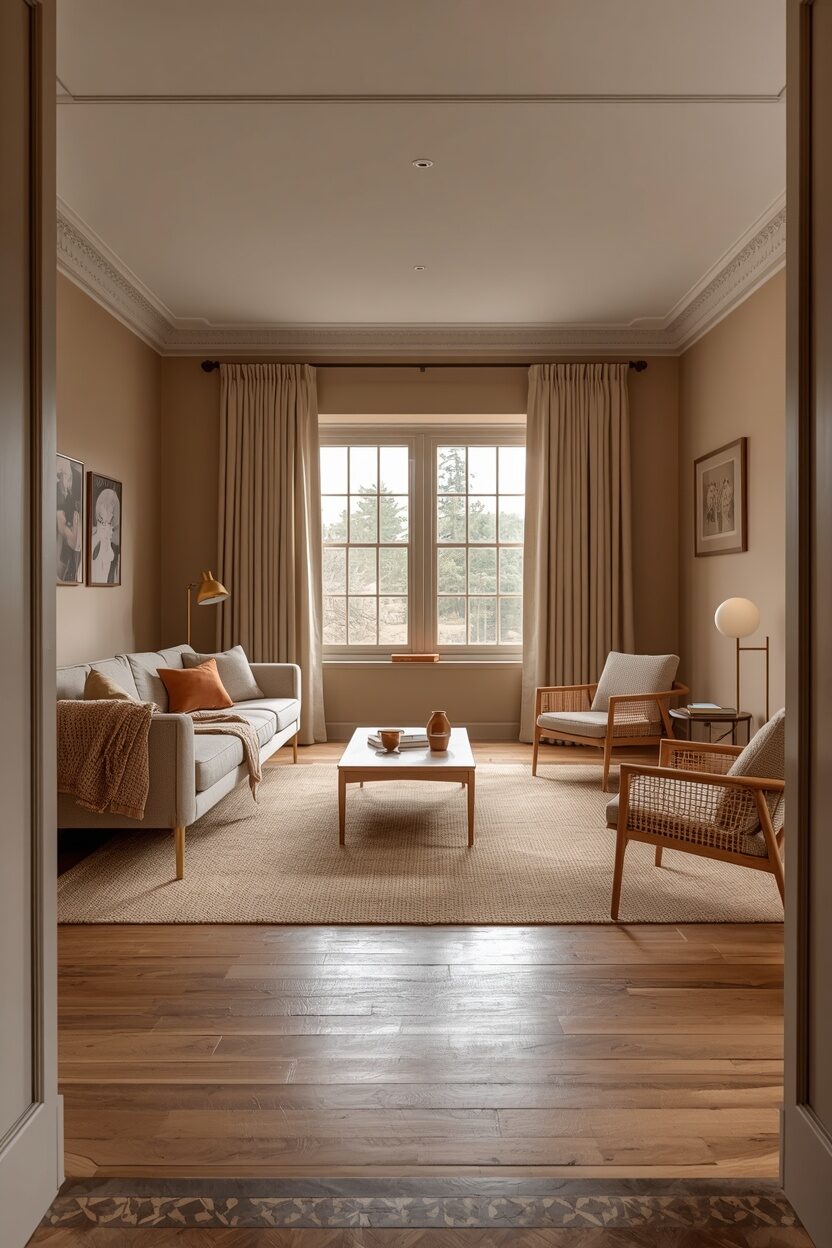
Most lounges are not badly decorated. They are badly arranged, badly lit, and hung with a rug two sizes too small — and no amount of new cushions will fix any of those three things.
That is the useful news, because arrangement and lighting cost far less than furniture. What follows is twelve changes, roughly in the order I would make them, with the actual measurements that separate a room that reads as considered from one that reads as a showroom floor sample. Some take an afternoon. One takes a tin of paint and a Saturday.
1. Pull the sofa off the wall
The default instinct is to shove every piece of furniture against the perimeter, which leaves a lake of empty floor in the middle and conversation happening across a six-foot gap. Move the sofa forward. Even three or four inches of breathing room behind it changes the read of the whole room, because the eye registers the wall and the sofa as two separate planes rather than one flat surface.
In a larger lounge, go further and float the sofa properly with a slim console behind it. In a small one, the small gap alone does the work. This costs nothing and takes four minutes.
2. Size the rug properly, or don’t bother
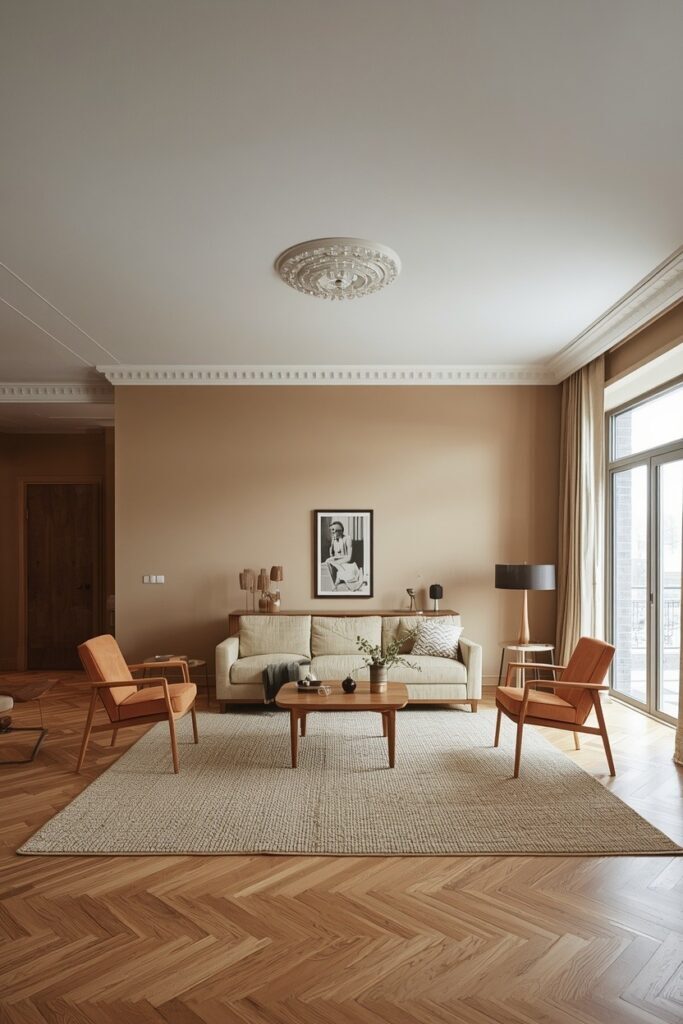
A rug that is too small is worse than no rug. It shrinks the room, chops the floor into awkward islands, and makes good furniture look cheap.
The rule I actually use: at minimum, the front legs of every seat sit on the rug. Better still, all legs sit on it, with 8 to 18 inches of bare floor showing around the edges as a border. In practice that means most lounges need an 8×10, and a lot of them need a 9×12 — considerably bigger than the 5×7 people reach for. If a large wool rug is out of budget, a big jute base with a smaller wool rug layered on top gets you the footprint for less.
3. Hang the curtains high and wide
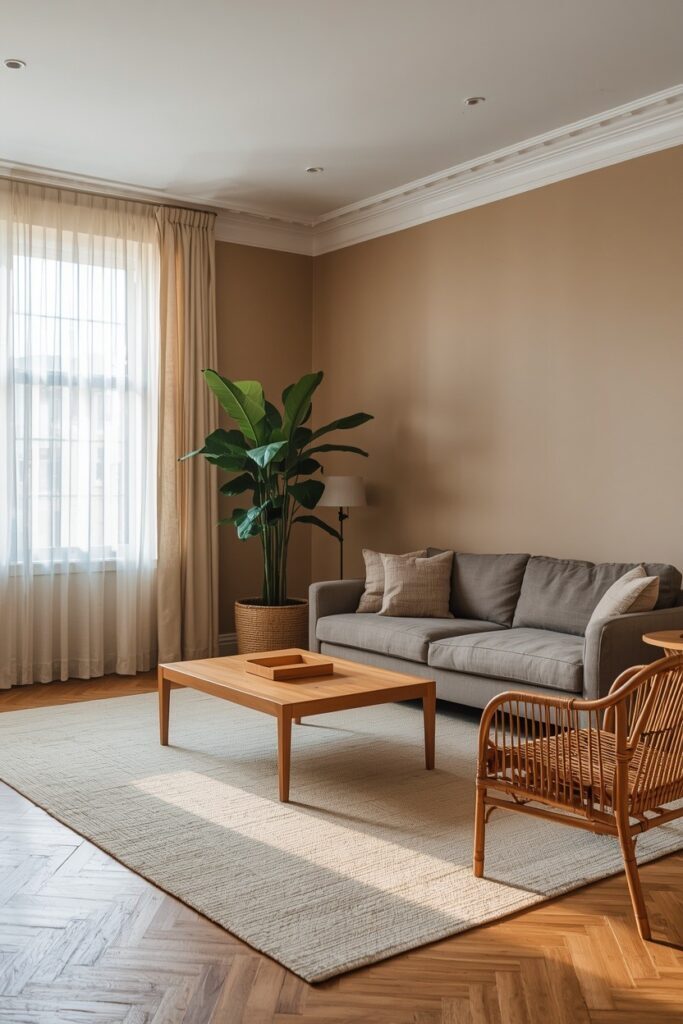
Curtain rods mounted tight to the window frame are the single most common decorating tell in a lounge, and they make the ceiling look lower than it is.
Mount the rod 4 to 6 inches above the frame — or halfway between frame and ceiling if you have the height — and extend it 8 to 12 inches past the frame on each side so the open curtains stack against wall, not glass. You gain height, you gain apparent window width, and you gain daylight, because nothing is covering the panes. Length matters too: panels should reach the floor, either just kissing it or breaking by an inch. Curtains that stop above the skirting board look like trousers that shrank in the wash.
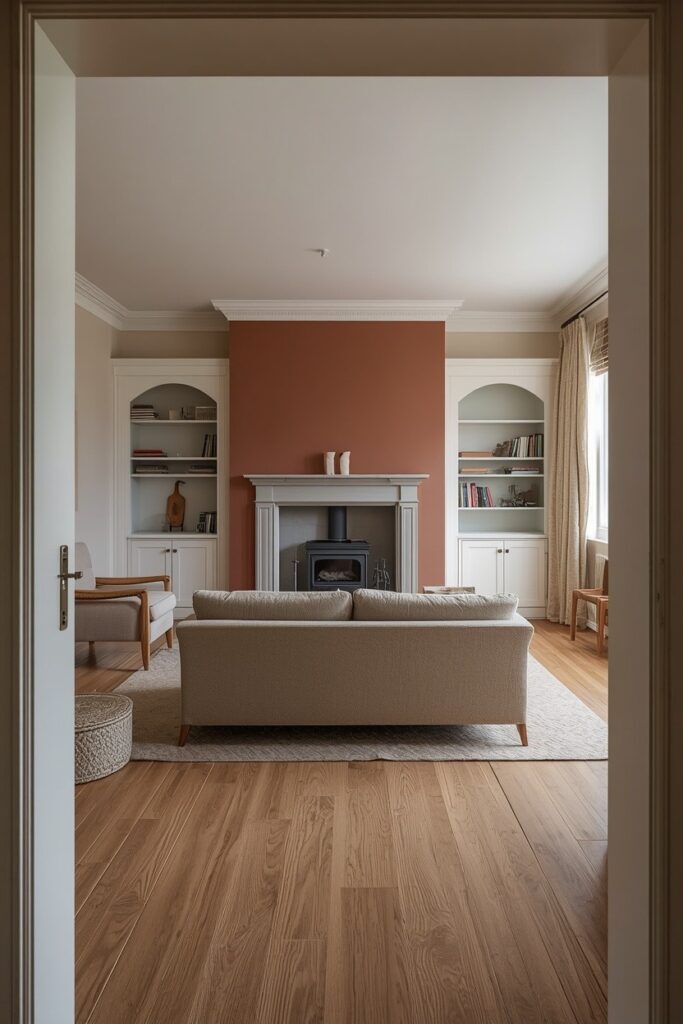
4. Colour the chimney breast or the alcoves
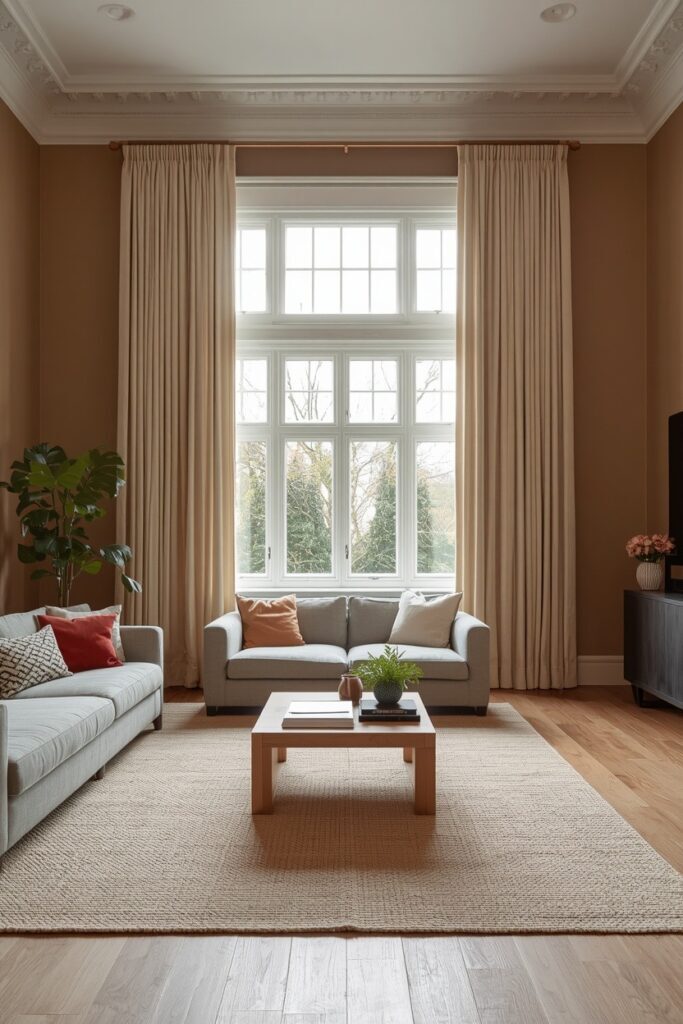
Painting an entire lounge a deep colour is a big commitment and, in a room with average light, often a regret. Painting the chimney breast or the two alcoves either side of it is a much smaller one, and it gives the room the architectural anchor it is usually missing.
Choose a muted, slightly dusty shade rather than a saturated one — a soft clay with a grey undertone, a deep olive that leans brown, an ink blue with a hint of green in it. These read as considered in daylight and warm under lamplight. Straight primary tones do neither. Paint the alcove backs and leave the shelving the wall colour if you want the recess to look deeper.
5. Light at three heights, all of it warm
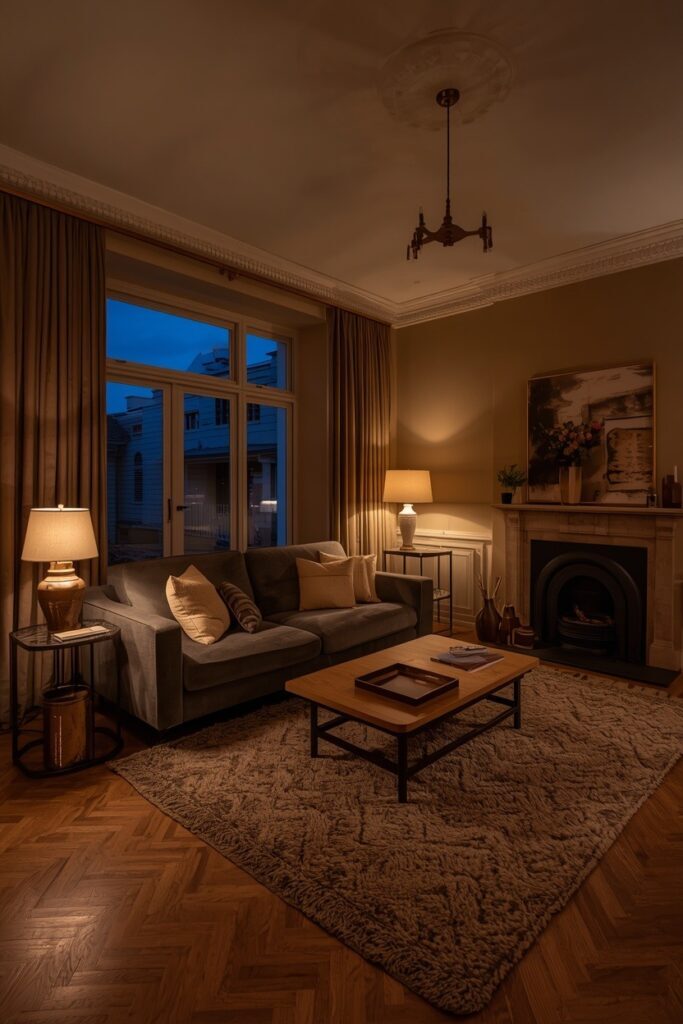
If your lounge has one ceiling light and nothing else, that is the problem. A single overhead source flattens everything under it and puts hard shadows under people’s eyes at exactly the hour you want the room to be welcoming.
Aim for three heights: something overhead on a dimmer, a table lamp at roughly seated eye level, and a floor lamp in a far corner to push light into the edges. Use 2700K bulbs throughout — 3000K is passable, and anything at 4000K or above turns a warm room clinical after dark. Mixing colour temperatures across lamps is the mistake I see most; one cool bulb in a room of warm ones reads as a fault in the room rather than in the bulb.
6. Layer three textures, not three patterns
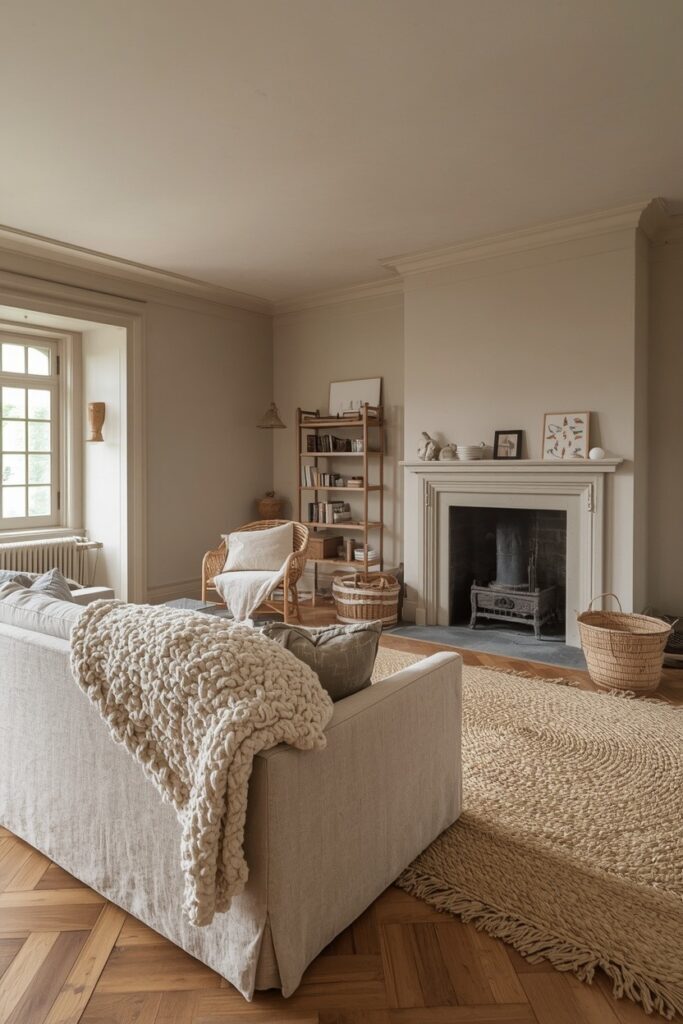
Pattern is where lounges get loud. Texture is where they get depth, and you can stack a lot of it before anything competes.
A workable combination: one smooth surface, one nubby, one natural. Brushed linen on the sofa, a chunky wool-blend or bouclé cushion against it, a jute or rattan element somewhere in the room — a basket, a chair frame, a woven tray. Add a slubby cotton throw over one arm of the sofa, pulled slightly askew so it puddles a little at the seat. That small imperfection is what stops a room looking styled for a viewing.
One caution: cream bouclé shows every mark and holds pet hair like velcro. Beautiful in a grown-up sitting room, a poor choice in a family lounge with a shedding dog.
7. Art goes lower than you think
Almost everyone hangs art too high. The centre of the piece — not the top, not the hook — should sit around 57 to 60 inches from the floor, which is standard gallery eye level.
Over a sofa, use a different measure: the bottom edge of the frame should land 6 to 10 inches above the sofa back so the two read as a group rather than two unrelated objects. Width matters as much as height. Art should span roughly two-thirds of the furniture beneath it, so a small print marooned above a three-seater will always look like an accident. If you only own small pieces, group them with a consistent 2 to 3 inch gap and treat the whole cluster as one rectangle.
8. Build the coffee table in a triangle
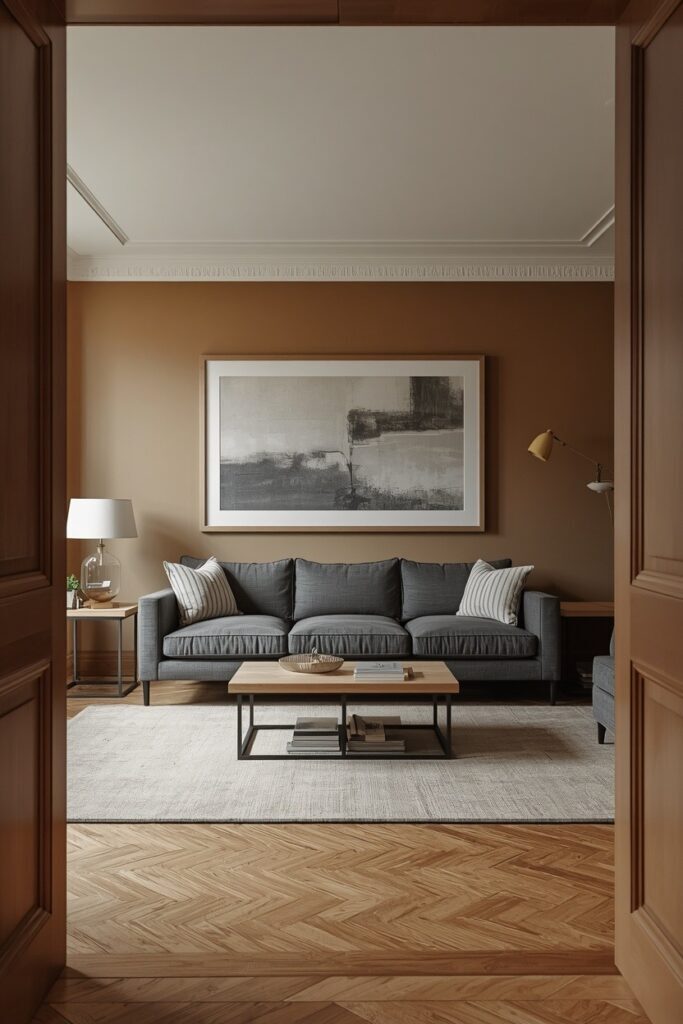
A coffee table with things scattered evenly across it always looks like clutter. A coffee table with three points of interest at three different heights looks arranged.
Start with a tray — it corrals the small stuff and gives your eye a boundary. Then build the triangle: something tall (a slim vase, a candle, a small plant), something horizontal (a short stack of books, two or three, no more), and something sculptural and low (a bowl, a stone object, a lidded box). Leave a good half of the surface empty. That empty half is not wasted space; it is where mugs go, and it is the reason the arrangement doesn’t read as a display.
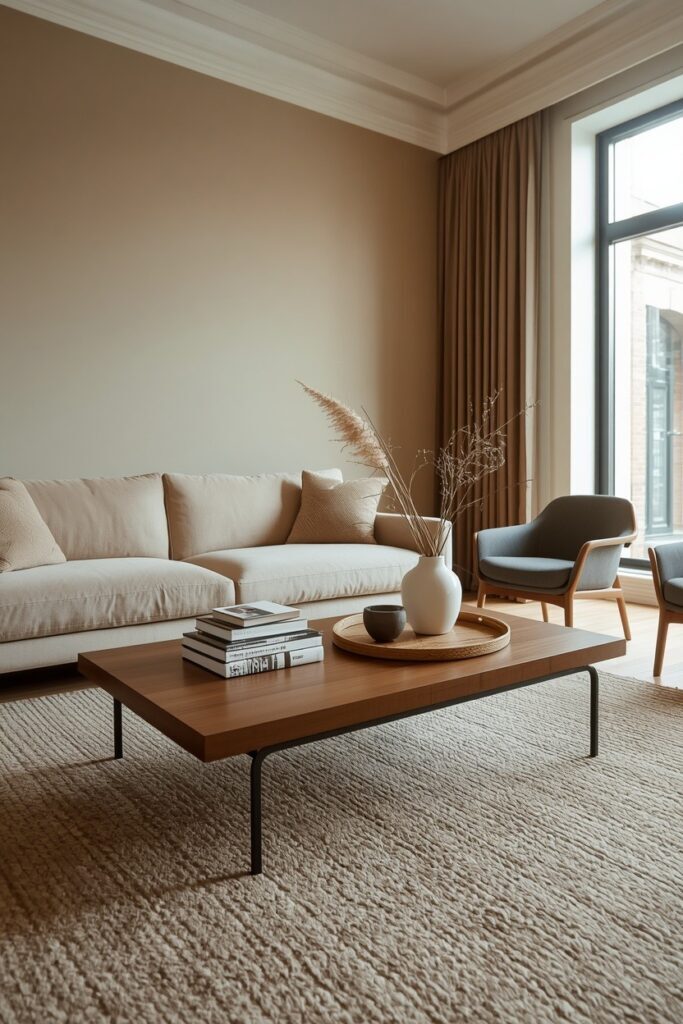
9. Put the mirror opposite the window, not above the sofa
The reflex is to hang the big mirror over the sofa or the fireplace. Look at what a mirror there actually reflects: the opposite wall, usually blank.
Hang it where it can catch daylight instead — on the wall facing or adjacent to the window — and the room borrows light it doesn’t have. This matters most in a north-facing lounge, where the natural light stays cool and thin all day. A large mirror with a warm frame, oak or aged brass, will bounce that light around and take some of the greyness out of it. One big mirror beats three small ones, and leaning a very large one against the wall works if you can secure it properly and there are no toddlers in the house.
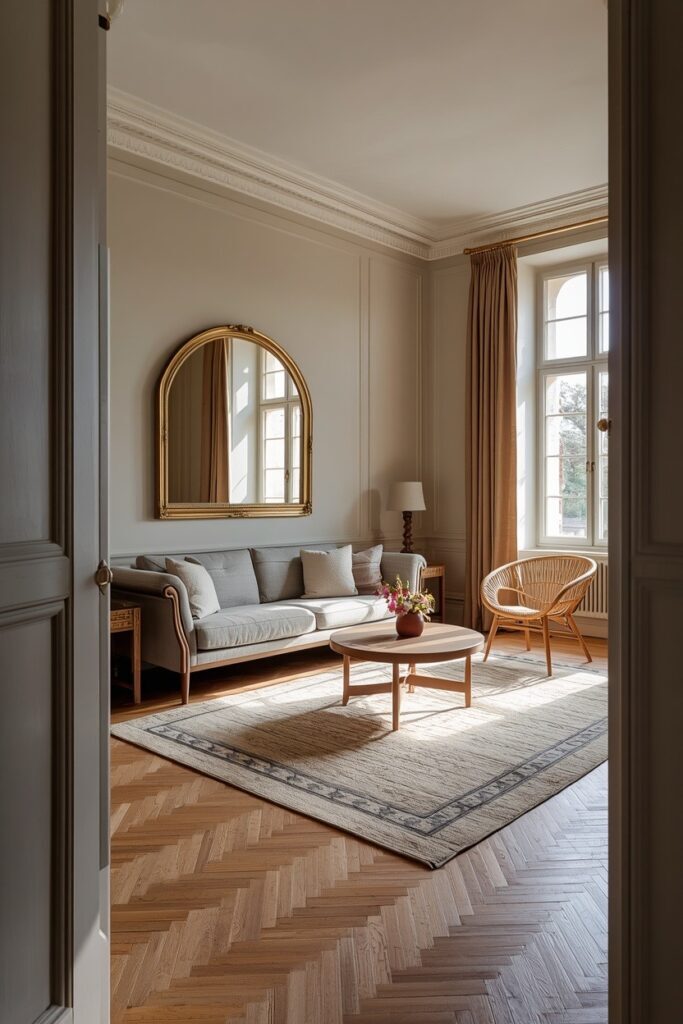
10. Paint the wall behind the television dark
Nobody wants to look at a black rectangle on a pale wall. You cannot hide a television and you shouldn’t waste money trying, but you can stop it dominating.
Paint the wall behind it something deep — charcoal with a warm undertone, a dark olive, an inky blue-green — and the screen stops reading as a hole and starts reading as part of a dark plane. Flank it with shelving or a low sideboard in a matching or closely related tone so the composition has width. One warning worth taking seriously: a dark wall in a room with weak lighting goes cold and cave-like after sunset, so this idea and idea five are a package. Do them together or don’t do either.
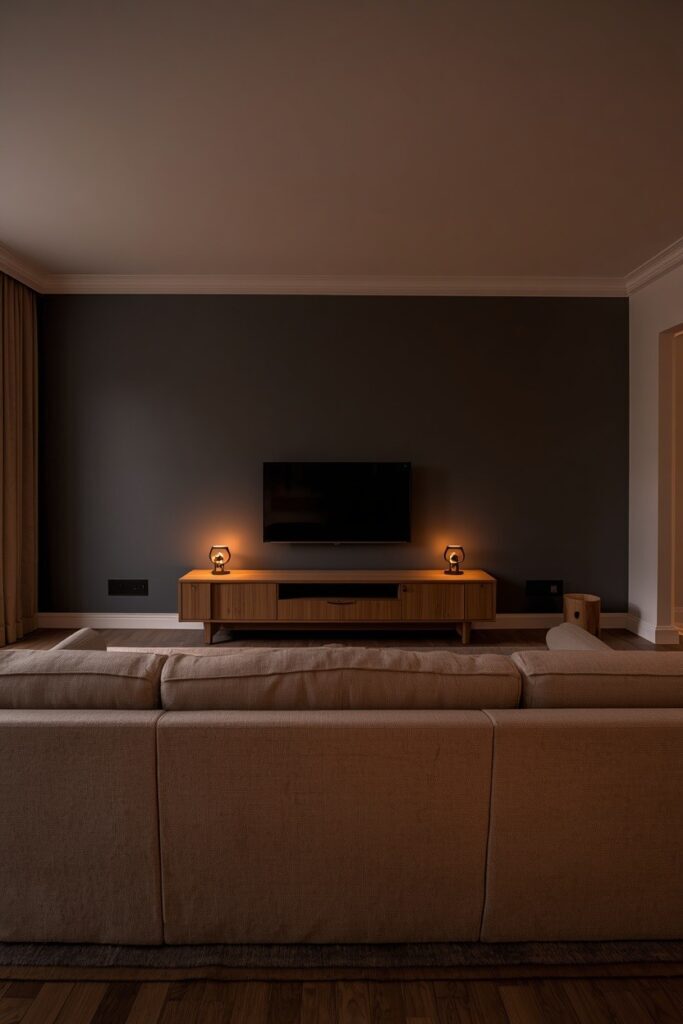
11. Angle the seating so people can talk
A lounge arranged entirely around the television is a viewing room. Turning it back into a sitting room takes one adjustment: angle two chairs toward the sofa at roughly 45 degrees rather than lining them up flat against the far wall.
Keep the conversational distance sensible — around 8 feet at most between facing seats, close enough to talk without raising your voice. Every seat should be within easy reach of a surface to put a drink on, which usually means adding one small side table rather than a second big one. If your room is long and narrow, two smaller seating zones will always beat one stretched-out row.
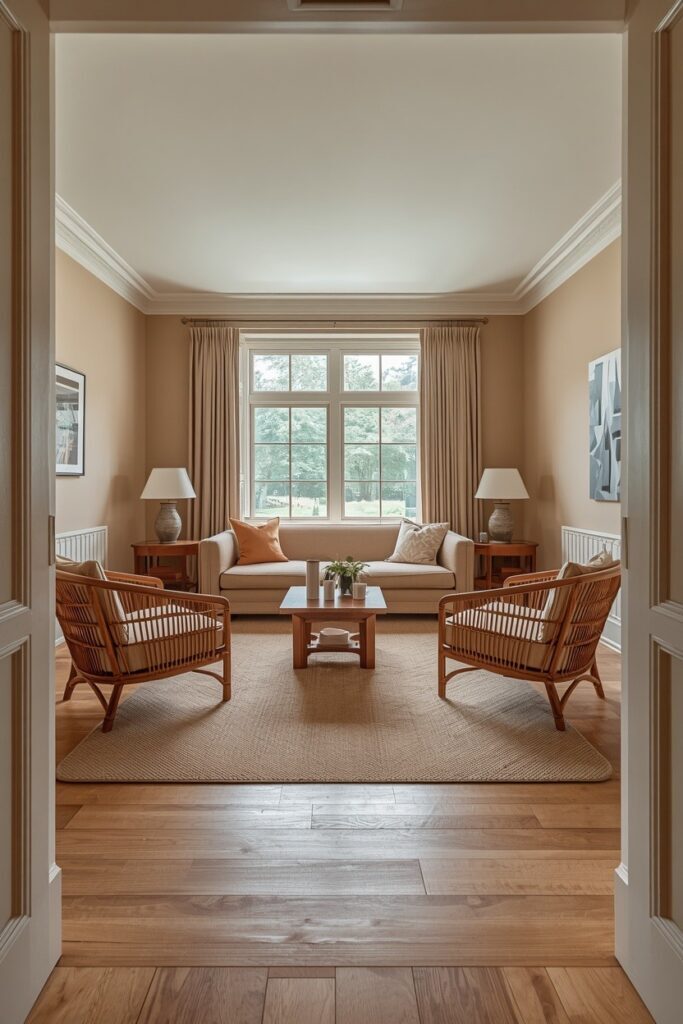
12. One large plant beats five small ones
Small plants dotted around a lounge read as clutter. One substantial floor plant reads as architecture.
Go for height — something that reaches at least 4 feet, in a basket or a heavy ceramic pot that suits the room rather than the nursery pot it arrived in. Corners next to a window are the obvious home, partly because that is where the light is and partly because a corner is where a room usually goes dead. Fiddle leaf figs get all the attention and kill themselves at the slightest draught; a rubber plant or a kentia palm will forgive you far more. If your lounge genuinely has poor light, a good faux tree at a distance is a more honest choice than a real plant slowly dying in public.
Where I’d start if I only did three things
Rug size, curtain height, and a second light source. In that order.
A correctly sized rug fixes the proportions of the entire room and makes furniture you already own look better than it is. Raising the curtain rod takes twenty minutes and adds visual height you cannot buy any other way. And one warm table lamp changes the room every single evening, which is when you actually use it. Paint, art, and plants are all worth doing — they are just not what is holding the room back.
FAQ
Can I do any of this in a rented flat?
Most of it. Rugs, lamps, furniture placement, plants, and coffee table styling need no permission at all. For curtains, a tension rod or a landlord-approved bracket set with the original fixings kept in a labelled bag will usually get you there, and filled screw holes are a small job at move-out. Paint is the only genuine sticking point, and peel-off adhesive versions of a dark TV wall exist if you want the effect without the argument.
My lounge is north-facing and everything looks grey. What changes?
Warm every choice by one step. Avoid cool greys and stark whites on the walls, which will go blue in that light — pick shades with a yellow, red, or green undertone instead. Lean on oak and warm brass rather than chrome and black metal, keep every bulb at 2700K, and use the mirror trick in idea nine. North light is soft and even, which is genuinely lovely; it just needs warmth built back in deliberately.
How do I make a very small lounge work?
Choose fewer, larger pieces rather than more small ones. One properly sized rug, one substantial sofa, one big mirror, one large plant. Small furniture scattered around a small room makes it look smaller and busier. Raise the curtains as high as the ceiling allows, keep the floor visible around the edges of the rug, and pick a sofa with legs — being able to see floor beneath furniture buys you a surprising amount of visual space.
What’s a sensible order to do all this in?
Layout first, always — move everything before you buy anything, because the arrangement determines what you actually need. Then rug, then lighting, then curtains. Paint next, since you will want to see it against the furniture that is staying. Art, plants, and surface styling go last, once the room’s shape is settled. Doing it in this order stops you buying a rug for a layout you’re about to abandon.
Conclusion
A lounge that works is mostly a matter of proportion and light, not spending. Get the rug big enough, get the curtains high enough, and get a warm lamp burning at eye level by six o’clock — the rest is refinement on top of a room that already reads right.