
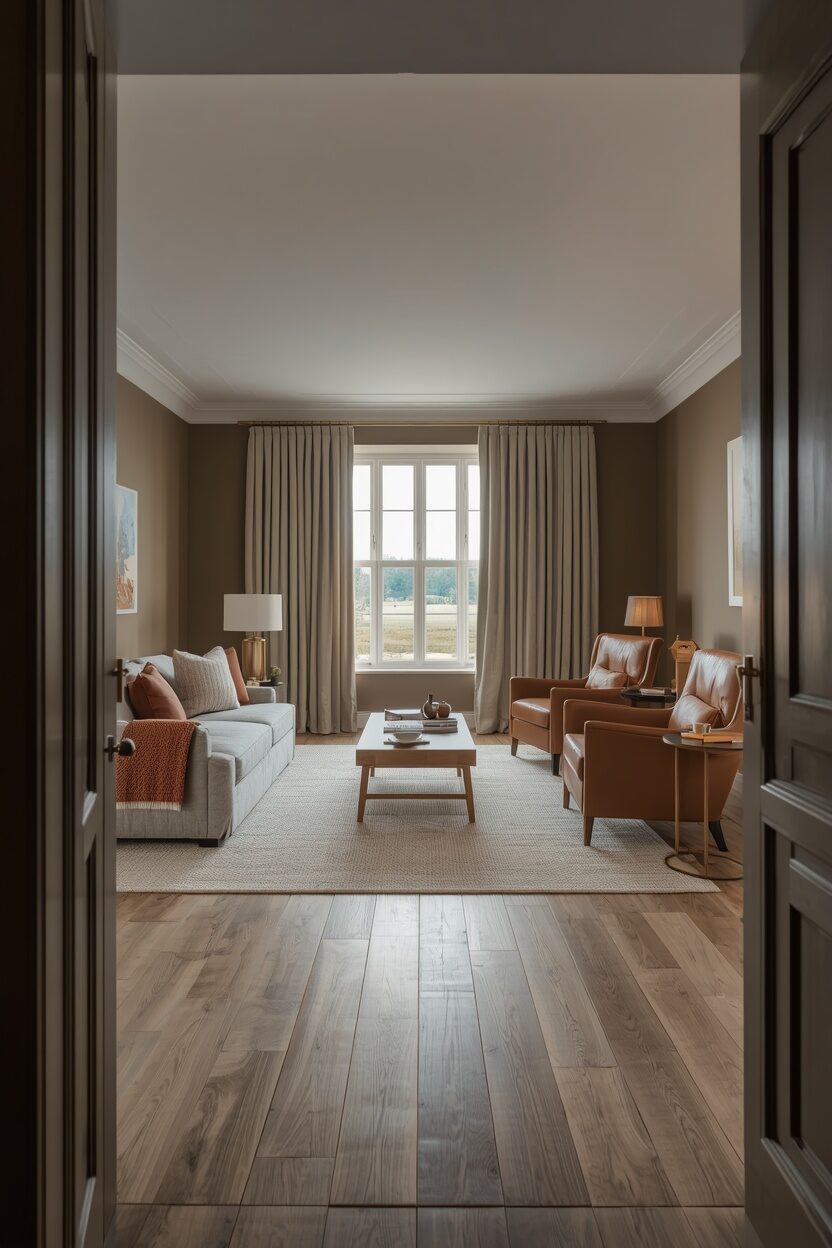
Grey gets blamed for a lot of dull rooms, and almost none of it is grey’s fault. The problem is nearly always one of two things: the wrong undertone for the light in that particular room, or grey used on its own with nothing warm to push against.
Get those two right and grey does what people hoped it would do in the first place — it recedes, it flatters everything placed against it, and it stops competing with your furniture. Here are twelve ways to make a grey living room read as considered rather than corporate, starting with the decision that matters more than all the others combined.
1. Pick the undertone before you pick the shade
Every grey leans somewhere. Some lean blue, some lean green, some lean brown or purple, and that hidden undertone is what determines whether your living room looks serene or looks like a waiting area.
The shortcut: hold your sample against a sheet of plain printer paper. Against pure white, the undertone shows itself immediately — you will suddenly see the blue in a grey that looked neutral on the chart. Then test it on the wall, in a big patch, and look at it at three times of day. Warm greys, the ones with brown or yellow beneath them, are the safest bet in most homes and are usually sold as greige. Cool blue-greys are stunning in a bright south-facing room and miserable in a dark one.
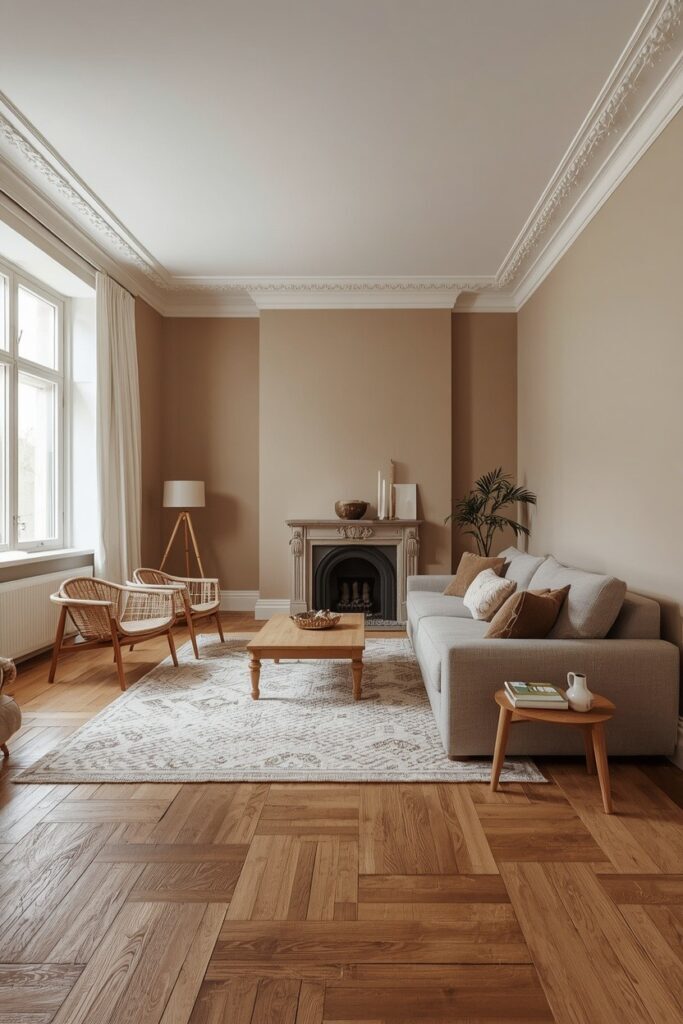
2. Pair grey with cream, not brilliant white
This is the change that rescues most grey rooms, and it costs the price of a different tin of paint.
Brilliant white woodwork next to grey walls creates a hard, slightly clinical edge — the white looks blue and the grey looks flat. Swap to a soft chalky off-white or a warm cream on skirting, architraves, and ceiling, and the whole scheme softens without losing contrast. Do the same with textiles. Cream cushions, oatmeal throws, and undyed linen sit against grey far more comfortably than optic white, which always looks like it wandered in from a different scheme.
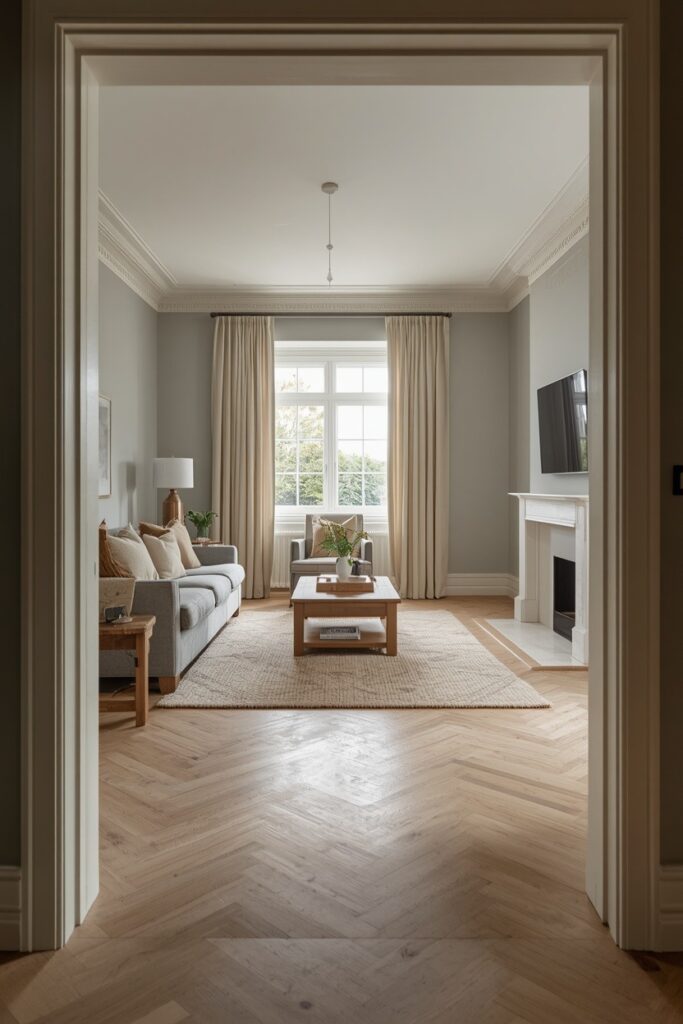
3. Bring in wood, and make it warm wood
Grey and wood is the most reliable pairing there is, but the species matters. Cool-toned wood — grey-washed oak, ash, anything limed — doubles down on the coolness and leaves you with a room that has no temperature at all.
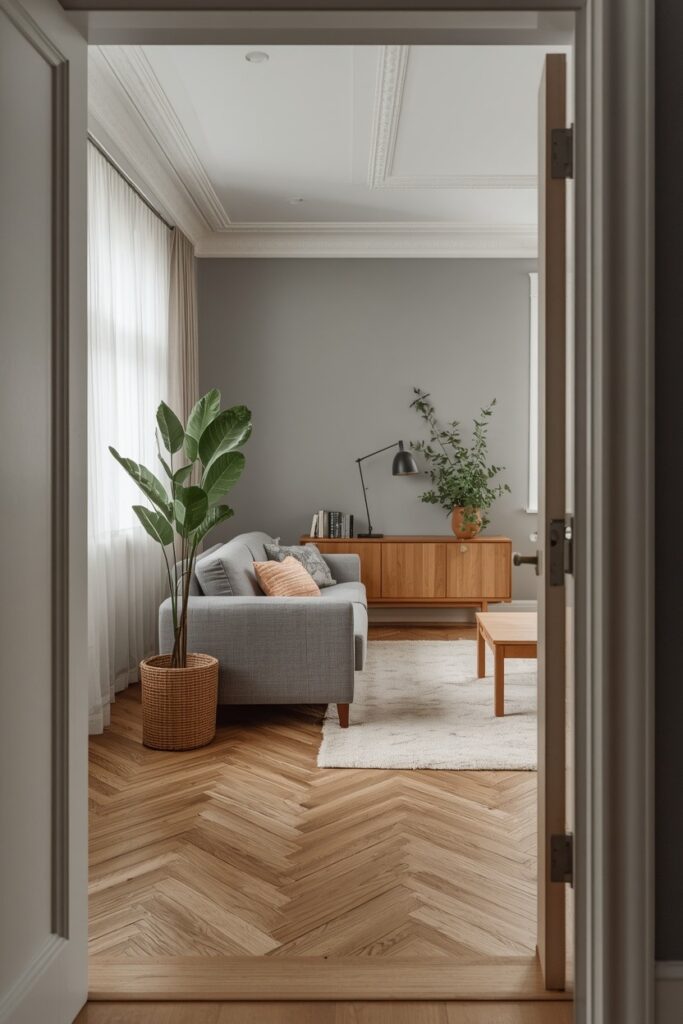
Reach for the warmer end instead: honeyed oak, walnut, caramel-toned rattan, even a mid-brown vintage piece with some orange in the patina. One substantial wooden element does most of the work, usually the coffee table or the floor. Two or three related but not matching woods look far better than a full matching set, which reads as a furniture package rather than a room assembled over time.
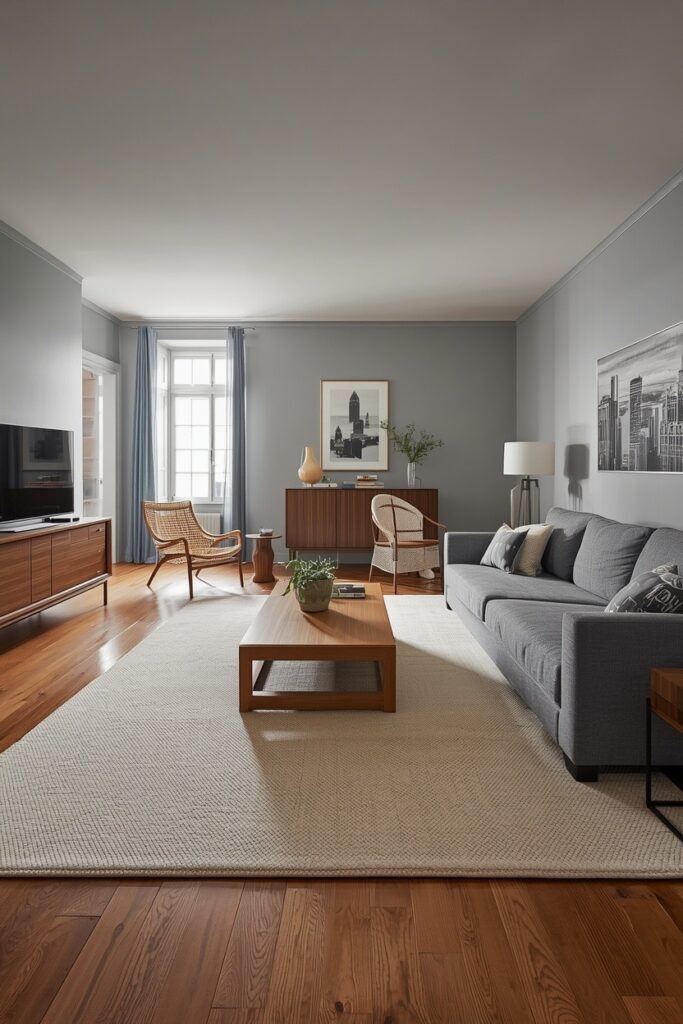
4. Choose one warm accent colour and commit
Grey is a background. It needs something to be a background to, and one colour used properly beats four colours used timidly.
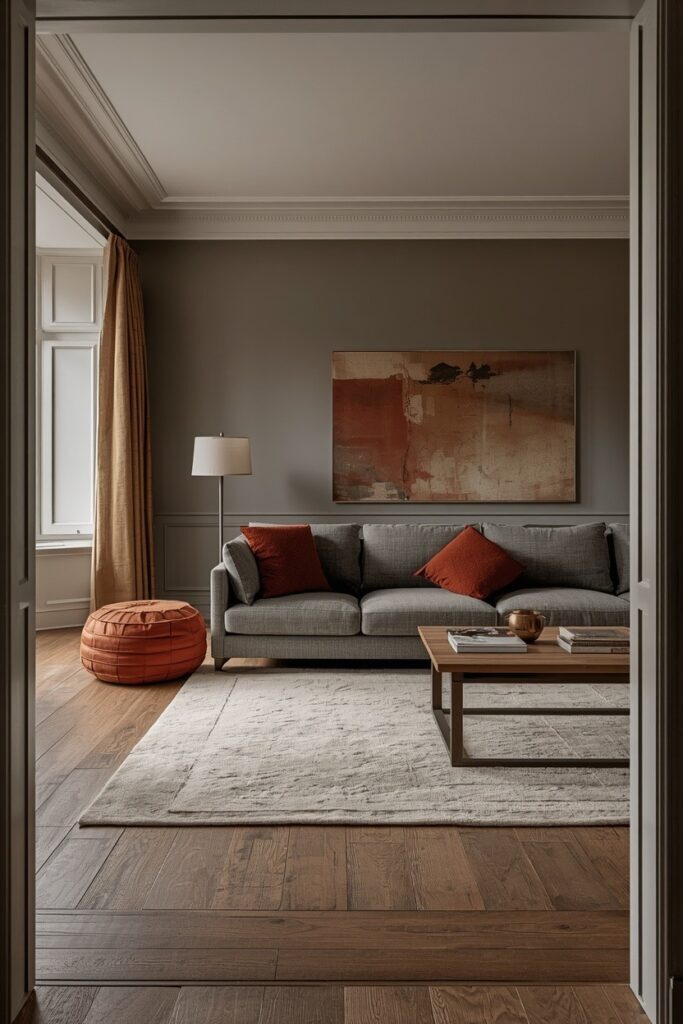
The shades that do the most against grey are all on the warm side: rust and terracotta, mustard or soft ochre, dusty blush, deep olive. Pick one. Then place it at least three times around the room at different heights so the eye travels — a pair of cushions on the sofa, something at floor level like a rug border or a pouffe, and something up high such as art or a lampshade. Three placements is the point at which an accent stops looking accidental. Two looks like a leftover.
5. Texture is not optional in a grey room
In a colourful room you can get away with flat surfaces. In a grey one you cannot, because with the colour contrast turned down, texture is the only thing left generating depth. A grey room with smooth walls, a smooth sofa, and a low-pile rug will always look like a rendering.
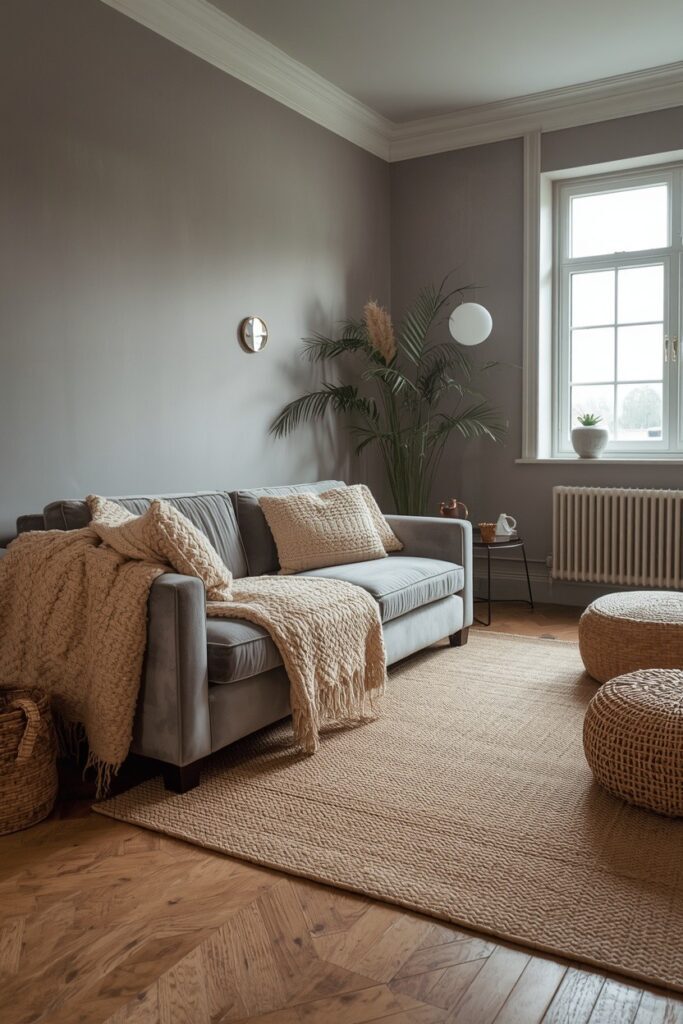
Stack it deliberately. A brushed linen or washed velvet sofa, a chunky wool-blend or bouclé cushion against it, a jute or sisal element underfoot, a slubby cotton throw with visible weave. Washed velvet in particular earns its place here — it catches light differently across the day and gives grey somewhere to shift. If everything you own in the room is smooth, add the rough things first and the colour later.
6. Go dark on one wall instead of mid-grey everywhere
Mid-grey on all four walls is where rooms go inert. There is no light wall to lift the space and no dark wall to give it depth, just a uniform middle tone that flattens everything.
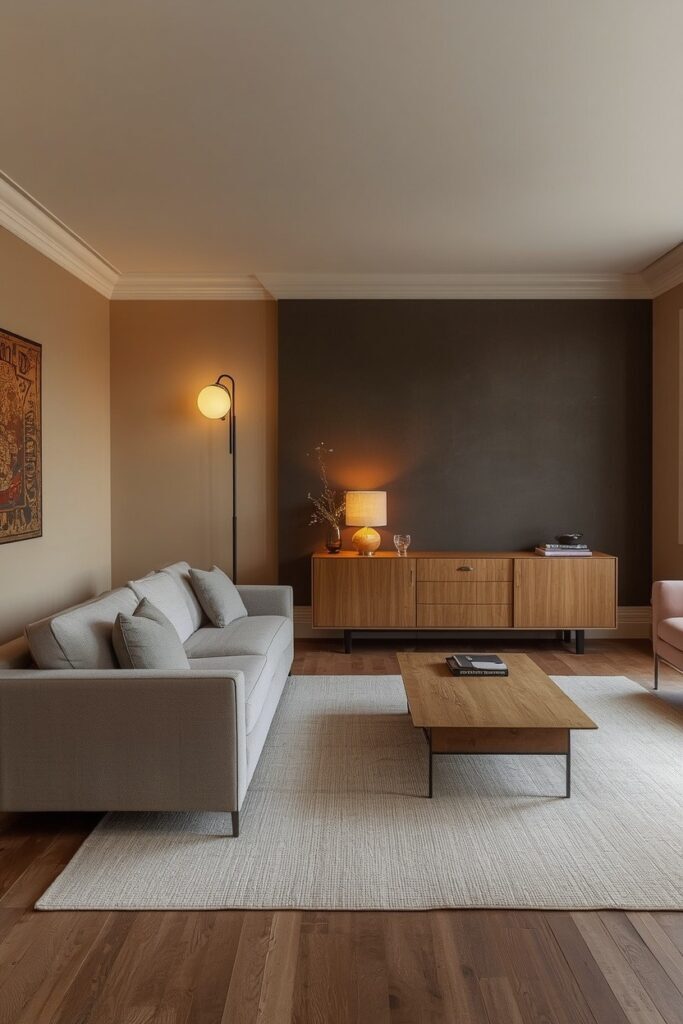
A better structure: warm off-white or the palest greige on three walls, and a deep charcoal on the fourth — ideally the chimney breast or the wall behind the television. Choose a charcoal with warmth in it, one that leans brown or green rather than blue, or the wall will read as slate at night. The contrast gives the room a front and a back, which is what makes photographs of grey rooms look three-dimensional and yours look flat.
7. Don’t put a grey rug in a grey room
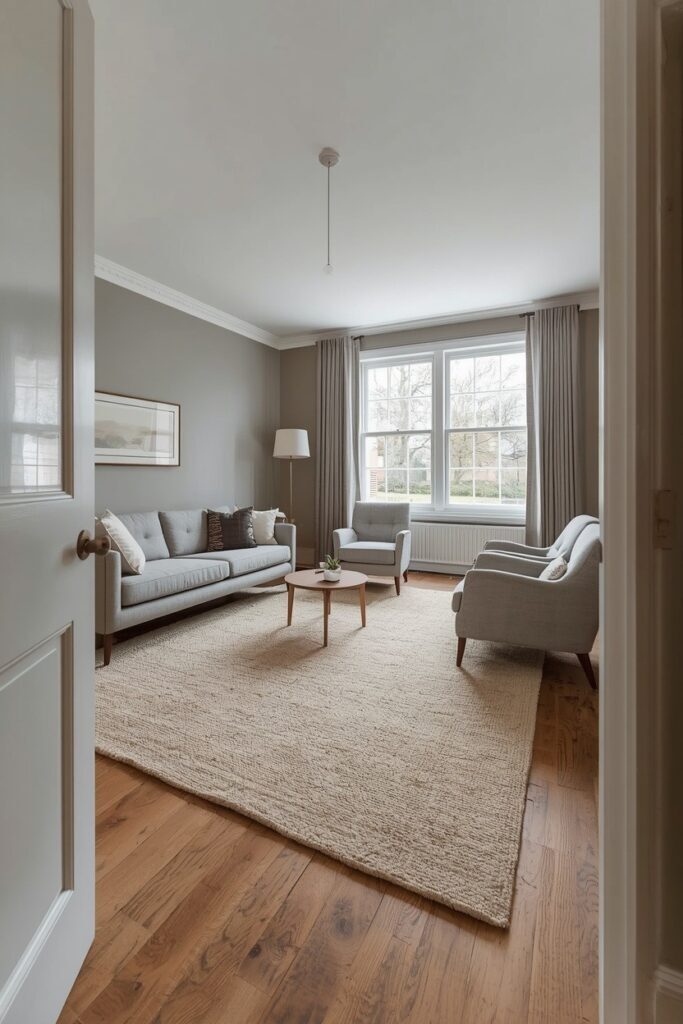
Matching your grey rug to your grey sofa to your grey walls is the fastest route to a room with no structure at all. Everything sits in the same tonal band, nothing separates, and the space reads as a single grey blur.
Break the floor away from the walls. A cream or oatmeal wool rug lifts the whole room and makes the grey furniture look deliberate. A jute or seagrass rug adds warmth and pattern at the same time. If you are set on grey underfoot, go several shades darker than the sofa and add a visible texture — a chunky flatweave, a deep pile, something with a border — so the difference is doing real work rather than being a slight change of shade.
8. Use brass and warm metals, not chrome
Metal finish is a small decision with an outsized effect on how warm a grey room reads. Chrome, polished nickel, and cool black hardware all reinforce the grey. Aged brass, antique gold, and bronze push against it.
Repeat one warm metal in three or four places — a floor lamp, a mirror frame, curtain rod finials, the legs of a side table. Aged and brushed finishes look considerably better than bright polished ones in a domestic room; polished brass reads as hotel lobby. If your room already has black window frames or black door handles, keep some black in the scheme rather than fighting it, and let the brass appear at eye level and above where it catches the lamplight.
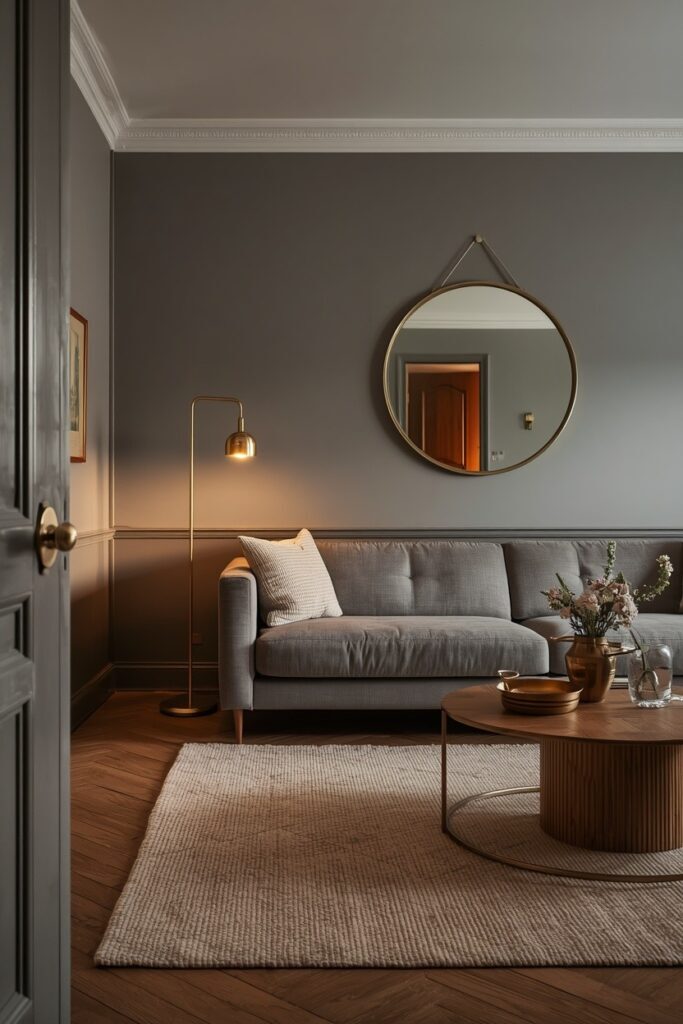
9. Keep every bulb at 2700K
A grey living room punishes bad lighting more than any other colour scheme. Cool white bulbs at 4000K will strip the last of the warmth out of grey walls and leave the room looking like an office after hours.
Fit 2700K throughout — not just in the main light, but in every lamp, because one mismatched bulb is visible from across the room. Put the ceiling light on a dimmer and rely on lamps at two other heights in the evening. Then check what your bulbs are doing to the paint: grey shifts more under artificial light than almost any other colour, and a shade that looked warm in the shop can turn distinctly lilac under the wrong bulb. Test the paint and the bulb together before you commit to either.
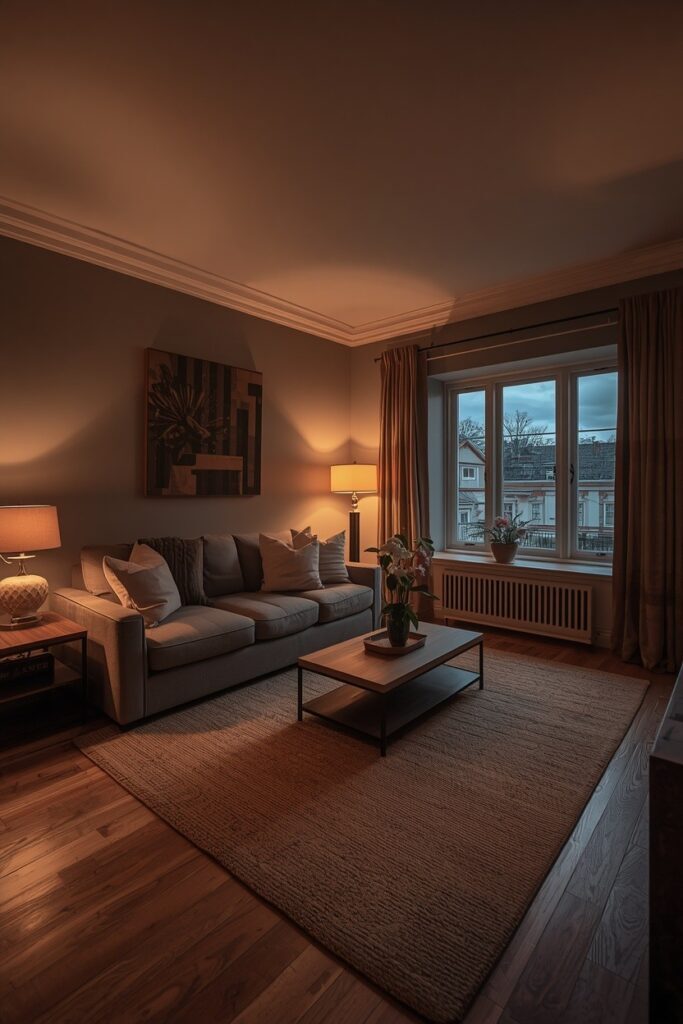
10. Add black in small, deliberate doses
Grey without black has no punctuation. Everything hovers in the middle of the tonal range and the room looks slightly out of focus.
Small amounts of true black sharpen it up instantly — thin picture frames, a black metal lamp base, dark ceramics, the legs of a chair, a black-and-white photograph. Keep the quantity low, roughly one black element per major zone of the room, and keep the pieces small. Large black furniture in a grey room tips the balance from crisp to heavy, and once it’s heavy you need considerably more warmth elsewhere to bring it back.
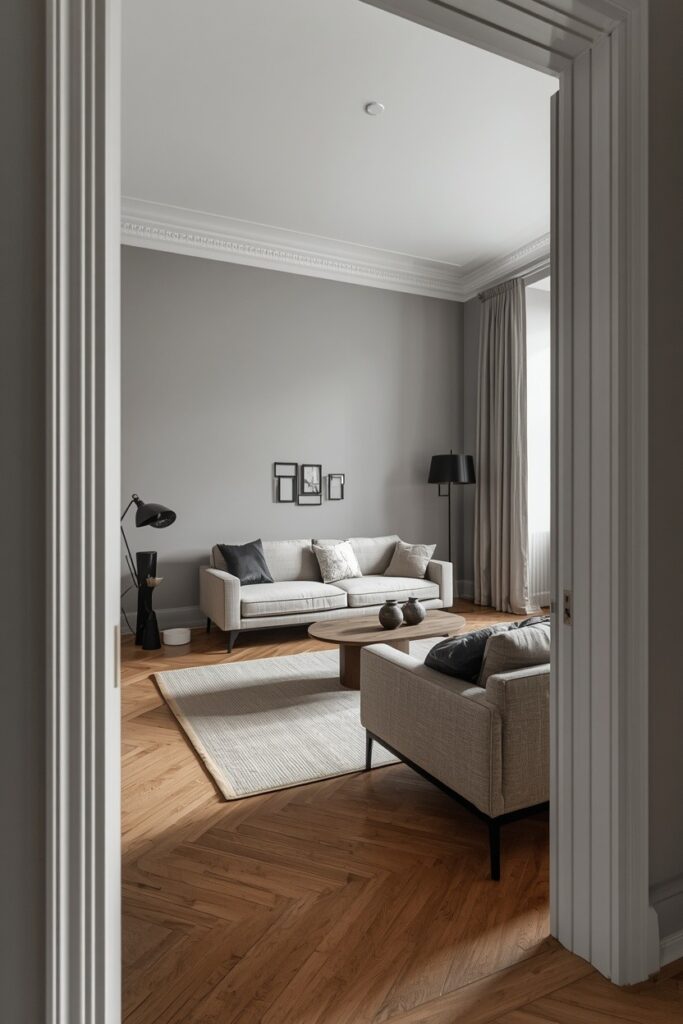
11. Break up a large grey sofa
A big grey sofa is the most common starting point for a grey living room, and left alone it becomes a large flat mass that dominates the space.
Break the surface. Two large cushions in a contrasting texture at the outer corners, one smaller cushion in your accent colour, and a throw folded over one arm rather than draped symmetrically across the back. Vary cushion sizes — a 20 inch square next to an 18 inch one has visible hierarchy, four identical ones do not. And leave the middle seat clear. A sofa buried under eight cushions is a sofa nobody sits on, which is the opposite of the point.
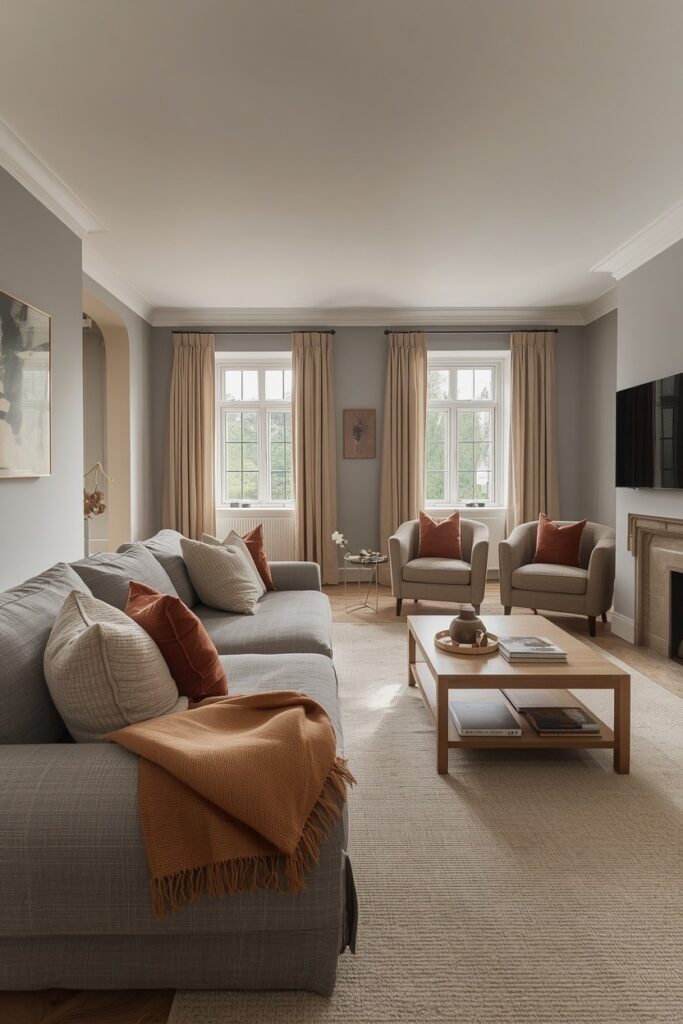
12. Let greenery do the warming
Plants are the cheapest warm accent available and the only one that changes with the seasons. Against grey walls, green reads as remarkably rich — far stronger than it does against beige — so you need less of it than you think.
One large floor plant in a corner near the window will do more than a row of small pots on a windowsill. Choose species with substantial leaves that hold their shape against a flat background: a rubber plant, a kentia palm, a monstera if you have the space for it. Put it in a woven basket or a warm terracotta pot rather than plastic. In a genuinely dark room, dried stems in a tall vessel are the honest alternative — eucalyptus or pampas hold their colour for a year or more and ask nothing of you.
Where I’d start if I only did three things
Change the white, change the rug, change the bulbs.
Repainting brilliant white woodwork to a soft chalky cream takes one afternoon and immediately removes the clinical edge that makes people say a grey room looks cold. Swapping a grey rug for cream or jute separates the floor from the walls and gives the room structure it didn’t have. And putting 2700K in every lamp costs very little and changes the room every evening. None of these require new furniture, and together they fix most of what goes wrong with grey.
FAQ
My living room is north-facing — should I avoid grey altogether?
No, but be strict about undertone. North light is cool and blue, so it will amplify any blue sitting in your grey and can turn a pretty shade genuinely cold. Choose greys with a clear brown, yellow, or green undertone, keep the depth on the lighter side, and put your warmth in the fixed elements: cream woodwork, honey-toned wood, aged brass, warm bulbs. Sample large patches and check them at 4pm on a grey day, which is grey paint’s worst moment.
Can I do a grey living room in a rental without painting?
Yes, and arguably it’s easier — you skip the hardest decision. Build the grey through soft furnishings instead: a grey sofa cover or throw, grey cushions, a charcoal pouffe, and let the landlord’s magnolia walls act as your warm neutral. Add a large cream or jute rug, warm wood, and brass lamps. A big leaning mirror and full-length curtains hung high do more for a rental than paint would anyway.
Grey and beige at once — is that a mistake?
Not any more, and greige exists precisely because the two work in the same room. The trick is to avoid a 50/50 split, which reads as indecision. Let one lead — say 70 percent warm neutrals with grey as the structural colour on the sofa and one dark wall, or the reverse — and repeat each tone at least three times so it looks planned. Keep the undertones in the same family: a warm grey with a warm beige, never a blue-grey with a yellow beige.
How do I stop a grey living room dating?
Keep the grey on the things that are easy to change and the warmth on the things that aren’t. Grey walls can be repainted in a weekend; a grey-toned floor, grey fitted units, or a grey-washed wood floor are commitments you’ll live with for a decade. Put your money into warm timber floors and simple joinery, and let paint, cushions, and rugs carry the trend. That also means you can shift the room to a different colour later without touching anything structural.
Conclusion
Grey is a background colour that people keep asking to be the main event. Give it warm woodwork, warm wood, warm metal, and one honest accent colour to sit behind, and it will quietly make everything in the room look better — which is all it was ever meant to do.