
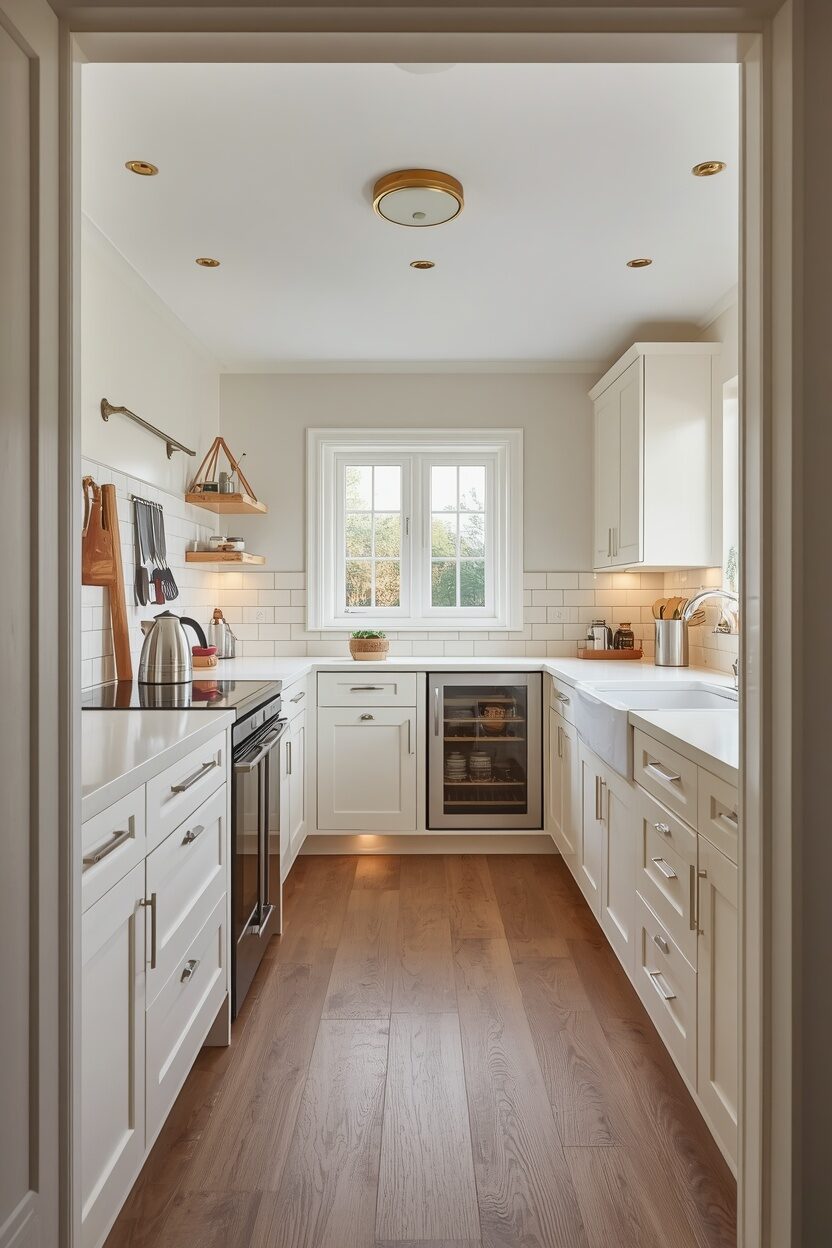
Most kitchens are not short of storage. They are short of reachable storage — the cupboards are full, but half of what’s in them is stacked three deep behind something else, so the daily items get left out on the counter instead.
The fix is to open up the space you already own: the wall between the worktop and the wall cabinets, the dead air under those cabinets, the vertical inches above a jar, and the awkward gaps beside appliances. Below are twelve pieces of storage that do that, with the dimensions worth knowing and, for renters, the versions that need no drilling. If you haven’t yet decided what actually deserves counter space, do that first — storage works far better once the editing is done.
1. Hang a rail across the wall behind the counter
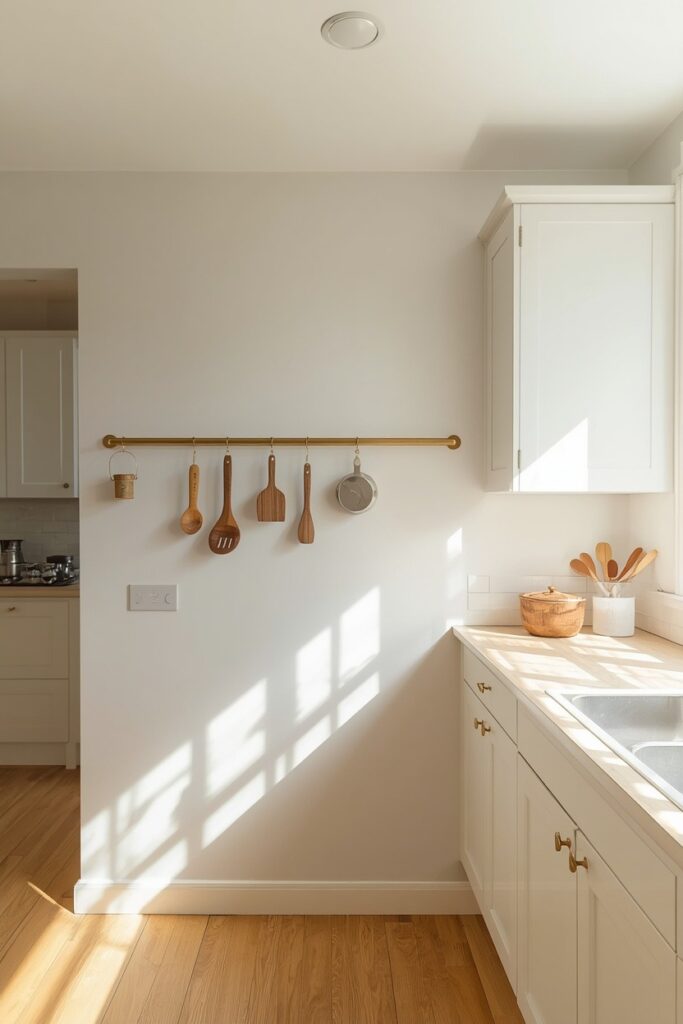
The strip of wall between worktop and wall cabinets is usually the most underused surface in the kitchen, and a single rail turns it into hanging storage for everything that would otherwise stand in a crock.
Mount it around 18 inches above the worktop — high enough to clear a mixing bowl, low enough to reach without stretching. Standard rails take S-hooks for utensils, plus small hanging pots for salt or spoons, and clip-on containers for oil bottles. Keep it to one run rather than several, since a wall of hooks starts to read as a hardware display. And keep it away from directly behind the hob, where hanging tools collect a grease film and need washing rather than wiping.
2. Swap the knife block for a magnetic strip
A knife block occupies a surprising footprint of prime worktop — usually right in the prep zone — for something that could hang flat against a wall.
A magnetic strip mounted on the splashback holds a full set in a few inches of depth, keeps blades visible so you grab the right one, and lets them air-dry properly rather than sitting damp in a slot. Mount it around 16 to 18 inches above the worktop and well clear of the hob. Two cautions worth taking seriously: it needs a genuinely strong magnet rated for chef’s knives, tested with your heaviest blade before you trust it, and it is not the right choice in a house with small children, where a locked drawer with an in-drawer knife tray is the sensible version of this idea.
3. Use the dead space under the wall cabinets
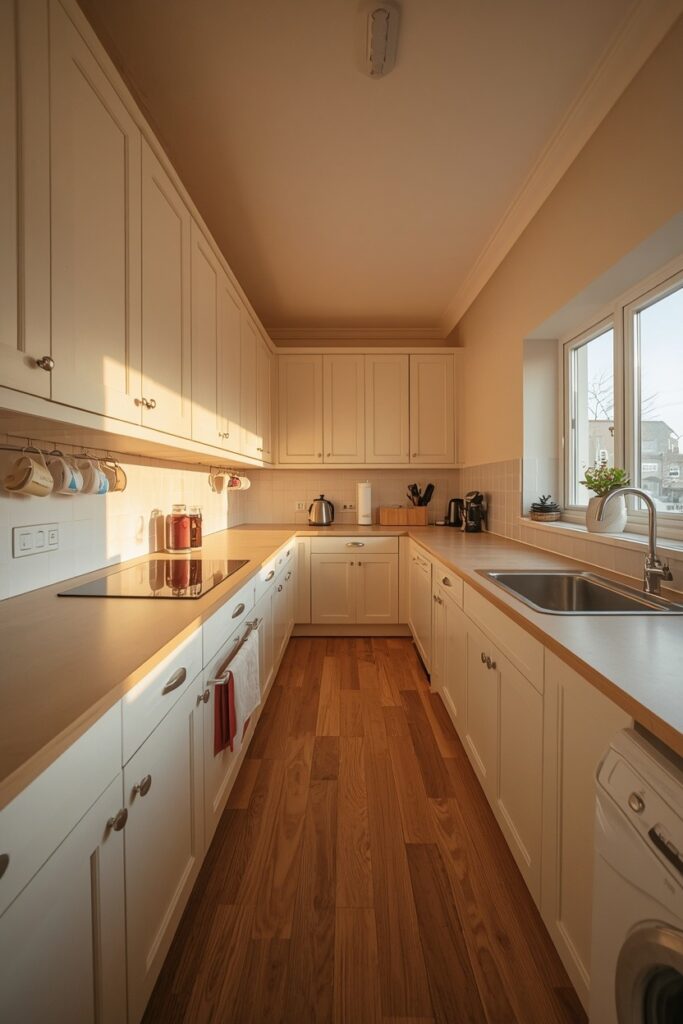
There is a band of unused air between the bottom of your wall units and the worktop, and it will take mugs, small baskets, a paper towel holder, or a slim spice rack without costing you a single inch of counter.
Under-cabinet fittings screw straight into the base of the carcass, and there are hook-on versions that slide over the shelf edge with no drilling at all. Mugs on hooks are the highest-value use — they empty an entire cabinet shelf, and mugs are the thing most likely to be sitting out anyway. Measure the clearance before ordering: leave at least 15 inches between the worktop and the lowest hanging item, or you lose the ability to work underneath and the whole gain is cancelled out.
4. Add a riser and double your usable surface
A riser is a shelf that sits directly on the counter, and it doubles the storage of whatever footprint it covers by using the vertical inches nobody thinks about.
Put a two-tier one behind the kettle for canisters and mugs, or a small one beside the hob for oil and salt with spices tucked beneath. The best versions are open underneath so the space below stays fully usable rather than being blocked. Choose a material that belongs in the room — solid oak, walnut, or a powder-coated metal rather than white plastic — because a riser is permanently on show. Depth matters: anything more than about 8 inches deep will start to eat into your working space rather than adding to it.
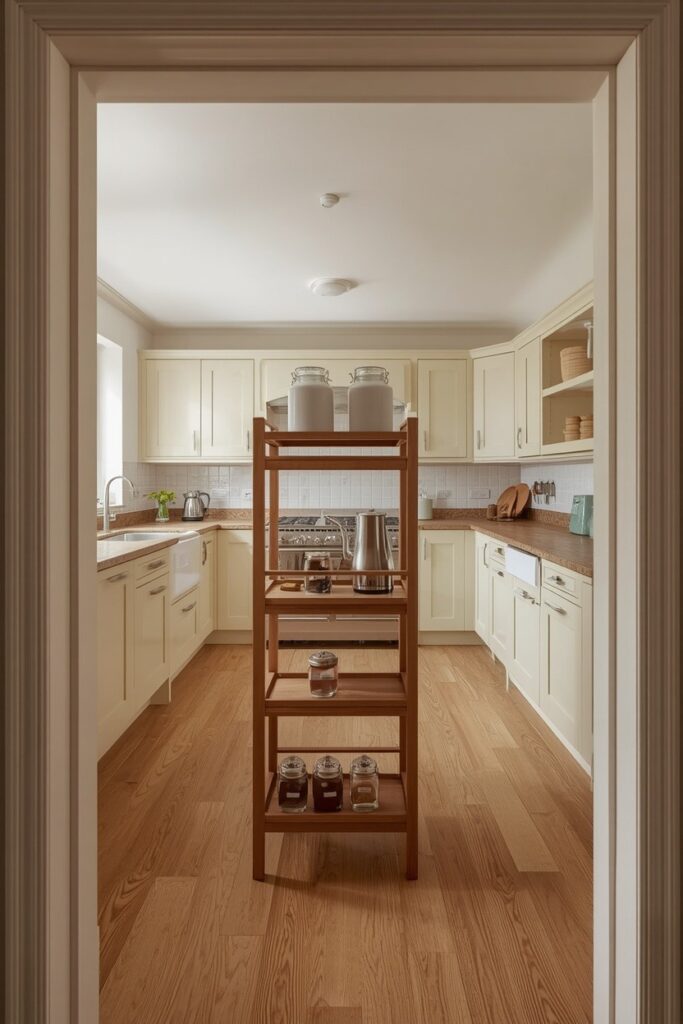
5. Put a shallow open shelf above the worktop
In a kitchen with no wall cabinets — or a stretch of blank wall where they end — one open shelf gives you storage exactly where you need it without the visual weight of a closed unit.
Keep it shallow. Around 6 to 8 inches deep holds jars, small bowls, and plates without stealing headroom over the counter, and mount it roughly 18 to 20 inches above the worktop. One shelf beats three, because two more shelves means two more surfaces to dust and a wall that starts shouting. Load it with things you use, not things you display: everyday bowls, glasses, the oil and vinegar. The honest downside is that anything within a few feet of the hob picks up a greasy film and needs washing before use, so site it at the far end if you can.
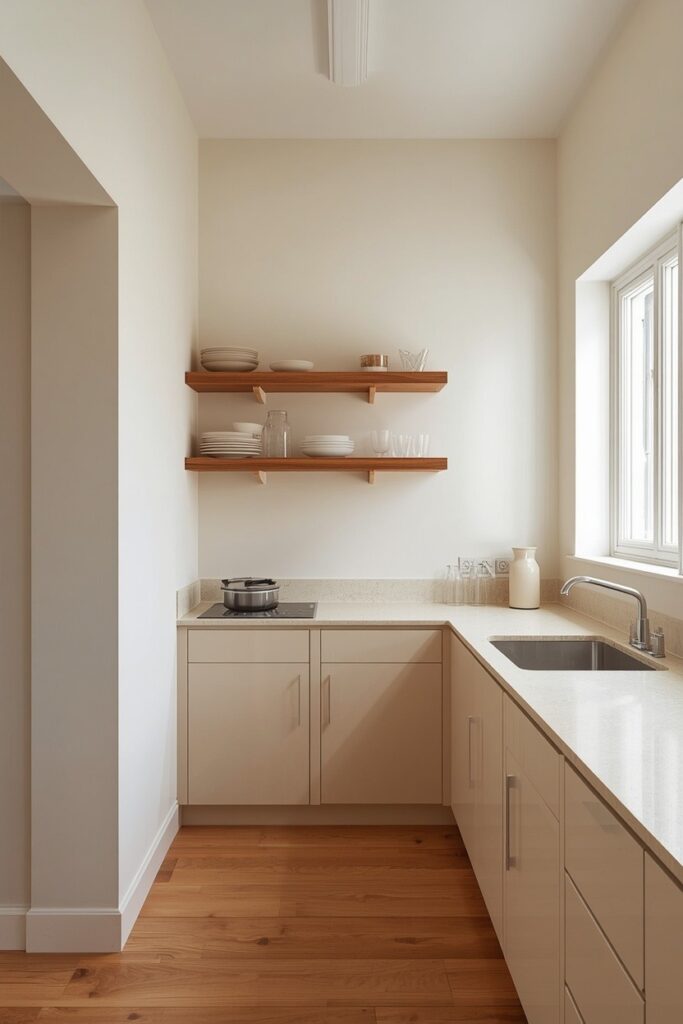
6. Build an appliance garage in the corner
The corner where two runs of worktop meet is the least usable stretch in any kitchen, and it is where the toaster and the coffee machine invariably end up.
An appliance garage — a cabinet with a lift-up, roller, or bi-fold door sitting on the worktop in that corner — gives those machines a home where they stay plugged in and ready but out of sight. Fit a socket inside when the electrics are accessible, and leave the door open while anything is toasting so heat and steam escape. Around 15 to 18 inches deep and the full height to the wall cabinets suits most machines. It is one of the few storage additions that removes several large objects from the counter at once.
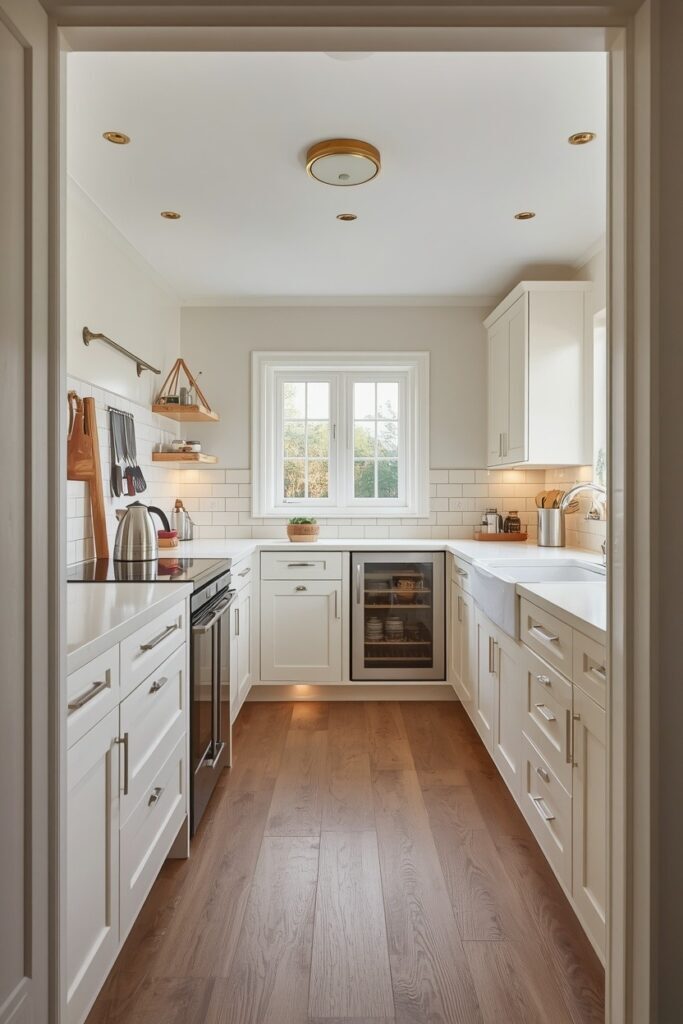
7. Fill the gap beside the fridge with a slim rolling cart
Almost every kitchen has an awkward gap — 8 to 14 inches wide, beside the fridge or at the end of a run — that currently holds a mop and a bag of recycling.
A narrow rolling cart on castors turns it into three tiers of storage that can be pulled out entirely when you need it. It’s the right home for oils and vinegars, tins, or the baking things you use monthly. Measure the gap and subtract an inch for clearance, and check the cart’s handle doesn’t foul the fridge door swing. Because it rolls, it can also work as a mobile prep surface — wheel it beside you while cooking, then push it back. In a rented kitchen, this is the single most useful addition available, since it needs no fixing of any kind.
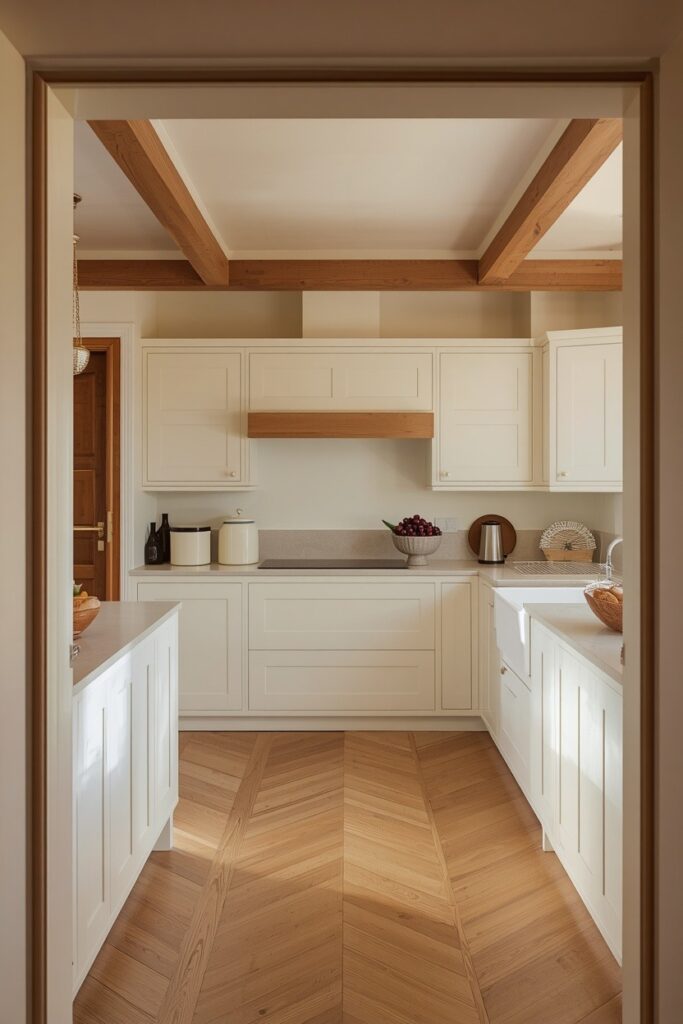
8. Use the inside of the cabinet doors
Every cabinet door has a few inches of unused depth behind it, and door-mounted racks are the cheapest storage you can add to a kitchen.
Under the sink, a door rack holds cleaning sprays and cloths and clears the floor of the cupboard so the pull-out bin actually pulls out. Inside a wall cabinet door, a slim rack takes spice jars in a single visible row — far better than a spice drawer where you read every lid from above. Two rules: check the rack clears the shelves when the door closes, which is what catches people out, and screw into the door rather than relying on adhesive if it will hold anything heavier than a cloth.
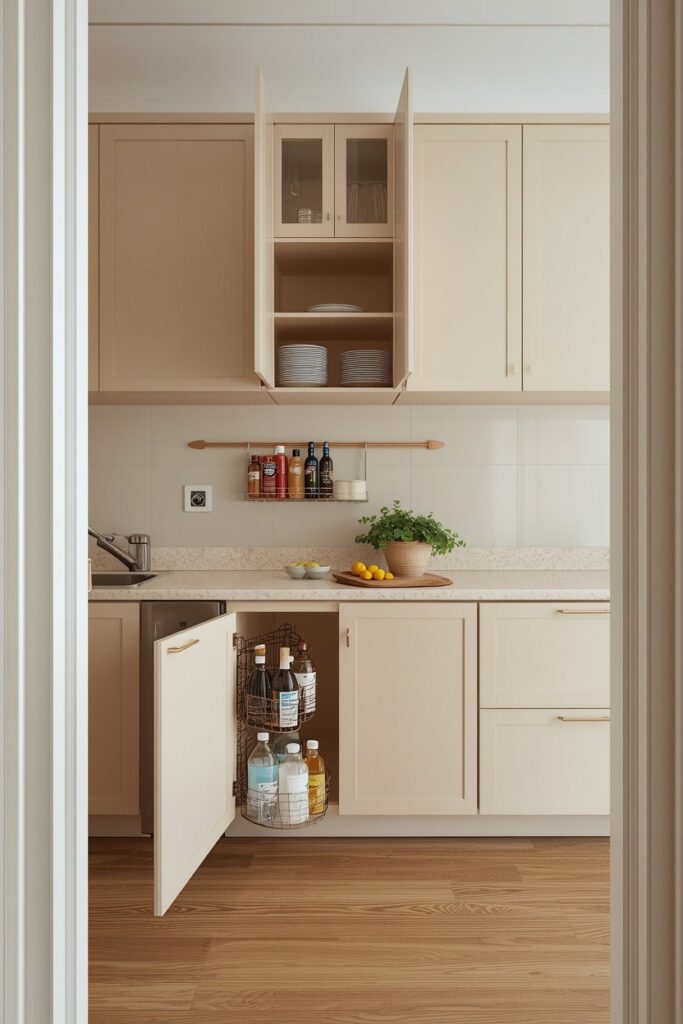
9. Fit a carousel in the corner base unit
Corner base cabinets are where kitchen storage goes to die — a deep, dark cavity with a small opening, holding pans that nobody has seen since installation.
A carousel or a pull-out corner mechanism brings the entire contents out into the light, which effectively hands you back a whole cupboard’s worth of capacity you already paid for. Retrofit versions fit most standard carcasses, though the fit is fussy enough that measuring the opening, the internal depth, and the hinge position carefully is worth the twenty minutes. Load it with pans and large bowls — the heavy, awkward items that would otherwise stay out on the counter because nobody wants to crawl in after them.
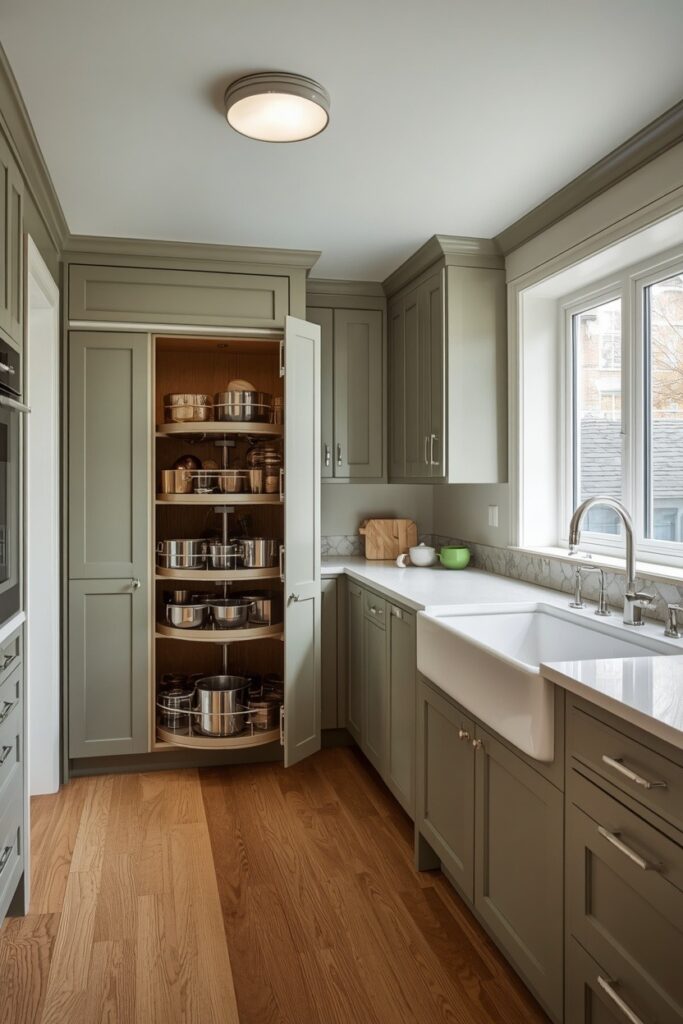
10. Store boards and trays on their edges
Chopping boards stacked flat on the counter are a small, permanent pile that gets shuffled every time you need the one at the bottom.
Standing them vertically takes a fraction of the space and makes every board reachable. A slim divided rack inside a base cupboard, a vertical slot built into the end of a run, or a narrow purpose-made cabinet a few inches wide will all hold boards, baking trays, and roasting tins on edge. The same principle applies inside the oven cabinet’s drawer if it has one. It’s a small change with a disproportionate effect, because boards are bulky, used daily, and almost always end up left out.
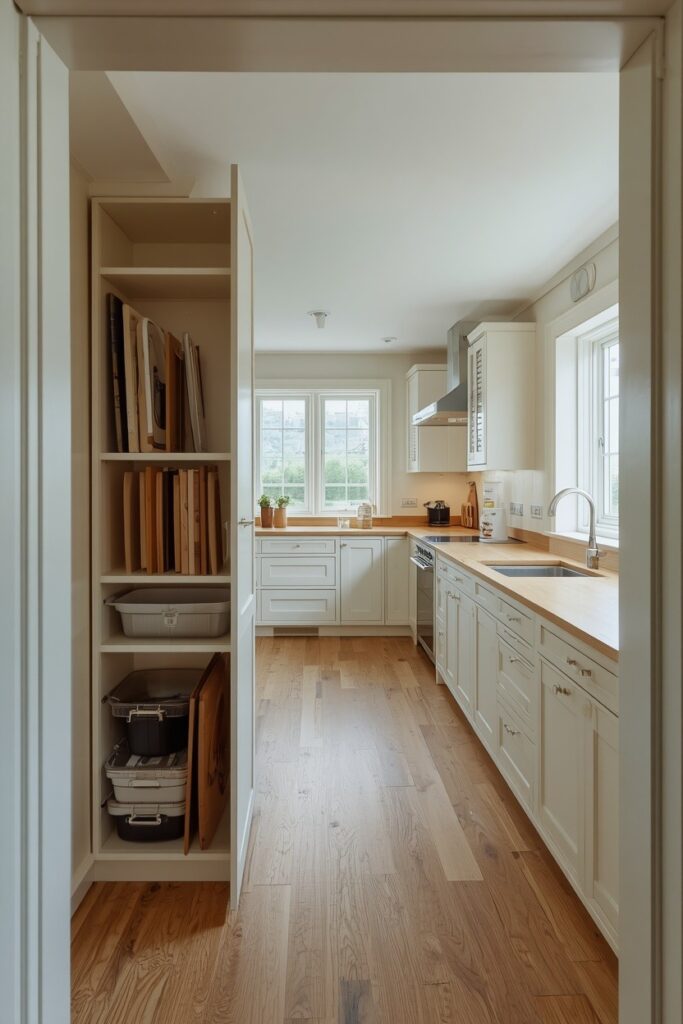
11. Borrow the space over the sink
A sink is a large hole in your worktop, and for most of the day nothing is happening in it.
An over-sink rack or a roll-up mat spans it and turns it into temporary surface — somewhere to drain washed vegetables, rest a colander, or hold a chopping board while you work. The roll-up versions store in a drawer when not in use, which suits a small kitchen better than a fixed rack. If you have a window above the sink, a slim shelf across the reveal will hold plants or a soap dispenser without touching the counter at all. Just leave the window operable; a shelf that blocks the one window you open in summer is a short-lived idea.
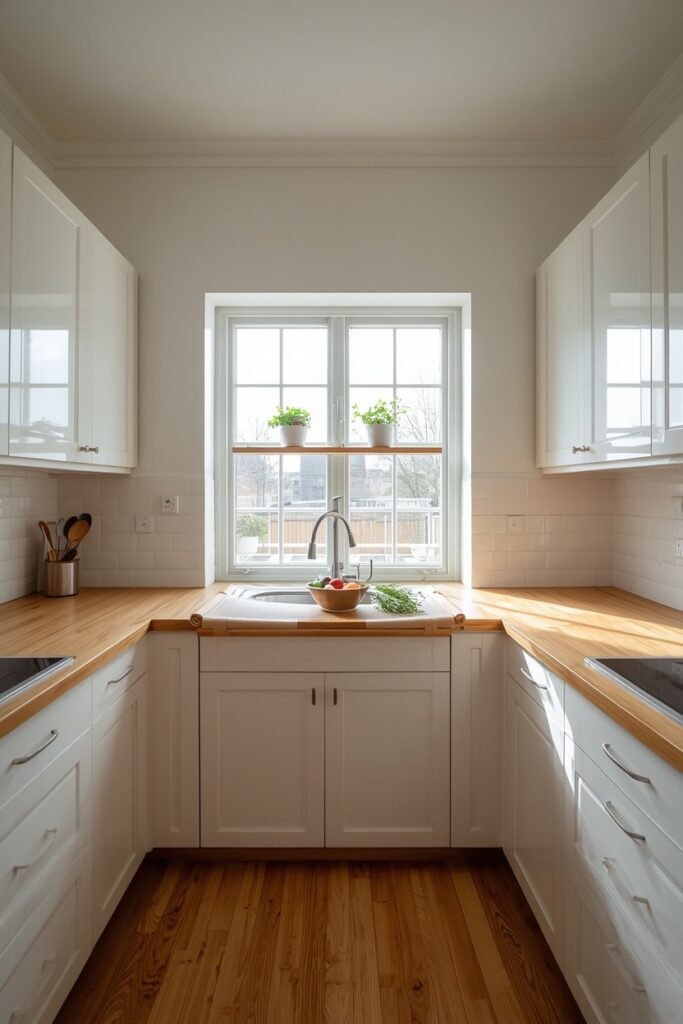
12. Choose counter storage that you don’t mind looking at
Some things genuinely belong on the worktop, and once you accept that, the goal shifts from hiding them to choosing versions worth seeing.
A bread bin in enamel or oak stores a loaf properly and reads as furniture rather than packaging. A lidded stone crock holds coffee beside the machine. A large shallow bowl in ceramic or wood takes fruit, onions, and garlic in one place. Keep the palette tight — pick two materials, say oak and off-white ceramic, and buy within them, because a counter of five different materials looks busier than a counter of five matching objects. Anything you handle with damp or oily hands should be wipeable and dishwasher-safe, which quietly rules out most unsealed timber near the hob.
Where I’d start if I only did three things
A wall rail, a riser behind the kettle, and a slim rolling cart in the gap beside the fridge.
Between them, those three cover the three kinds of space kitchens waste: the empty wall, the vertical inches above the counter, and the awkward gap that currently holds nothing useful. None of them requires touching your cabinets, two of them need no tools at all, and together they’ll clear more worktop than a new set of cupboards would. Start there, live with it a fortnight, and then decide whether the corner carousel and the appliance garage are worth the bigger job.
FAQ
What can I add if I’m renting and can’t drill anything?
More than you’d expect. Risers, rolling carts, over-sink racks, freestanding shelf units, and bread bins are all free-standing. Under-cabinet hooks and racks in slide-on versions grip the shelf edge without fixings. Tension rods work inside cabinets to create vertical dividers, and adhesive hooks handle light items provided you check the surface first and buy the removable kind. Save the rail and the magnetic knife strip for a home you own, or ask — many landlords will agree to a couple of small fixings in exchange for filling the holes.
Is a lot of open counter storage harder to keep clean?
Yes, and the distance from the hob is what decides how much harder. Cooking throws an airborne mixture of grease and steam that lands on everything within a few feet and bonds with dust into a film that needs washing rather than wiping. So put open shelving and rails at the far end of the run, keep anything near the hob wipeable and dishwasher-safe, and don’t store rarely-used items in the open at all — you’ll have to wash them before use, which is the worst of both worlds.
How much counter storage is too much?
Judge it by clear surface rather than by object count. If less than about three-quarters of your worktop length is empty, you have added storage where you needed editing, and more containers will make it worse. The other test is functional: you should still have one uninterrupted run of at least 24 inches between sink and hob with nothing on it whatsoever. If a riser or a bread bin has crept into that stretch, it goes elsewhere regardless of how good it looks.
What’s worth spending money on and what should stay cheap?
Spend on the built-in mechanisms — corner carousels, pull-outs, deep drawer runners — because they take real weight, get used daily, and are miserable to replace once fitted. Spend a little on anything permanently visible, since a solid oak riser and a plastic one cost differently and read very differently. Keep it cheap for door racks, hooks, and dividers hidden inside cupboards, where function is all that matters. And buy one of anything before you buy six, particularly containers, because sizes that look right online rarely fit the shelf.
Conclusion
Every kitchen has more storage than it appears to — it’s on the walls, under the cabinets, in the vertical inches above a jar, and in the gap beside the fridge. Claim two or three of those and the worktop stops being the place things end up by default.