
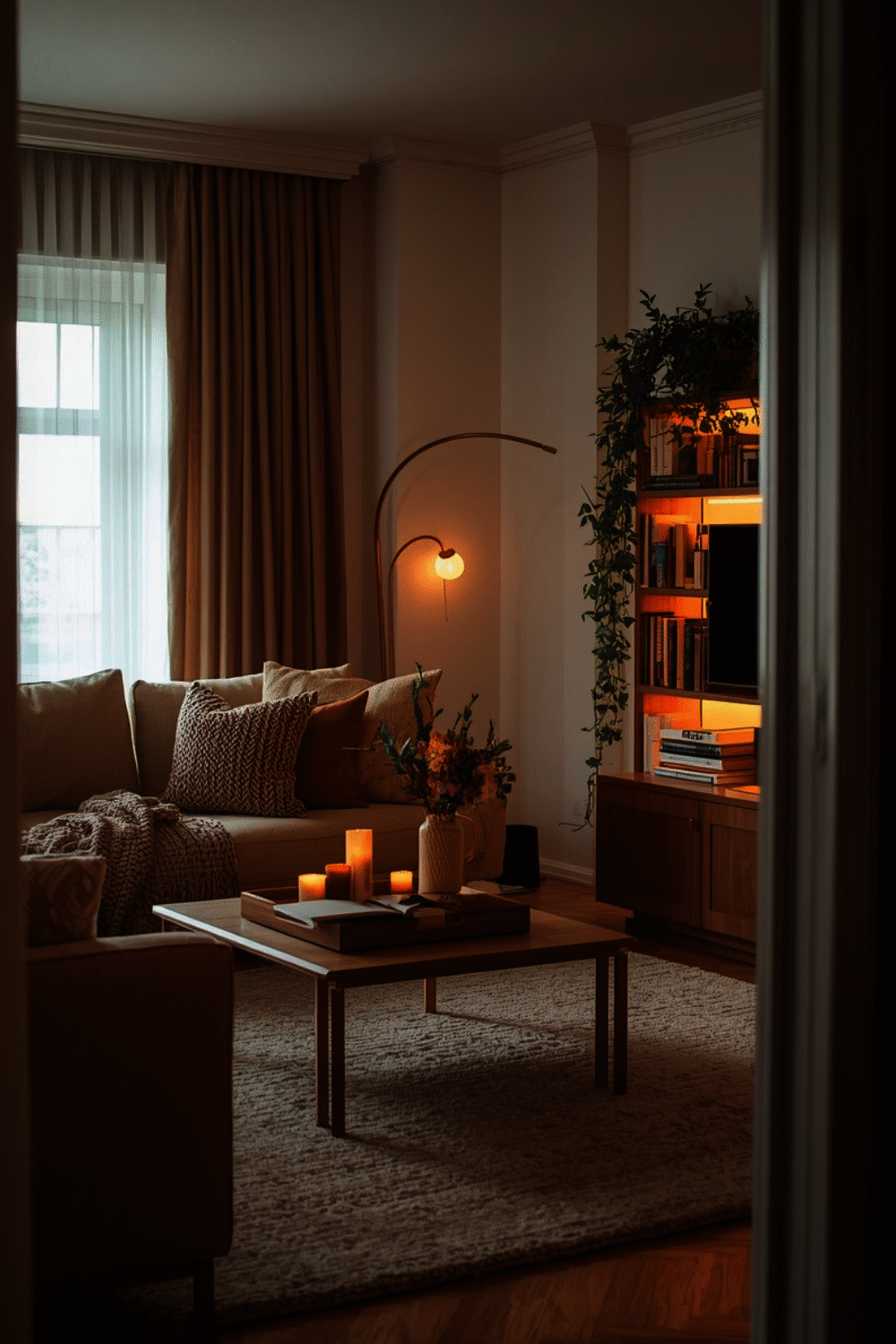
A warm, inviting living room isn’t about spending more — it’s about layering the right soft, warm things until the room makes you want to sink into it. Lighting, texture, and a few personal touches do most of the work, and none of it has to be complicated.
These 25 simple living room ideas are the easy, low-effort changes that turn a room from a space you pass through into one you settle into. Take the handful that suit your room, and the whole space warms up fast.
1. Swap the Overhead Light for Warm Lamps
The single fastest way to warm a living room is to turn off the overhead light and switch on lamps. A few table and floor lamps at different heights, all with 2700K warm bulbs, replace the flat ceiling glare with soft pools of golden light.
Aim for at least three light sources around the room rather than one from above. The low, layered glow is what instantly makes a space read calm and inviting after dark.
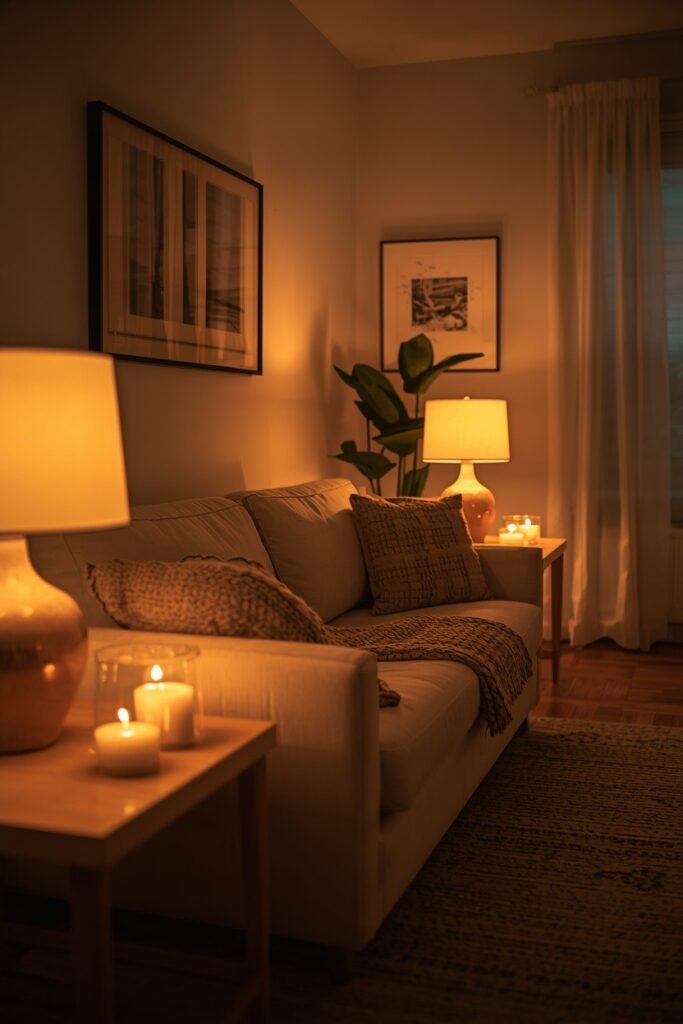
2. Drape a Chunky Knit Throw
A chunky knit throw is the quickest texture win in any living room. Draped over the sofa arm or folded across the back, it adds warmth you can see and reach for, and it invites you to wrap up the moment you sit down.
Choose a warm neutral — cream, oat, caramel — in a heavy cable or waffle knit. The bigger and chunkier the weave, the more it reads as warm and tactile rather than thin and decorative.
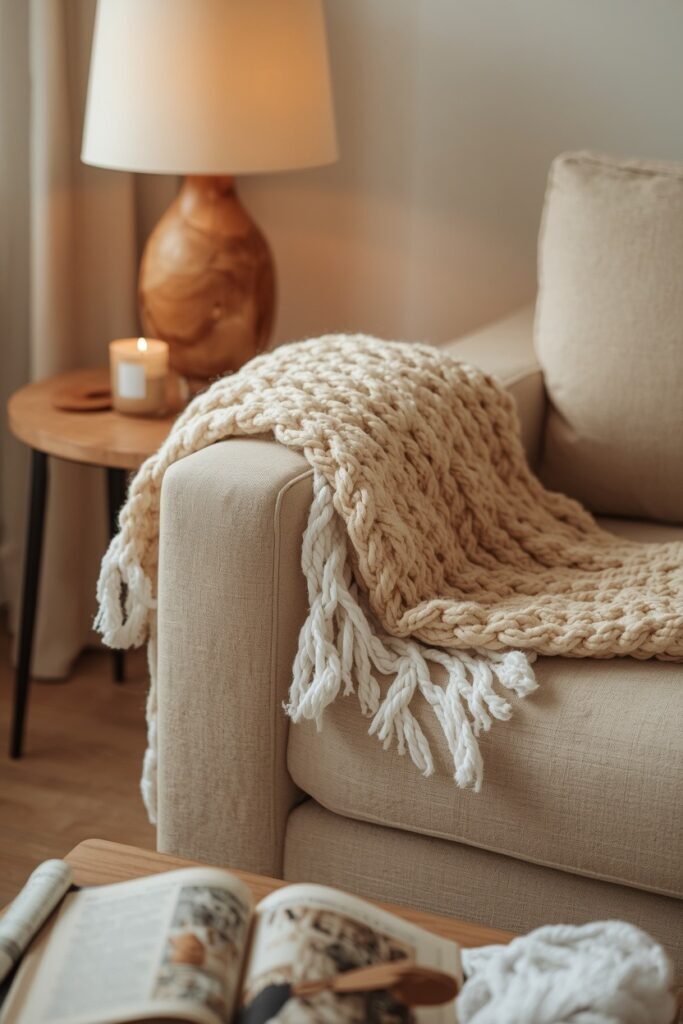
3. Layer a Big, Soft Rug
Bare or hard floors make a living room read cold and echoey. A large, soft rug — wool, shag, or a thick flatweave — warms the floor underfoot and pulls the seating into one snug, defined zone.
Go bigger than seems necessary; the front legs of all the seating should sit on the rug so the area reads connected. A soft, warm-toned rug is the foundation that everything else layers onto.
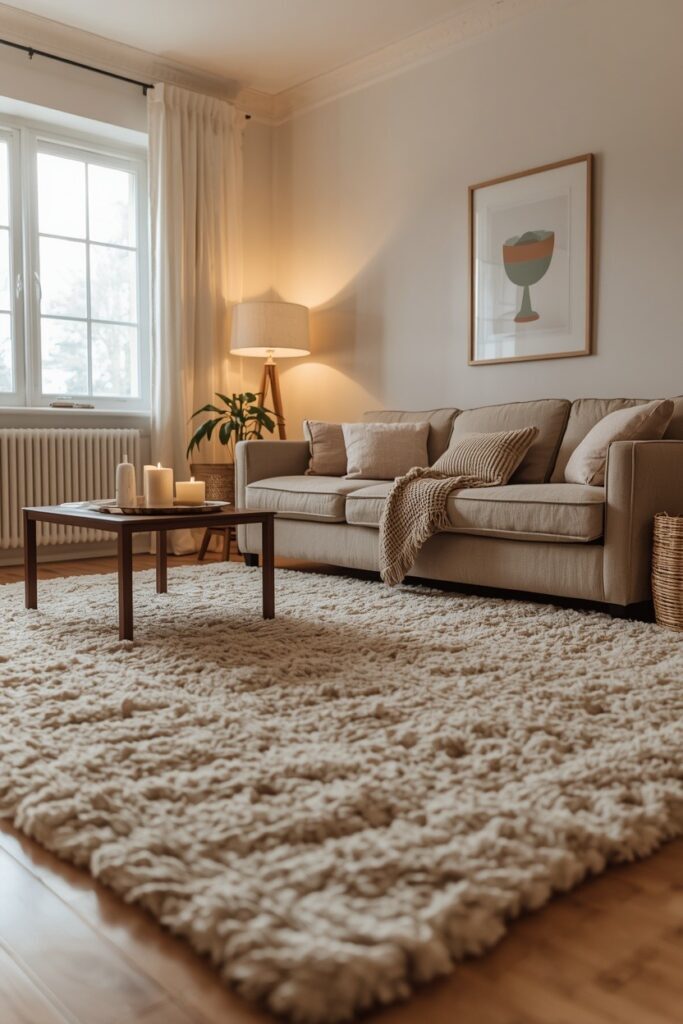
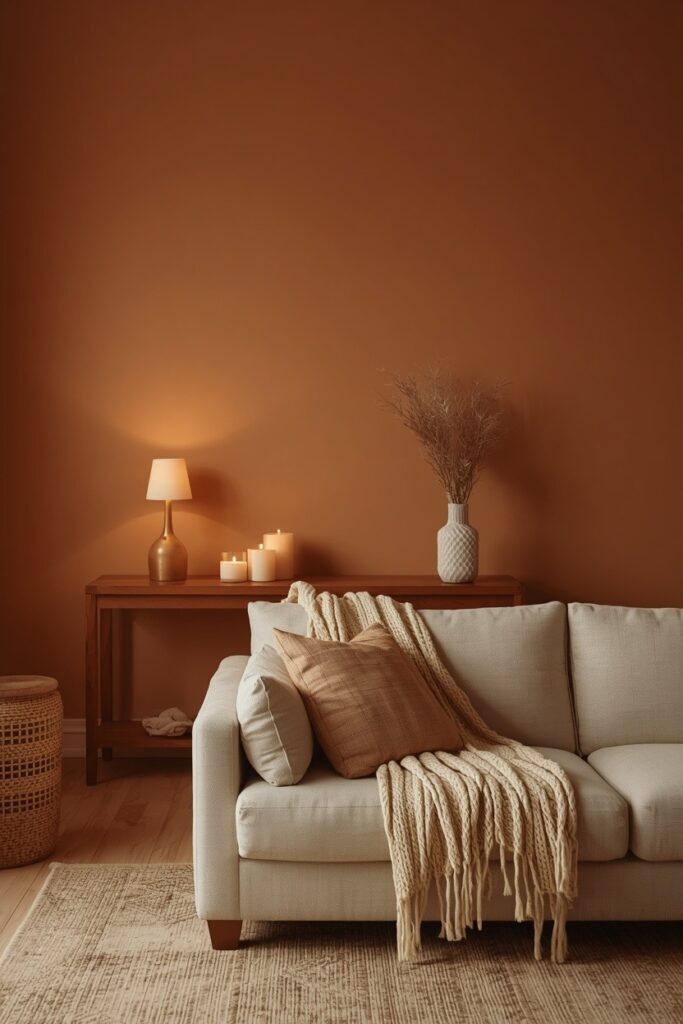
4. Warm the Walls With a Soft Paint Colour
Stark white walls can read cold under lamplight. Shifting to a warm greige, soft taupe, or gentle warm white wraps the room in a subtle warmth that makes everything in front of it glow.
The colour barely registers as colour — it just makes the room read softer and more enveloping. Test a large sample in evening light, since warm neutrals shift a lot between daylight and lamplight.
Getting the balance right
• Choose a neutral with a warm undertone — a touch of beige or greige — so it glows rather than greys under bulb light.
• Keep trim a soft white rather than stark, so the contrast stays gentle and warm.
• Carry the warm tone onto the ceiling for an even more enveloping, restful room.
• Pair the warm walls with wood and brass so the whole palette reads soft and layered.
Paint Picks
• Walls: “Pale Oak” (Benjamin Moore OC-20) — a warm greige that wraps the room in soft warmth without reading as a strong colour
• Trim and ceiling: “White Dove” (Benjamin Moore OC-17) — a soft warm white that keeps the trim gentle against the warm walls
5. Carve Out a Reading Nook
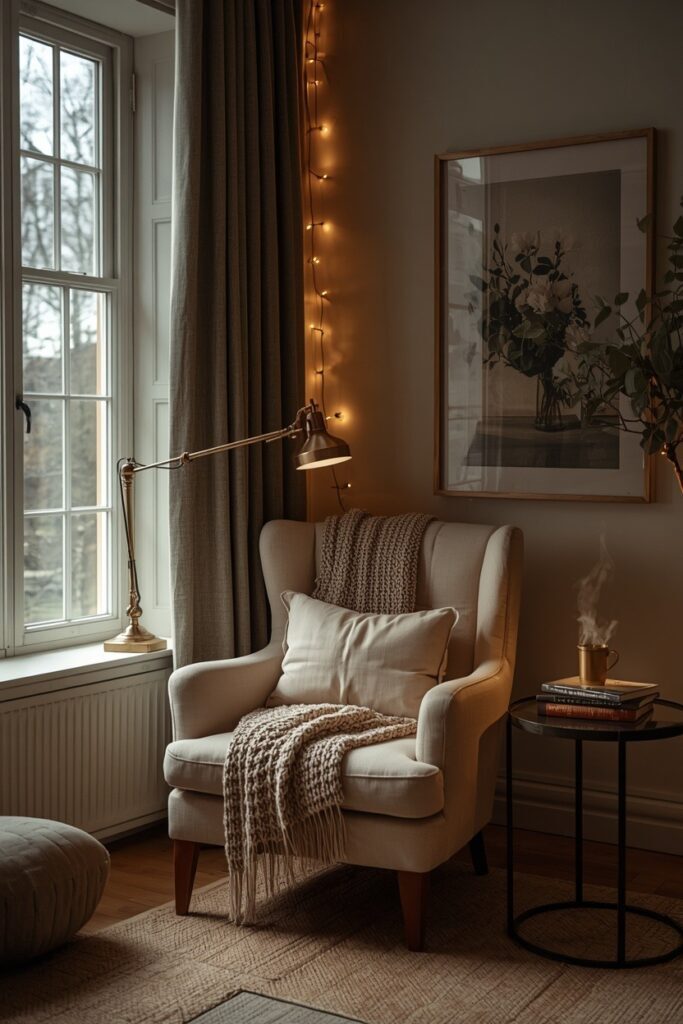
A reading nook gives a living room a second, more intimate posture. A comfortable chair tucked into a corner with a lamp, a throw, and a small table for a mug becomes the spot everyone gravitates to.
You don’t need much space — a chair angled toward a window with its own light source is enough. The key is a dedicated reading lamp and something soft to wrap up in.
6. Pile On Mixed-Texture Cushions
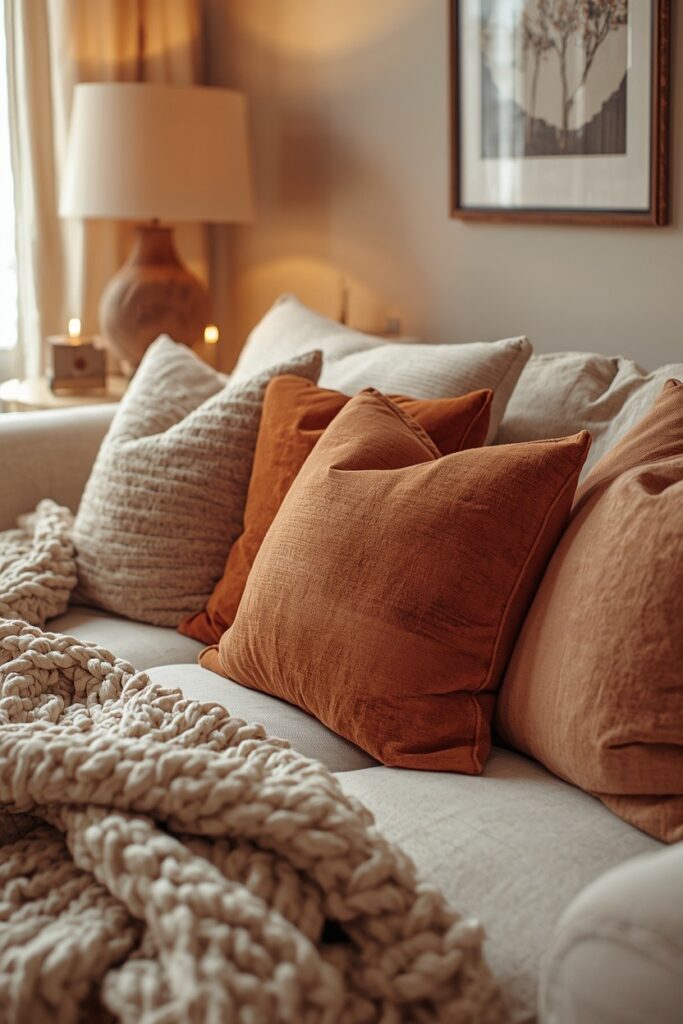
Cushions are where a sofa goes from flat to inviting. Mixing textures — a boucle, a velvet, a linen, a knit — in a warm palette layers depth that one matching set never achieves.
Vary the sizes and stick to two or three warm tones so it reads collected rather than chaotic. Odd numbers and a mix of plain and textured covers keep the arrangement relaxed and full.
7. Bring In Warm Wood Tones
Wood is the material that warms a room without trying. A wooden coffee table, side table, or shelf brings natural grain and warmth that balances soft textiles and stops an all-fabric room reading flat.
Mix wood tones rather than matching them exactly — a little variation reads more collected and natural. Warm oak, walnut, and pine all add the grounding warmth a room needs.
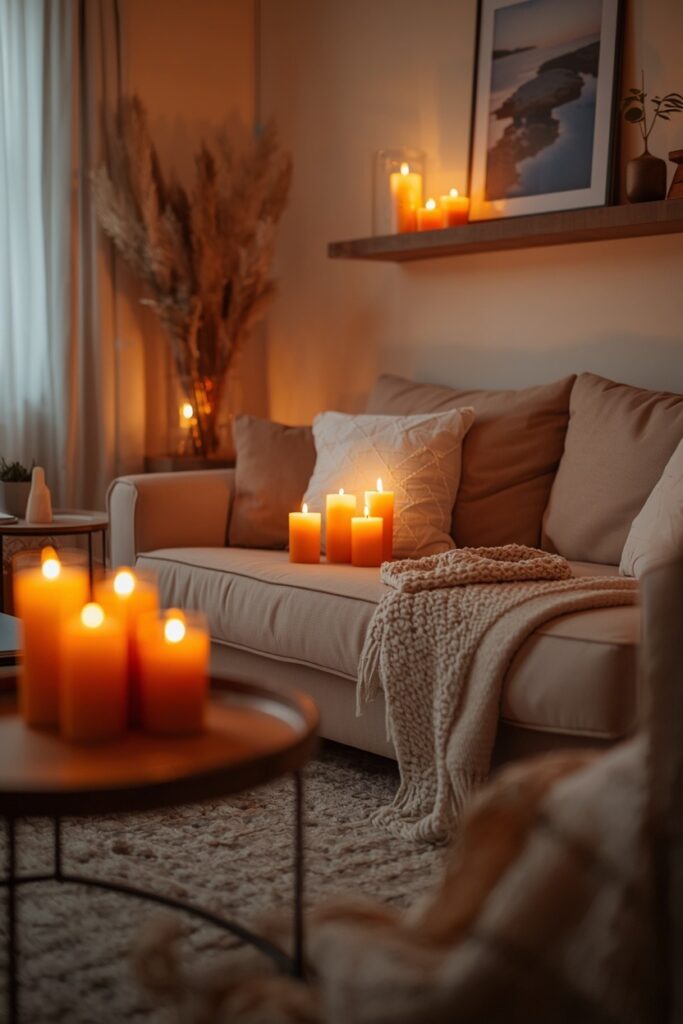
8. Light Candles at Different Heights
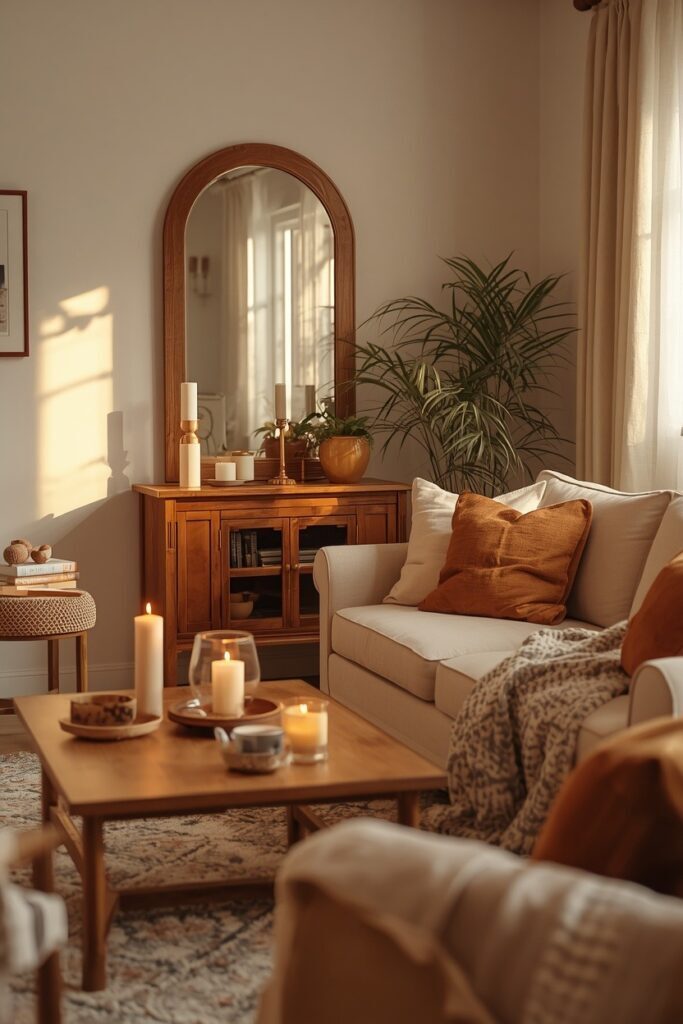
Candles bring a warmth no bulb can fully match. Clustered at different heights — on the coffee table, a shelf, the floor — their flicker fills a living room with soft, moving light in the evening.
Group them in odd numbers on a tray for the prettiest effect, and choose warm cream or amber tones. The low golden flicker is the detail that turns a lit room into a genuinely inviting one.
9. Style the Bookshelf Warmly
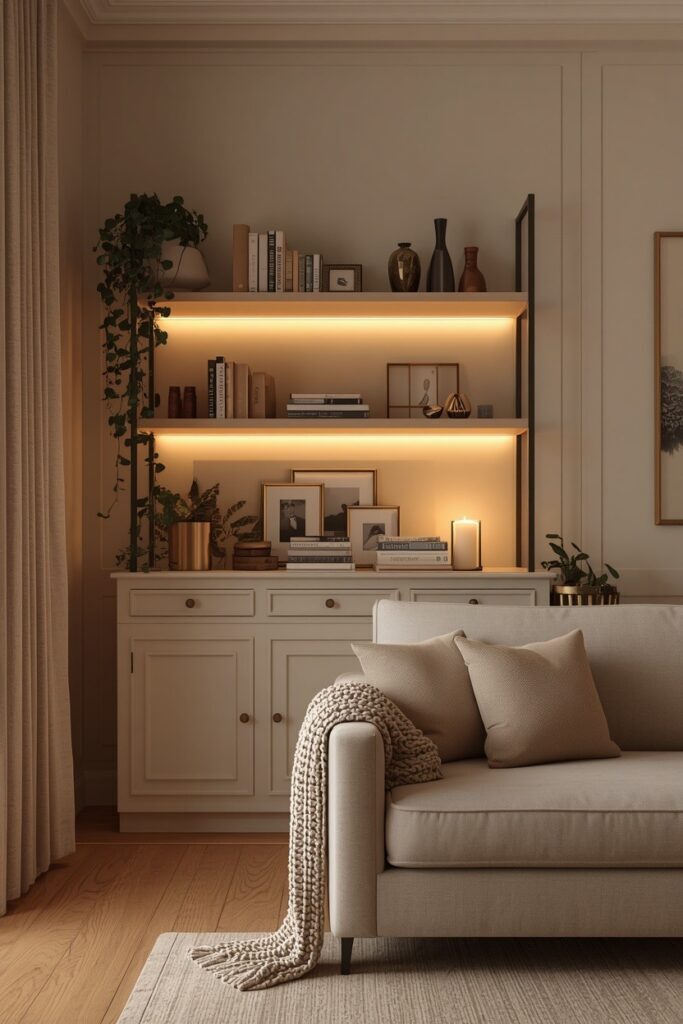
A bookshelf does more than store books — styled well, it adds warmth and personality. Mix books laid flat and upright with plants, framed photos, and a few warm-toned objects so it reads collected rather than rigid.
Add a warm LED strip along the shelves for a soft glow that makes the whole wall come alive at night. Leave some breathing room so it looks styled, not stuffed.
10. Add Plenty of Plants
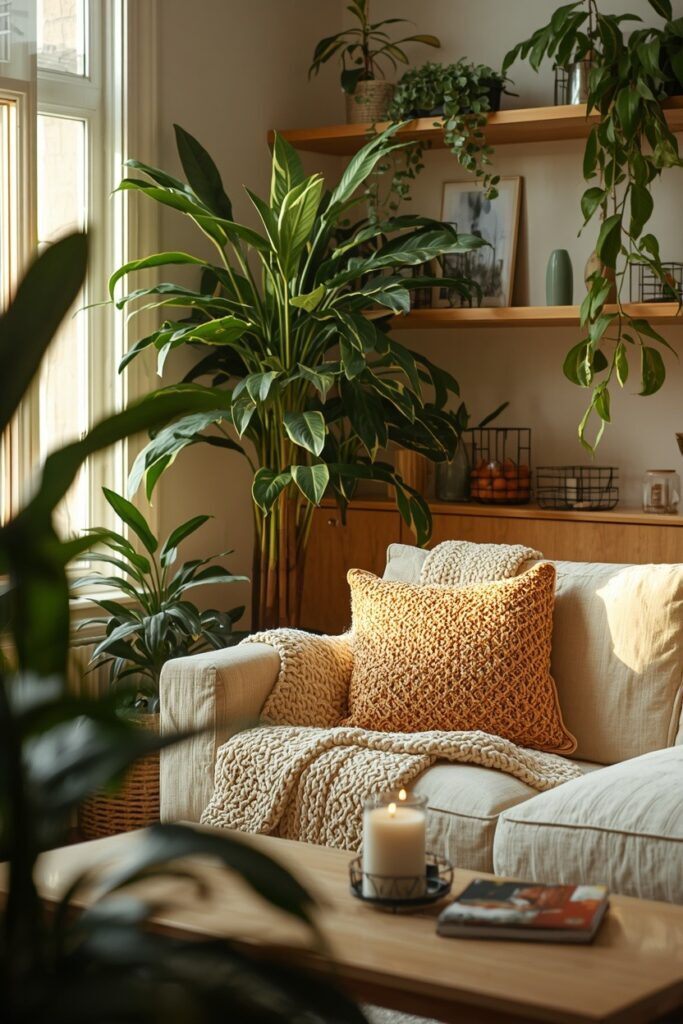
Plants bring life and softness that nothing else can. A tall floor plant in a corner, a trailing plant on a shelf, and a couple of small pots on the table add organic green that warms and calms a living room at once.
Group them at varying heights so the green reads lush rather than scattered. Choose easy plants — pothos, snake plants, a fiddle-leaf fig — that forgive a busy schedule.
11. Add Warm Brass or Gold Accents
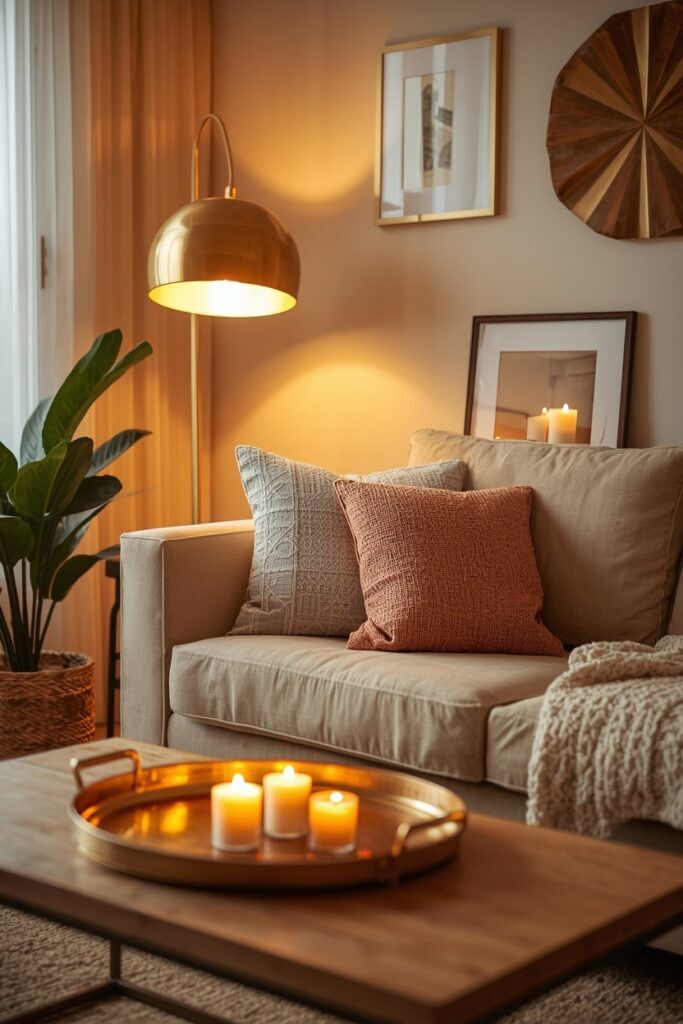
A few warm metal touches lift a living room from soft to considered. Brass or gold in a lamp, a tray, a frame, or a pair of candle holders catches the warm light and adds a gentle glow.
Keep the metals in one warm family so they read deliberate. A little brass against soft textiles and wood is the accent that makes the whole palette read pulled together.
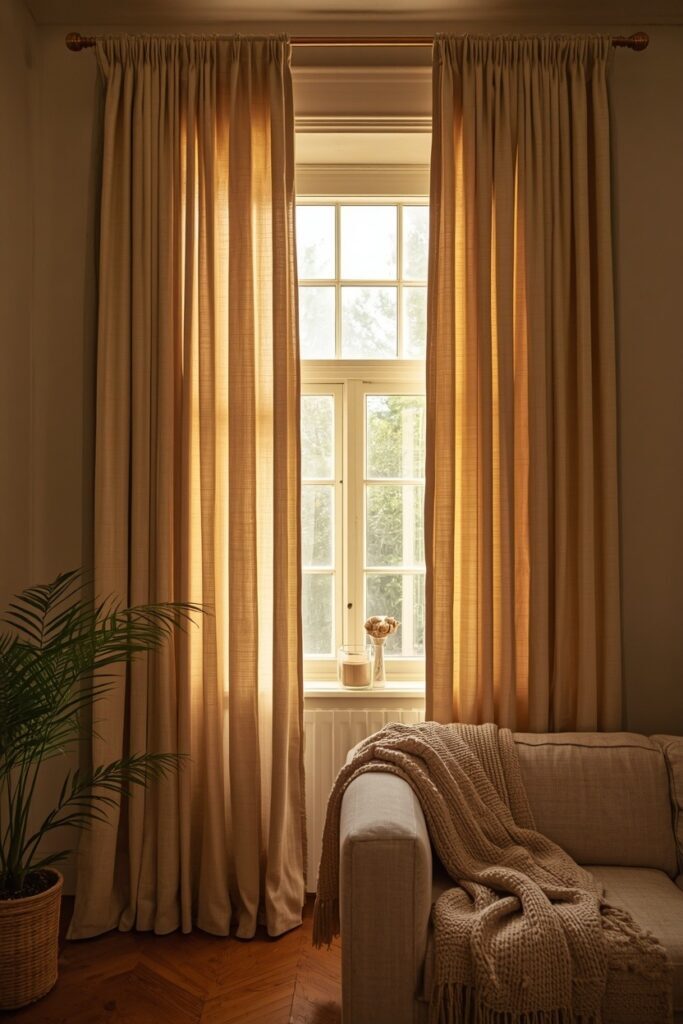
12. Hang Floor-to-Ceiling Curtains
Short or skimpy curtains make a room read unfinished. Floor-to-ceiling panels in a warm linen, mounted high and wide, frame the windows, add soft texture, and make the walls read taller and grander.
Hang the rod just below the ceiling and let the panels pool slightly at the floor. The soft fabric warms the room and softens the hard lines of the windows.
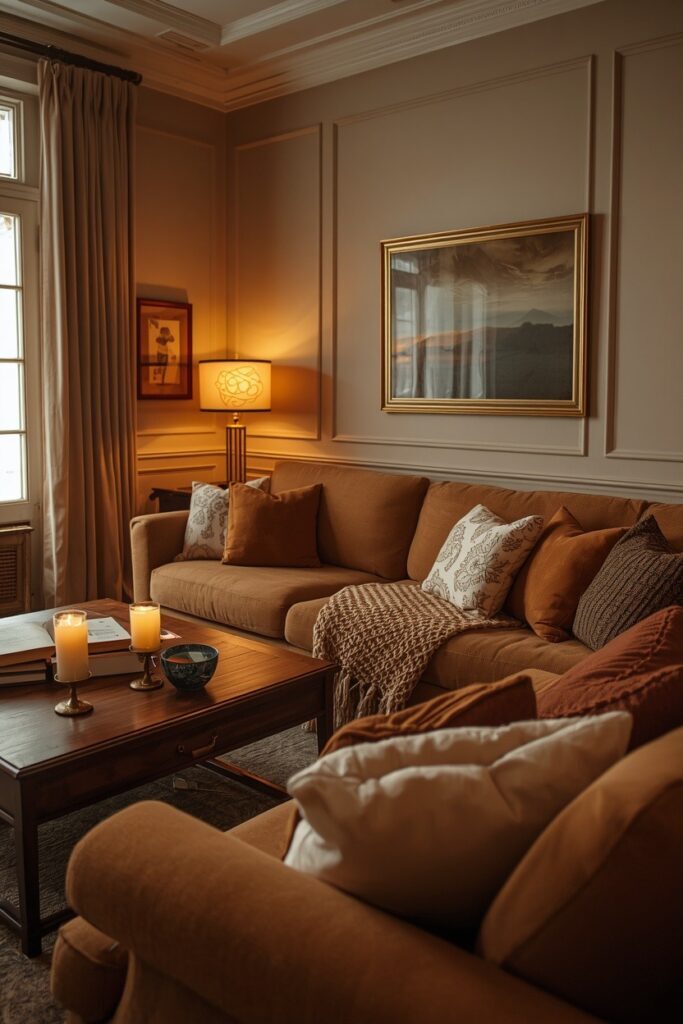
13. Choose a Deep, Sink-In Sofa
The sofa is the heart of a living room, and a deep, plush one you can sink into sets the whole mood. A generous seat depth and soft cushions invite lounging in a way a firm, shallow sofa never will.
Layer it with cushions and a throw and it becomes the spot the whole household fights over. If a new sofa isn’t in budget, a feather-fill cushion topper adds the sink-in softness to a firmer one.
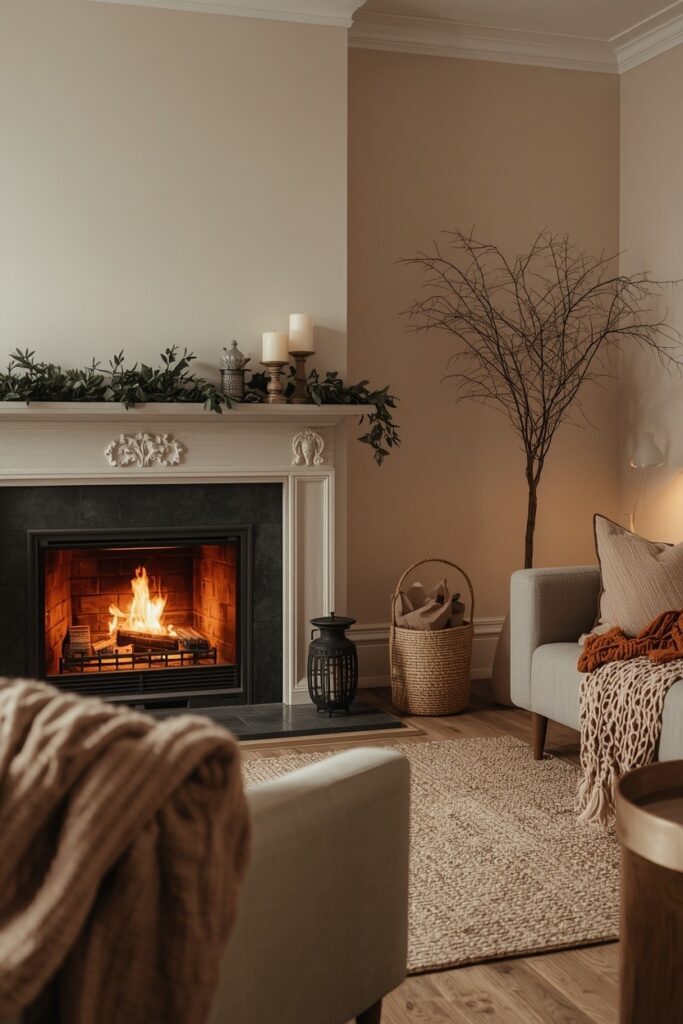
14. Create a Focal Point With a Fireplace
A fireplace is the ultimate warm focal point, drawing the seating around it and filling the room with glow. If you have one, style the mantel with candles and greenery and arrange the sofa to face it.
No real fireplace? An electric insert, a cluster of candles in the hearth, or even a freestanding ethanol burner gives the same gathering-around warmth. The point is a single warm focus the room organises around.
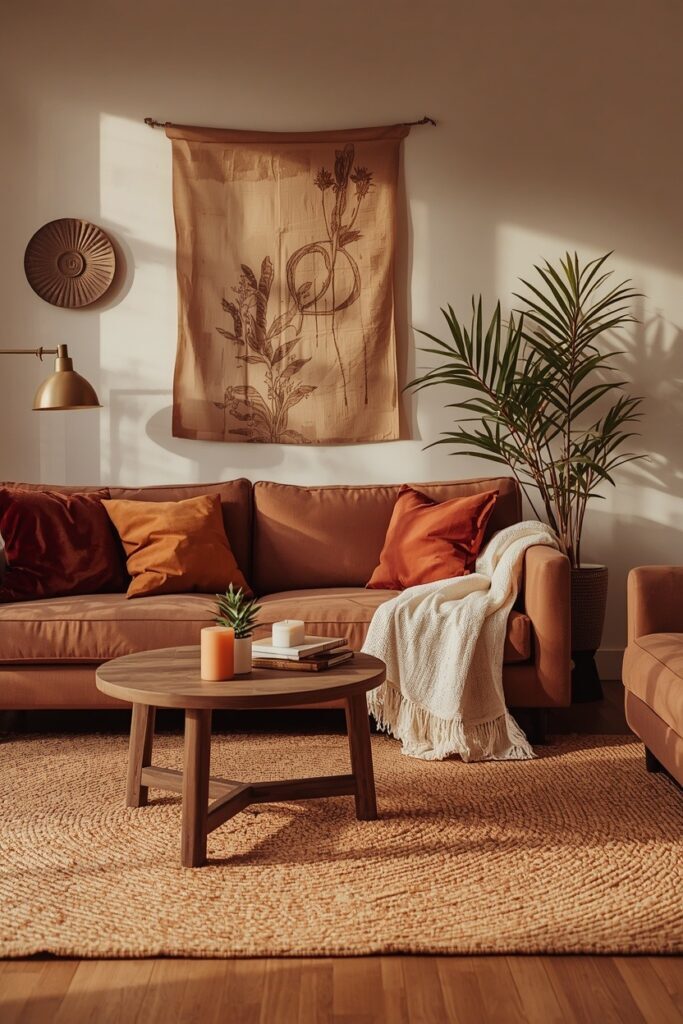
15. Build a Warm Colour Palette in Textiles
Colour temperature shapes how warm a room reads. Building the textiles around warm tones — caramel, rust, terracotta, cream, warm browns — makes the whole room glow, especially under lamplight.
You don’t need to repaint; cushions, throws, and a rug in warm shades shift the temperature on their own. Layer several warm tones for depth rather than relying on one.
16. Add a Soft Glow With String or LED Lights
A little extra warm glow goes a long way. Warm-white string lights along a shelf or mantel, or an LED strip hidden behind the TV or bookshelf, adds a soft ambient layer that reads magical at night.
Keep them warm-white, not cool, and tuck the source out of sight so you see the glow, not the wire. It’s an inexpensive way to add the kind of low, atmospheric light that makes a room inviting.
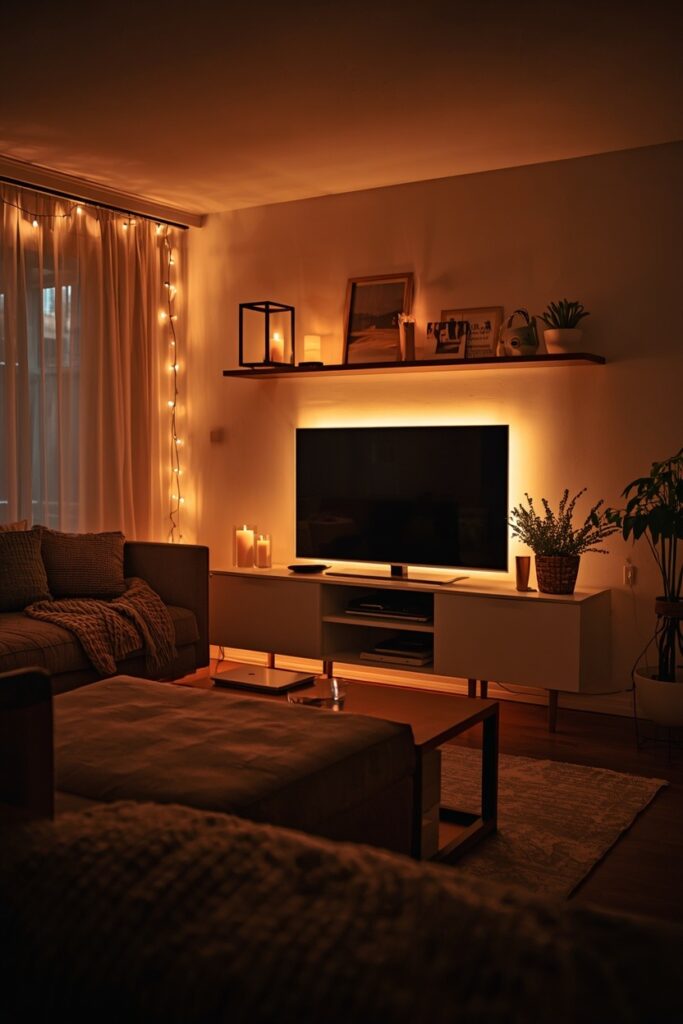
17. Display Personal Touches
A room without personal touches reads like a showroom. Framed photos, travel mementos, a few meaningful objects, and books you actually love give a living room warmth that no amount of decor can fake.
Group them on a console, shelf, or the coffee table rather than scattering them. The things that mean something to you are what make a room feel genuinely like home.
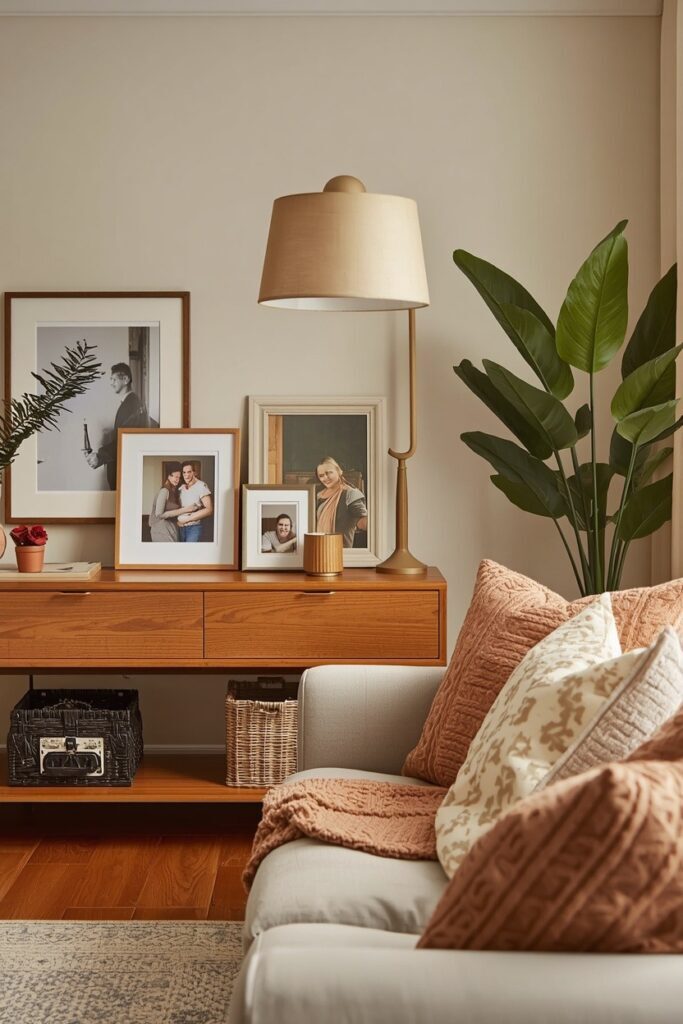
18. Style the Coffee Table
The coffee table is the room’s centerpiece, and a few styled layers make it inviting. A stack of books, a tray to corral small things, a candle, and a small vase of flowers turn a bare surface into a warm focal point.
Vary the heights and group items in a loose triangle. A tray keeps it from sliding into clutter and makes the whole thing easy to lift and move when you need the space.
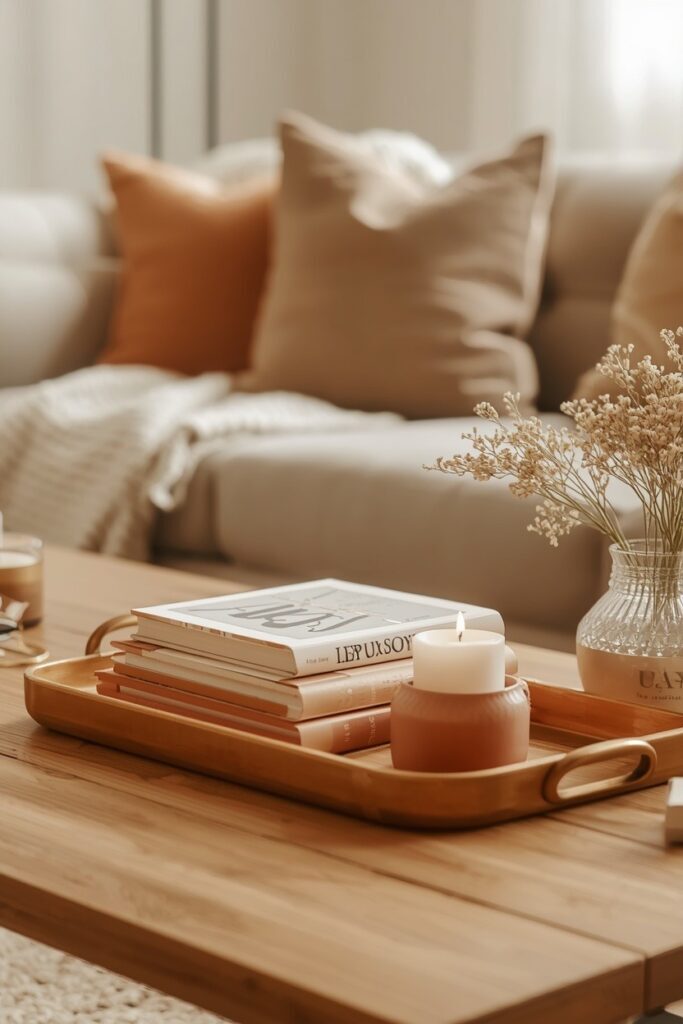
19. Add an Arc or Floor Lamp for Ambient Glow
A floor lamp fills the vertical gap that table lamps miss. An arc lamp curving over the sofa, or a slim standing lamp in a dark corner, adds ambient light right where you read or relax.
Choose one with a warm bulb and ideally a dimmer. Lighting the corners and the seating from a standing height is what banishes the dim, unlit gaps that make a room feel flat.
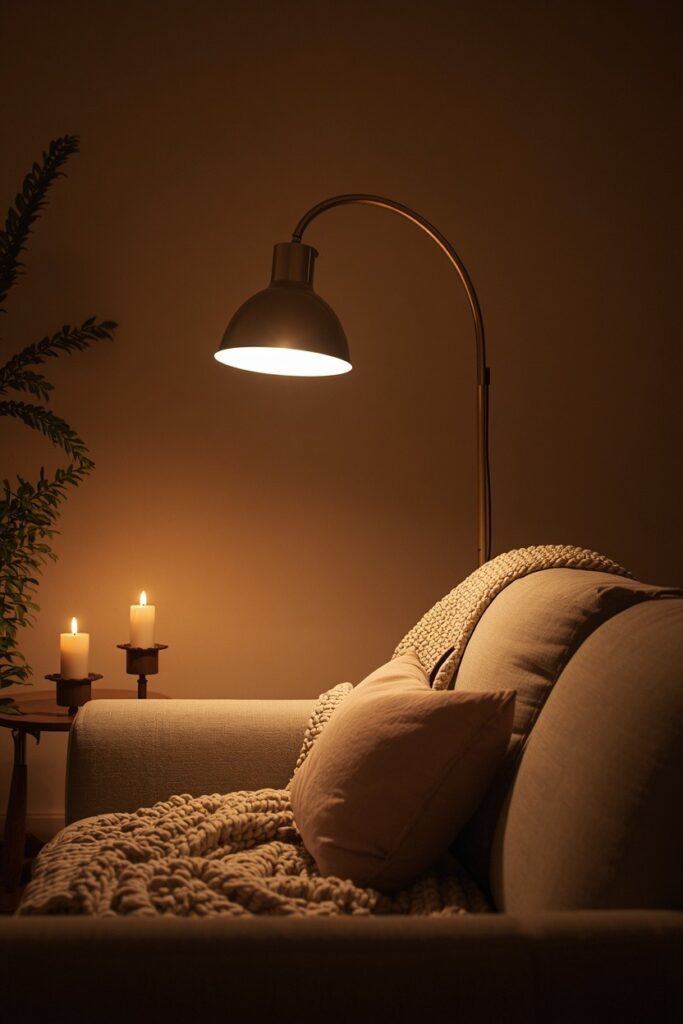
20. Layer Soft, Touchable Materials
Touch matters as much as looks in a warm room. Layering soft, tactile materials — boucle, velvet, linen, faux fur, chunky knit — makes a living room one you want to reach out and sink into.
Mix the textures across the sofa, a chair, and the cushions so the eye and hand both find variety. Soft materials in a calm palette read rich and inviting without any bold colour.
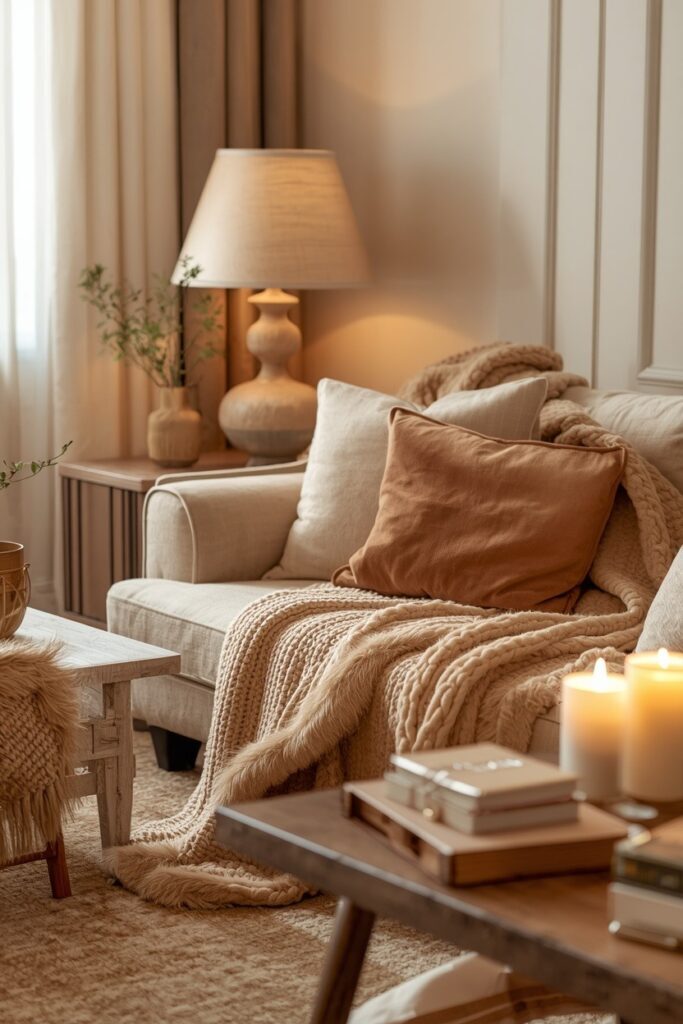
21. Add a Statement Armchair
A single comfortable armchair adds a second seat and a layer of character. A curved boucle or warm velvet chair beside the sofa gives the room balance and an extra spot to curl up.
Angle it slightly toward the sofa to create a conversation area, and drape a throw over the arm. One well-chosen chair adds personality a matching sofa set can’t.
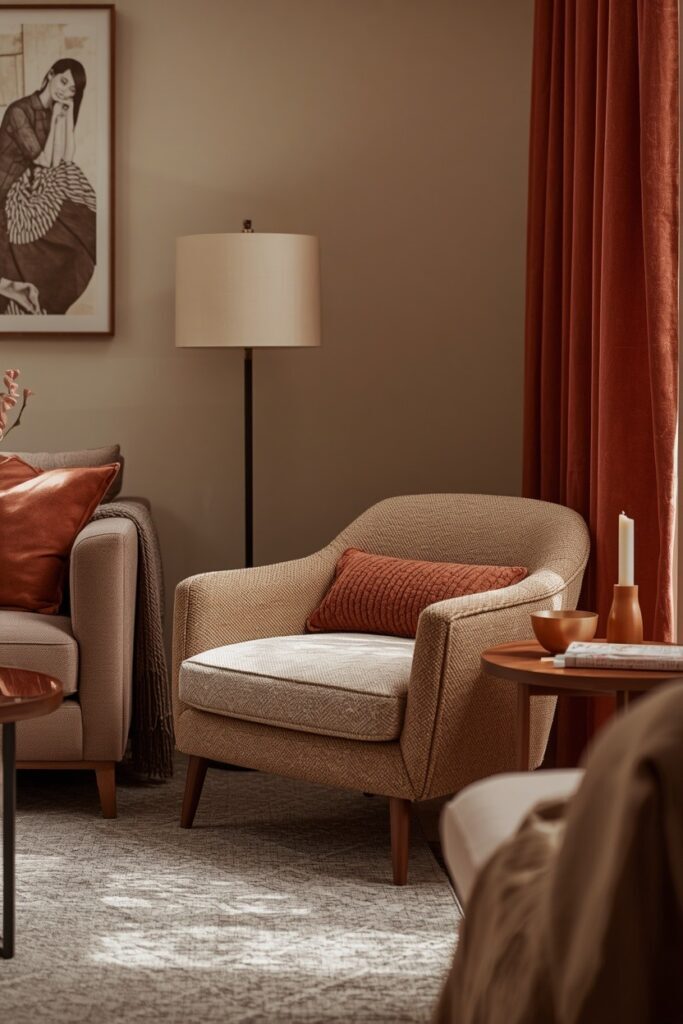
22. Hang Warm-Toned Art or a Gallery Wall
Bare walls above the sofa leave a room feeling unfinished. A piece of warm-toned art or a gallery wall in wood and brass frames fills the space and adds colour and personality at eye level.
Keep the art in warm tones and the frames in one or two materials so the grouping reads cohesive. Lay it out on the floor first and treat the cluster as one rectangle above the sofa.
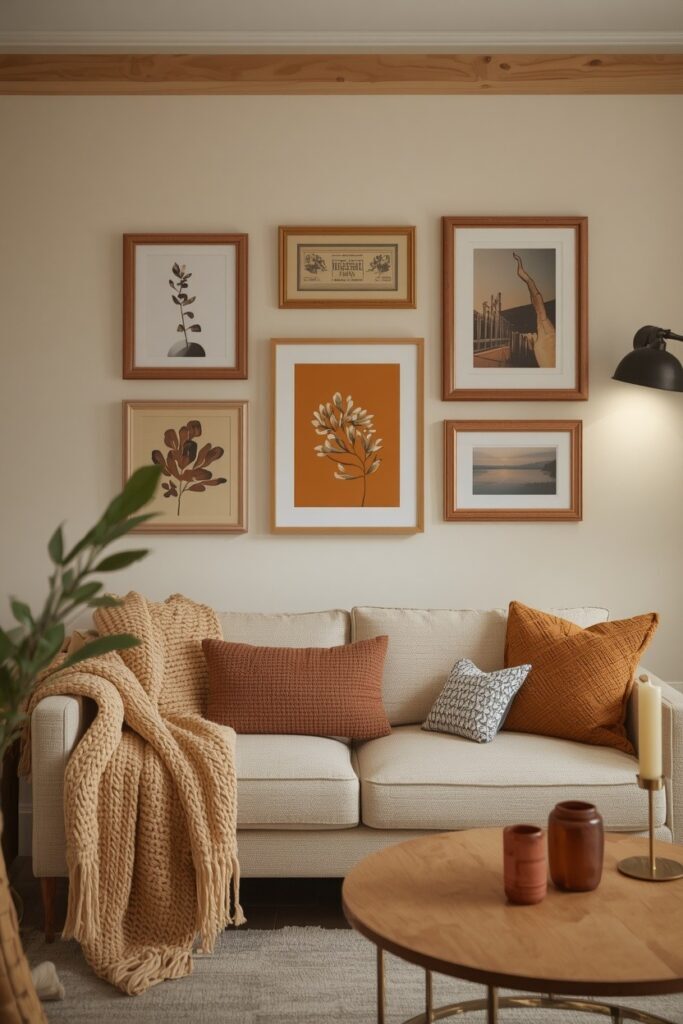
23. Keep Blankets in a Basket
A basket of blankets beside the sofa is both useful and welcoming. It keeps extra throws within reach for movie nights and reads as an open invitation to grab one and get comfortable.
Choose a large woven basket and fill it with a few folded knit and linen blankets. The natural texture adds warmth, and the blankets are right there when the evening turns chilly.
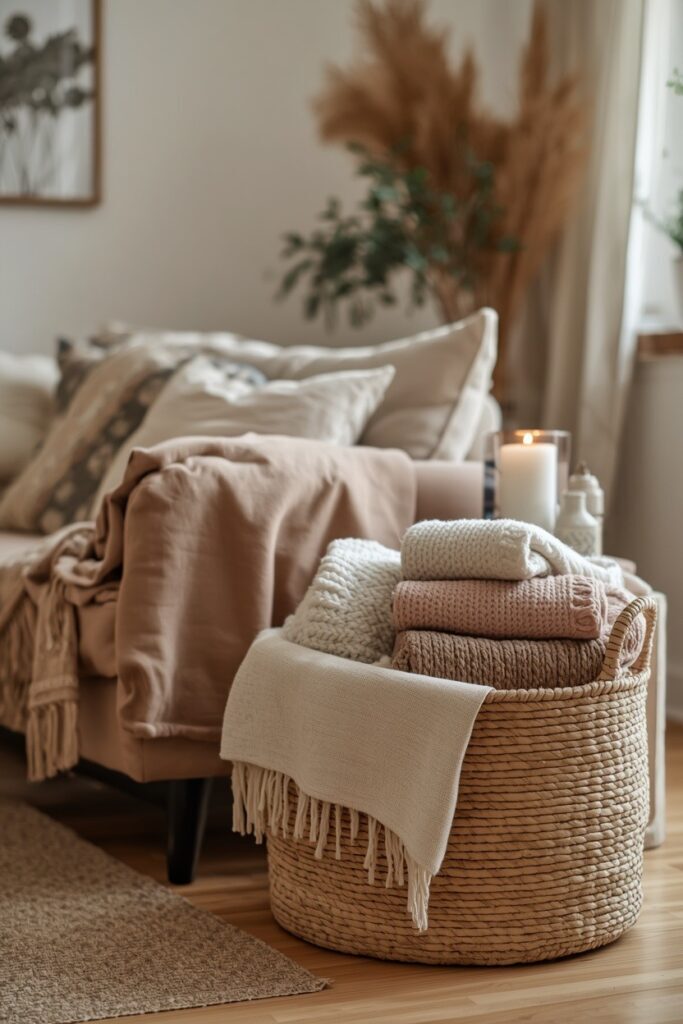
24. Add a Pouf or Ottoman
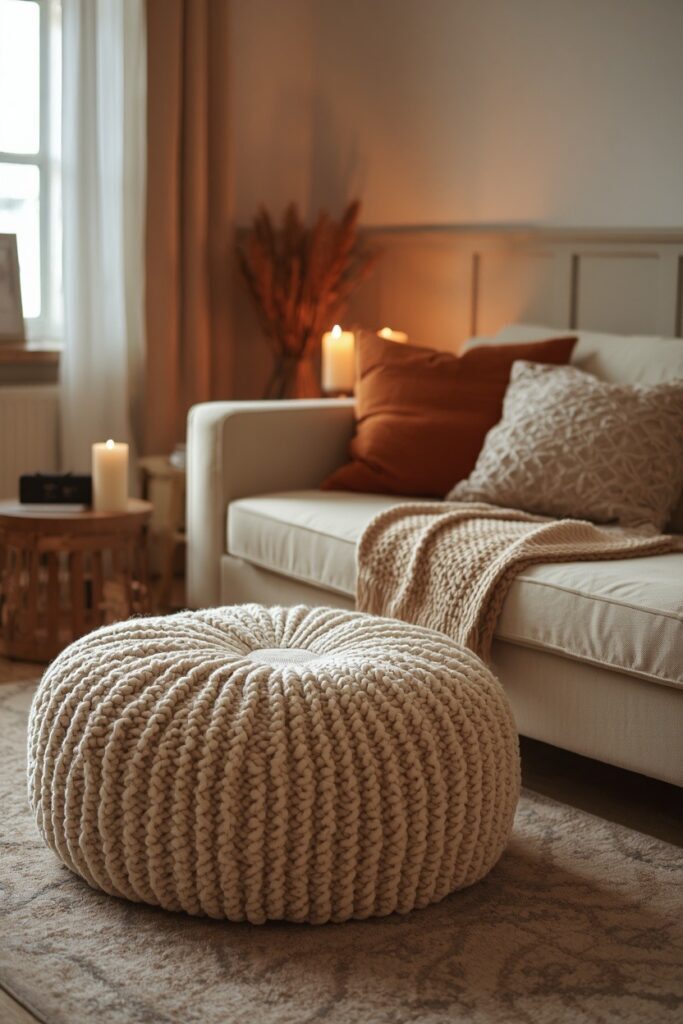
A pouf or ottoman adds flexible comfort — a footrest, extra seating, or a soft surface for a tray. A knit pouf or an upholstered ottoman in a warm tone slots in wherever it’s needed and adds another soft layer.
Choose one that doubles as storage or a tray table to earn its space. Putting your feet up is a small thing that makes a living room read relaxed rather than formal.
25. Edit It Down to Keep It Calm
Warmth and clutter aren’t the same thing. A room packed with stuff reads chaotic, not inviting — so editing down to the things you love and use, with clear surfaces and breathing room, is what lets the warmth come through.
Keep the styling intentional: a few meaningful objects, clear coffee-table space, and tidy surfaces. A calm, simple room layered with soft texture and warm light is the version that actually relaxes you.
Where I’d Start if I Only Did Three Things
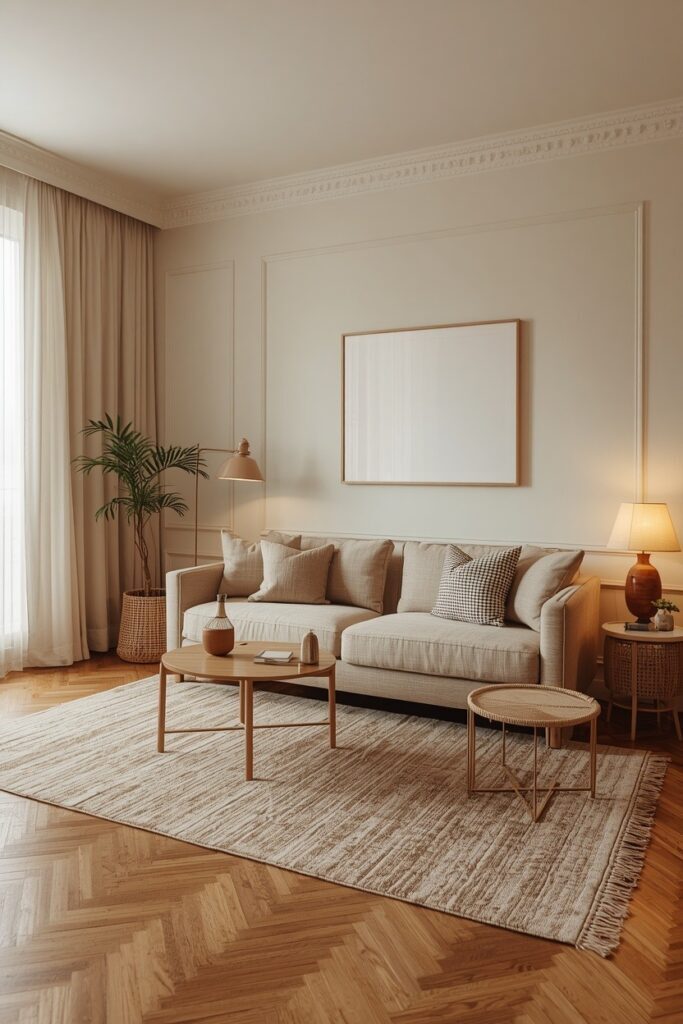
If I wanted to warm up a living room fast, I’d start with the lighting — turn off the overhead, add three or four lamps with 2700K bulbs, and the whole room softens instantly. Next, I’d layer texture: a chunky knit throw, mixed cushions, and a big soft rug add the touchable warmth a room lives on. Third, I’d add candles and a couple of plants for glow and life. Warm lamps, layered texture, candles and greenery — that trio transforms a room in an afternoon for very little.
FAQ
How do I make a living room warm on a small budget?
Start with what you already control: swap to warm 2700K bulbs, turn off the overhead and use lamps, add a throw and some cushions you may already own, and light a few candles. Thrifted baskets, plants, and rearranged furniture cost little or nothing. Warmth comes from light and texture far more than from expensive furniture.
My living room is large and feels cold — how do I make it inviting?
Break the space into zones and pull the seating closer together around a focal point like a rug or fireplace, rather than pushing everything to the walls. Add a large rug to anchor the main area, layer plenty of lamps so no corner stays dark, and use plants and a second seating spot to fill the volume. Bringing furniture inward is what makes a big room read snug.
Can a minimalist living room still be warm?
Absolutely — warmth comes from texture, light, and warm tones, not from clutter. A pared-back room with a soft rug, a chunky throw, warm wood, a couple of plants, and layered lamplight reads calm and inviting while staying simple. Edit down to what you love and let texture and glow do the work.
What single change makes the biggest difference?
Lighting. Turning off the overhead and switching to warm-bulb lamps at several heights transforms a living room more than any other single change, instantly and for very little money. Texture comes a close second — a chunky throw and a soft rug — but warm, layered light is the foundation everything else sits on.
Conclusion
A warm, inviting living room comes down to layers: soft light at several heights, plenty of texture, warm tones, a little greenery, and the personal touches that make it yours. None of it requires a big budget or a renovation — just a willingness to swap the overhead for lamps, pile on the soft things, and edit out the clutter. Start with the lighting, layer from there, and the room becomes the one everyone wants to settle into.